0
0

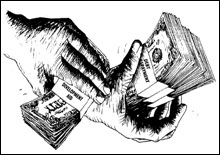 HOW can developing countries ensure that aid money (often in the form of concessional loans) reaches the poor people. How can they ensure that today’s loans do not contribute to a debt crisis in the future. And how can the international financial institutions ensure that they are financing poverty reduction and not creating indebtedness.
Many debts are viewed to be illegitimate because they are stolen by corrupt leaders/dictators or used to oppress the rights of people. How can it be ensured that this is not repeated.
What rules, procedures, mechanisms and structures need to be put in place to avoid today’s loans becoming tomorrow’s debt crisis?
These were the questions discussed in a two-day “dialogue on loan contraction and debt management” by 50 civil society organizations and the Southern African Community Parliamentary Forum in Nimibia late last month.
The participants in the dialogue reached the conclusion that: first, new loans at present are procured in an extremely non-democratic manner. Uganda was the only country in the region where new loans have to be approved by the Parliament. The Uganda parliament has managed to reject two proposed loans from the IFIs based on insufficient evidence of how they were going to address poverty.
Yet, even in this case, the executive is more beholden to outside donors than to the legislature or to the citizens. The Ugandan parliament on one instance was requested to approve a new loan on one afternoon as World Bank staff had boarded a plane in Washington and the loan had to be approved before they landed in Kampala.
Second, the participants agreed that there needs to be greater transparency and participation in how the resources are managed and spent. Parliamentarians and civil society groups need to be involved in monitoring process. This will help reduce corruption and improve investment of loans in poverty reduction.
Third, the donors need to end their practice of imposing economic policy conditions on developing countries. Conditionality is contradictory to be concept of ownership and of supporting nationally owned development strategies. Often debts carry huge social costs. The package may look attractive but the contents may be toxic.
The one-sided accountability by IFIs was rejected. The participants demanded mutual accountability between donors and aid recipients on development outcomes; poverty and social impact assessment on loans where there is concern regarding impact on the poor; more, better and quality aid anchored on exit strategies.—(Abridged version from South Centre bulletin)