0
0

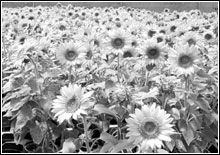 SUNFLOWER is a seed crop grown on 398,000 acres with an average 278,000 tons of production. About 42,000 tons of oil is extracted from the seeds annually for edible purpose. Edible oil is also extracted from rapeseed, mustard, canola, safflower, soybean and cotton crops.
Per hectare yield of sunflower is the highest in Pakistan as compared to other developing countries. With an increase in consumption at around 1.95 million tons, sunflower along with canola has the potential to meet requirements. The per capita consumption of edible oil in Pakistan is around 14-15kg.
The oil seed crops have no significant space in the rice-wheat and cotton-wheat rotation schedule. The seed production of these crops, therefore, is nominal as compared to wheat, rice, cotton, sugarcane, maize, potato etc. During 2002-03, the total area under oil seed crops was 1,100,000 hectares and production of seed at around 52.06 million tons with an average yield of 47,324kg per hectare. But imports are also required to meet its domestic needs.
An increase in sunflower cultivation will significantly reduce the import bill of edible oil. There is a need to focus on the management of crop and increase the per acre yield by introducing high yielding, early maturing, insect, pest and disease resistant hybrids.
It should provide inputs such as fertilizers, irrigation etc., and introduce modern production technology. Cultivation of sunflower is possible in winter, spring and autumn seasons.
The major problem associated with crop cultivation in rice-wheat cropping system is the sowing time of sunflower which coincides with the wheat. Since wheat is a major crop and fetches higher benefits, the farmers prefer wheat to sunflower.
Maturity period of sunflower coincides with the sowing season of cotton which delays cotton sowing thus resulting in yield reduction. As cotton is cash crop, the farmers prefer its cultivation over other crops.
Sunflower being an exhaustive crop depletes soil fertility for which huge dose of fertilizers is required while pest and insect attacks rise after sunflower cultivation. All these factors hamper the government efforts and also discourage farmers to increase its acreage.
Quality seed is essential for higher yield per unit area. It is possible to enhance the production by 10 to 20 per cent by using seed which is viable, healthy, vigorous and free from weeds seed and diseases.
The government should provide resources to research centres involved in evolving hybrid seed with desirable characteristics. However, private sector should also be encouraged in the production of hybrid seeds of sunflower and dissemination to growers because private-public coordination brings better results.
Bed plantation gives 15 per cent higher yield than traditional broadcasting method and also conserves about 45 per cent water.
Sunflower acreage can be increased by cultivating on marginal lands, inter-cropping and replacement of some traditional crops like rapeseed and mustard. About 6.17 million hectares are salt-affected soils which comprises 60 per cent of the cultivable canal command area. It can be managed through incorporation of gypsum and sulphuric or nitric acids in proper amounts and application of fertilizers, inclusion of green manure crops in a suitable cropping pattern and deep ploughing with chisel plough to reduce the severity of salinity/sodicity. Similarly, water-logged and eroded soils can be managed and made productive for sunflower crop.
Similarly, farmers with five to 12.5 acres of holding can be attracted towards sunflower cultivation through provision of inputs like seed, fertilizers, irrigation and credit. Adequate support prices and efficient marketing system will go a long way in boosting this crop.
Inter-cropping of sunflower in wheat, sugarcane and potato can also help in increasing the area under sunflower cultivation. Different governments have tried their best to increase edible oil production. The Pakistan Oil Seed Development Board was formulated to execute oil seed productivity enhancement programme in 1996-97 whose main focus was on area expansions and production enhancement of non-traditional crops. However, neither area nor production was increased.
It is imperative to increase local production of edible oil by popularizing non-traditional crops, particularly sunflower instead of low yielding traditional oil seed crops.
Marketing system should not allow importers to exploit local producers as it is a usual practice of importers to decrease the market prices of imported edible oil as the maturity period of crops nears.