0
0

 WITH the diminishing role of the public sector in employment generation and the limited capacity of the formal private sector to absorb the growing labour force, a large number of workers are joining the informal sector in shanty towns and suburbs of big cities.
Agriculture sector is also unable to cater for the growing demand for employment. People from rural areas move to big cities in their hunt for job. . The share of the informal sector in urban employment was estimated at 79 per cent in Pakistan in 1990.
To resolve the problem of unemployment in Japan, the Governor of Oita Prefecture, Hiramatsu came up with a revolutionary idea of” One Village- One Product” in April 1979. His idea was to bring out the vitality of each local area by reviving the industries that make full use of local resources and skills.
Hiramatsu viewed localization as the best response to the challenges of globalization. The concepts—Think globally, Act locally and Independence/Creativity are often used to bring local potential to its optimum level as a support for a broader goal of economic development.
The idea of “One village-One Product “ has been put in practice in China, Malaysia, Thailand, India, South Korea and the United States for reap immense economic benefits. Pakistan also embraced this global idea last year but we have not yet witnessed any practical demonstration of this. The government is showing lacklustre and lethargic attitude towards this revolutionary idea.
Pakistan conceived the idea of initiating such projects following a visit of the prime minister to Thailand last year. The first of this project was to export Chinioti furniture by providing expertise and funding to the people of Chiniot, who have been involved in furniture-making for a long time in order to diversify and modernize their products.
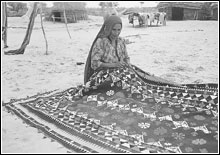
Pakistan has many such products with specific locations such as mango varieties of Mirpurkhas and Muzaffargarh, Shikarpuri achar, handicrafts of Hala near Hyderabad, stone made products of Taxila, fan industry of Gujarat, dairy product of Sahiwal, etc.
The people have lots of creativity in arts and crafts which is region specific, and needs help and guidance in product designing, marketing and financing.
Pakistan can add value to its products. The prime minister showed lot of enthusiasm for the scheme but the proposals are still passing through lot of paperwork at snail pace.
In Thailand the project “One Village- One Product” serves as a strategy to revive national economy by employing hundreds and thousands of villagers in making unique and diverse products, which are exported through marketing and facilitation from the government.
The areas of its focus are; food and beverages, textiles, home decorative products, herbal and spa products. The products are also offered through on-line marketing to exploit the potential of e-commerce.
Pakistan needs to use resourceful and innovative ways in marketing and improvement of products. SMEDA is wasting time on bureaucratic formalities while we need to formulate a comprehensive strategy and its execution on war footing. A strategy should be evolved for provision of non-farm employment opportunities in the rural areas to get rid of volatility in farm incomes. The “One village; one product” project would help our skilful artisans and rural masses to bring about a positive change in their lives.
The financial sector needs to finance the projects which fall under such schemes including rural modernization and micro-credit schemes.
The workers in the informal sector suffer from the low level of education and technical training. In addition, children, the elderly and females tend to be over-represented in the informal sector. The schemes like One Village One Product may improve the quality of employment and also help in bridging gaps of regional disparities. Such projects will foster a spirit of self-reliance among local citizens. The government would definitely have to incur initially some cost for providing technical assistance to improve product quality, or assistance in marketing.
Pakistan has offered one of the most competitive packages of fiscal and monetary incentives for investors in the past but the volume of the foreign investment has not been up to the expectations. Now, it is time to promote local investment.