0
0
BAGHDAD, May 13: Pressure mounted on Iraq’s Shias on Saturday to form a new government that will stem the ongoing violence, as US President George Bush described militias as one of the main challenges to peace.
Party officials were closeted in talks over the distribution of the key ministries, with prime minister-designate Nuri al Maliki’s office announcing meetings with representatives of all the major factions in parliament.
“Maliki will present his candidates to party leaders over the next two days for their approval,” said Mufid al Jazairi, a former minister of culture and a member of ex-premier Iyad Allawi’s Iraqi List Party, which is expected to take the defence ministry.
“Two problems remain to be resolved over the next few days — the ministry of interior and the question of the Fadhila Party,” Hassan al Seniad, a deputy from Maliki’s Dawa Party, said.
Even so, Mr Seniad said he expected a final cabinet line-up by Monday, a day after parliament reconvenes.
After it became clear that Dawa’s Hashem al Hashemi would not go on to lead the key oil ministry, the conservative Shia Fadhila Party withdrew from talks, precipitating yet another crisis in the tortuous process of forming a cabinet.
Leadership of the interior ministry, responsible for security in the country, remains up in the air, despite statements to the contrary by Mr Maliki last week.
A number of names have been put forward for the job, including an independent Shia, Qassem Dawoud, and the current minister, Bayan Baqr Solagh.
Mr Solagh, a member of the Supreme Council for the Islamic Revolution in Iraq (SCIRI), one of the main Shia parties, has been criticised for his ties to militias and his inability to rein in sectarian-related bloodshed.
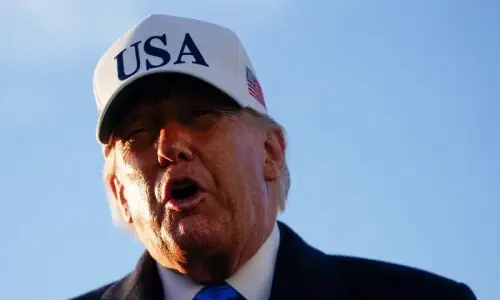
President Bush weighed in on the sensitive militia issue on Friday, calling on the Iraqi government to counter the unauthorised forces.
“Perhaps the main challenge is the militia that tend to take the law into their own hands,” he said following a meeting with ex-US secretaries of state.
“It’s going to be up to the government to step up and take care of that militia so that the Iraqi people are confident in the security of their country,” he said, making it clear the US military should not be expected to get involved with the militia threat.
British General Robert Fry added in a teleconference from Baghdad on Friday that the key to resolving the militia issue lies in politics.
Gen Fry said Mr Maliki must first ‘engage the political constituencies, which are connected to the main militias, lay out quite clearly what his political objectives are, and invite those political leaders to enter the legitimate political process and not remain outside of it.
“Before any form of military action was to have been taken, you first of all need political and also public consultation,” he said.—AFP