0
0

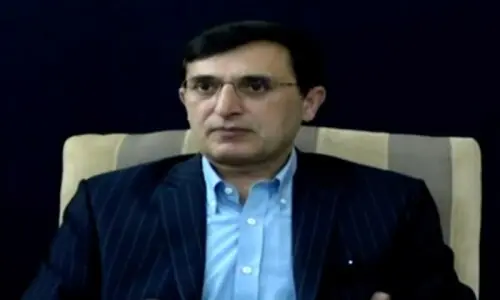
KARACHI, June 2: FPCCI president Ch Muhammad Saeed has urged the government to broaden the tax base and also bring down tax rates to encourage capital formation in the country.
Speaking at a dinner hosted for Press and the electronic media people by the Federation of Pakistan Chambers of Commerce and Industry here on Thursday, Mr Saeed also stressed upon the need for giving some relief to common man in the budget 2006-07.
Undoubtedly, he said the country had been progressing during the last couple of years but all figures related to macroeconomic stability and higher GDP growth were irrelevant for a common man.
He said that the revenue collection was rapidly increasing and may exceed the current year’s target of Rs710 billion. Other major macro indicators were also strong but all these achievements did not matter to common man, who badly needs some relief to face the high cost of living.
However, the FPCCI chief said that there was a greater need to broaden the tax base by bringing all categories of income under the net and only, thereafter, tax rates could be rationalised. “This would give the government more fiscal space to develop infrastructure, health, education and other major sectors,” he added. Mr Saeed that during last five years there had been no fresh investment and only BMR worth $5 billion were carried out by the textile industry to face the post-quota challenges. He urged the government to improve investment climate and suggested to the private sector to diversify.
He said presently the 67 per cent of export earnings was from textiles and clothing but in the world the engineering industry had 60 per cent share in external trade. Therefore, he suggested that there was a greater need to develop engineering industry.
The FPCCI chief said that Bangladesh currency (takka) was stronger than the Pakistan rupee though lately we managed to maintain stability in the exchange rate parity.
He said no research work was being carried out in the agriculture sector and in Israel organic cotton with colours was being grown. But we could not produce contaminated cotton and the industry was also not ready to give premium for clean cotton, he added.
Earlier, Sheikh Manzar Alam, chairman FPCCI standing committee on media and public relations, said that the media had a greater role to play and it was a tool if effectively used could bring a radical change in the society.
He said that the industry in general and textile sector in particular was confronted with high cost of inputs and around 176 hosiery units had already been closed down.