SINGAPORE, Sept 17: The World Bank is actively considering a $6.5 billion four-year support programme for Pakistan to assist this promising economy overcome the difficulties that deficient physical and human development infrastructure pose in its effort to accelerate the growth further in a way that benefits widest sections of the society.
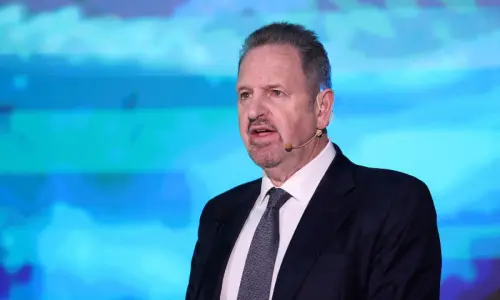
“Pakistan is a success story that needs to be told and heard here. There is also a need to show a clear break from the past (before 1999 period) when the country’s policies were inconsistent and irresponsible. The country needs this to reach out to the potential investors and also to make a case for the support it is seeking from donors to match the physical and human infrastructure deficit,” John W Wall, country director, Pakistan, in the World Bank, said this in an interview with Dawn on the sidelines of the meetings.
“At the moment, Pakistan has the soundest and safest banking system in South Asia, but many people do not know that,” he said.
He said that Pakistan’s delegation had a chance in the huge gathering of bankers and private sector representatives to present its case to be a country that offered comparatively favourable business environment for investors in South Asia. “This is exactly what Pakistani official delegation has been doing over the past two days and intends to do over the next couple of days of meetings in Singapore”.
The WB director was referring to an array of meeting that the State Bank of Pakistan governor and Dr Salman Shah, head of Pakistan’s delegation, are having with the World Bank/IMF teams and others.
Mr Wall said that restructuring of the fund and the bank, if approved, would benefit Pakistan and other developing countries as the dominance of lending countries in the institutions would be moderated, creating more space for the voices from emerging and less developed nations.
On the sensitive issue of conditionality, he said that the bank had realized that reforms could not be imposed on countries from outside. “When countries are coerced into certain policy prescriptions, they lack willingness to implement them,” he added.
“We have changed. We realize that we can not buy reforms. We have cleansed ourselves of that attitude. Even when governments sign on the dotted line in most instances, they do not live up to promises made”, he said.
He said that the bank now operated with close consultation with the policy makers so that they took the ownership of the programme.