0
0

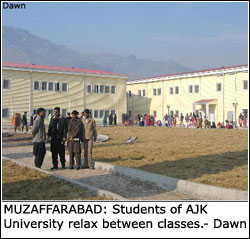 MUZAFFARABAD, Jan 16: Students took classes with enthusiasm and chatted away in free periods in and outside the prefabricated buildings, bringing the hustle and bustle peculiar to any educational institution back to the main part of the ruined Muzaffarabad, as the region’s seat of learning — the Azad Jammu & Kashmir University (AJKU), which was shifted to Islamabad after the Oct 2005 earthquake — has returned home.
But while the students were happy with their university’s fresh ambience on Tuesday — old structures having been replaced by gleaming new buildings — they also expressed displeasure at the hostel accommodation provided to them by the varsity administration.
AJKU spokesman Zafar Iqbal told Dawn the university administration had arranged accommodation for 400 students – 300 girls and 100 boys – in private buildings.
“We also have erected 100 tents in the premises of the new campus in Chehla Bandi where the remaining students will be accommodated till more buildings are hired,” he said. He claimed that every student contacting the administration for hostel allotment was being provided accommodation in one or the other place.However, students said it was difficult to live in tents in the chilly weather.
Rafaqat Hussain, father of a student, said he spent the previous night with his son in a tent. “There is no facility, not even toilets (along the tents). Students’ luggage is not safe there,” he said.
He said when his son got admission two months ago, the university administration had assured him that proper accommodation would be provided to him on Jan 15. “But you can see how worst is the situation here.”
Shahzad Rathore, chairman of the Muttahida Talba Mahaz, held vice-chancellor Dr Manzoor Hussain Khan responsible for the students’ plight.
He said proper arrangements for students’ accommodation should have been made before starting the classes in the Muzaffarabad campus.
Mr Rathore, who led a campaign against the shifting of the university to Islamabad, alleged that the AJKU administration had deliberately created the situation to justify the shifting of the institution to Islamabad “which was in fact for their personal convenience.”
“If they want students to stay in tents now, why didn’t they hold classes in tents after the earthquake?” he asked.
Students living in private buildings hired by the university also complained that the living conditions were pathetic.
A student of the botany department said she was sharing her room with nine other girls. “When you put 10 people in one small room, you don’t find space to lay down a prayer-rug,” she said.
Students said monthly hostel charges were about Rs1500 before the quake but now the charges had been increased to Rs 3,600.
A student from Sialkot said although the environment at the campus was pleasant but students were spending hardly six hours here and the remaining hours of the day at their hostels. “If the environment in hostels is not good, how can we concentrate on studies.”
Mr Rathore and others pointed out that the university administration had provided accommodation to the teaching staff in unaffected buildings of different departments though they could afford to live outside in rented houses.