0
0

The man who knew how to live and how to die
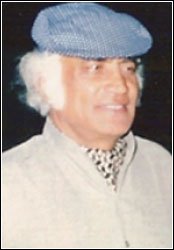 WHILE Zafar’s joblessness made no difference to him, it certainly destroyed the Sindh Provincial Museum. Pygmies who enjoyed the status of petty officers, started claiming the credit for its excellence.
A senior woman official who literally begged for a position in the culture department to save the culture of Sindh, deserves thanks for the removal of her illustrious predecessor. Among her laudable services was the turning down of the department’s request to retain the services of Zafar as consultant. Today Zafar lives while she is an inconsequential blip.
Zafar Ali Shah Kazmi was a multifaceted person – focused and unpredictable, bold and cutting, soft and brash. He has recorded each and every moment of his life. If and when his memoirs are published, one would know his mind. I hope his sons have his diaries published.
Many claim to have known him during the different stages of his life -- from the time that he rebelled against the dictates of cultural inhibitions to the days when he was confined to his small abode that gave peace and tranquillity to his restless soul.
His life began in Amri, where with two friends -- Mansoor Veeragi and Alan Faqir -- he used to roam the ruins of Amri and the banks of the mighty and turbulent Indus. The extremes of his personality, beautiful and dangerous, can be traced to those days.
His sojourns and loves are well known. They range from Rudolph Valentino to Motilal and Dilip Kumar, from fearless fights around the Saeed Manzil (Amar Jalil has immortalised his adventures as the feared gangster of Barnes Road in one of his short stories), to the crabbing days, from the film studios of Lahore to ((Mayo)) National College of ((Fine)) Arts and then to the NJV as a drawing teacher and a sculptor par excellence.
When he settled down to a married life, his love for his family was commendable. His wife faced the brunt of his cruel temper and gentle rustle. He fared well in the upkeep of his family. His children loved him; to them he was Papa. To us, he was Daadah.
His stay at the University of Sindh, his ouster and triumphant return to the Sindh Provincial Museum and then as an important member of the triumvirate in the Culture Department and the projection of Sindh’s cultural heritage, are all an epoch.
Dr Baloch and Justice Nana were his benefactors, but it was his talent and God-given qualities that made him shine. He played with the soul of colours -- his earlier works are classics in the depiction of Sindh’s beauty.
I came to know him in the late 60s through Mumtaz Mirza and Amar Jalil and over the last 30 years, I remained closer to him than any of his earlier friends. We fought, ridiculed and enjoyed the complexities of this quixotic journey.
He loved life but did not care for it; he was reckless. He strongly believed that it was not for us to worry about life and its trivialities. Those things are for the Creator to figure out.
He was never well off, but how he scraped by, no one knows. I never found him preoccupied, tense or worried. He would always say “Yar, hey kum thounjo na aahey. Chaad Maula tey”. He never complzained.
He was a connoisseur of beauty and everything to him was admirable. But he was not a hypocrite and he would never tolerate one. Mercurial as he was, he could be an embarrassment to his friends and, with an appalling measure, would cut us to size.
Hamid Haroon, Mumtaz and I (Jalil was scared of him), -- more so I -- had the privilege to joke with him and tease him, but he never reacted. In the same stride we would laugh off his assaults. One had to understand Zafar to appreciate him.
He gave away all his antiquities for setting up the museum and official audits have not been able to reconcile the wealth that he gave to the museum. He was not paid back. He was never regretful, but sad to see the museum decline so rapidly.
My last conversation with him during his illness was brief as he was in pain and could hardly hear what I was saying, but he came to the phone and kept repeating, “Rab jo karam ahay”. When I went to see him on Eid, he was sleeping peacefully, wearing a smart, blue sleeveless sweater and a golf cap. To me he appeared the same Zafar I saw in the early sixties during a cricket match at Kotri. He was fearless to the point of recklessness and was prepared to render his accounts.
In Dilip’s Daagh, there is a scene in which his drunken friends carry him on a cot to the graveyard and having lost their way, contradict each other. Suddenly Dilip gets up and tells them: “Shamshan kidhar hai show tou ham jantay hain, magar hum to bata nahey saktay, kuen key hum tou becharay mar chaley”. I would often tease him, 'Shamshan kidhar hey’, and he would say “Chadd Badmashey”.
Little did we know that both these foster brothers -- Alan Faqir and Zafar Kazmi -- would found their own “shamshan” where in death as in life they would be the sole lions. Alan lies buried in his house in Jamshoro and Zafar Kazmi in the Sindh Museum, a place which he created and is his identity. Whoever allowed this has done a great service, for once the present flim–flam from Sindh’s culture vanishes, Zafar will be remembered.
It is said that had death not been a gift and inevitable, man would have wasted his whole life attempting to avoid it. He would have risked nothing, attempted nothing, undertaken nothing, invented nothing, built nothing. Let us thank God for having made us this gift, so that life is to have meaning. Let us thank Him for having given us weariness and pain so that rest and joy are to have meaning.
The end of Zafar’s journey is the end of an era never to be repeated. People have changed, values are devalued, Sindh is not as romantic as it was in the 20th century. Zafar will not be born again.
Thank you and adieu my friend, you have ended your journey; we plod along.
Zafar Kazmi, painter, museologist and poet, served as curator of the Sindh Museum, Hyderabd, which he had built up from scrap and without adequate financial assistance. After a protracted illness, he died in Hyderabad on Jan 11.
Quetta carnage deplored
Condemning the Feb 17 suicide attack on a court in Quetta, Daily Ibrat says the government appears to be helpless in the wake of the growing incidents of terrorism.
The newspaper says the recent wave of terror had exposed the government agencies’ inadequacies. The daily puts a rhetorical question: “Who are the assailants and what are they up to?”
The Ibrat says a sense of insecurity has overtaken the nation after the bomb attacks during Muharram. “People are afraid that anything can happen the next moment.”
The paper expresses an apprehension that 'under a plan, sustained efforts are being made to create a law and order situation’ in the country. It ridicules a claim made by a senior official that the government has broken the terror network.
The Ibrat points out that acts of terror have increased after Washington started pressuring Islamabad into 'doing something’ to curb terrorism. “The perpetrators are conveying a message to the US that terrorists are present in Pakistan.”
The paper terms the recent wave of terrorism dangerous and calls upon the government to formulate a long-term strategy.
Criticising the hasty legislation work in the National Assembly last week, daily Awami Awaz says the passage of four bills betrays the ruling party’s contempt for rules and regulations. “If some member speaks out against this, he is harassed by the treasury benches.”
The newspaper says the 'rulers appear to be unconcerned about their responsibilities’. For example, the government has urged the cement and sugar barons to bring down the prices. The paper says it is the government’s duty to ensure that businessmen do not fleece the people, but instead of taking administrative steps, it is content with making appeals.Daily Ibrat welcomes the government’s decision to call a multi-party conference (MPC) on provincial autonomy.
The paper believes that Sindh will now formulate recommendations about provincial autonomy. The Ibrat calls upon political parties to attend the conference as 'vital issues concerning national cohesion are involved’.
Daily Hilal-i-Pakistan editorialises on the disappearance of political activists, recalling that the Attorney General has told the Supreme Court about some of the activists’ whereabouts. However, a large number of people are still missing. “These people were either picked up from workplaces or homes. No agency is willing to talk about them.”
The paper says even if these people are wanted for 'any anti-state activity’, they should be dealt with according to the law.
Daily Kawish condemns the Panipat train tragedy, saying that the 'sun of peace has never risen since partition’. “Whenever some confidence-building measures are taken, something unpleasant happens.”
The paper urges the two governments to investigate not only the attack, but also try to find out who stood to lose in the event of normalisation of relations.
| © DAWN Group of Newspapers, 2007 |