



 0
0

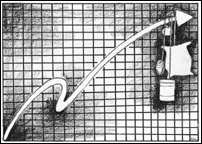 The voters rejected the PML(Q) despite the high economic growth rate because it did not benefit the majority and, instead, led to a whirlpool of food, fuel and financial crisis. They voted the PPPP-PML(N)-ANP-JUI coalition to power in the hope of a better tomorrow. No wonder that with the federal budget round the corner, expectations are high despite everything that has happened since the elections. While Islamabad must be busy evaluating its options for the next fiscal, powerful lobbies are also at work trying to influence public policy to suit their own interests. It is, therefore, imperative for the government to Mind the direction
In this special report, the team of Dawn Business reporters tries to reach out to the stakeholders and pick their mind over possible and viable solutions to the economic challenges that are staring the country in the face.
KARACHI: Post-election euphoria is fading fast as the economic situation has worsened enough to assume crisis proportions. Prospects of halting the economy’s gallop towards the red zone are not missing altogether, but public trust is low in the capability of the fragile coalition government to override the economic challenges.
The situation becomes trickier because of the unavailability of obvious quick-fix ready-to-implement solution to what is referred to as ‘hydra-headed problem’ of food, fuel and the problematic public finance situation.
So far the government has succeeded in making the electorate somehow endure the brunt of the rising cost of living and the falling value of disposable income. Some isolated events of extreme reaction to escalating food prices, food shortages, long electricity outages and suspension of gas supplies have been reported, but, generally speaking, people have exercising restraint. Probably they want to grant some more time to their elected leaders to settle in before pressing them to take steps for making life bearable.
Deterioration in the economic scenario is a result of a number of adverse developments. Prominent among them are dismal macro-economic indicators looking southward, such as double-digit inflation, weak performance of agriculture and manufacturing sectors, dwindling exports, rising imports, low and stagnant GDP-tax ratio, huge investment-saving gap, commanding power of market manipulators compounded by dangerously high levels of current account and trade deficits culminating in weakening of the rupee that has hit new lows against other currencies.
There is a mismatch in economic potential and the actual performance of the country which is endowed with enviable natural and human resources.
The results of Dawn survey highlights some interesting views and varied perceptions held by different segments on the possible solutions to fix the economy. People were generally found to be as aware of the magnitude of the problem as of the constraints on the government. There is no shortage of suggestions either.
For instance, there is a near consensus among stakeholders that the government needs to intervene directly to lend support to the vulnerable on the edge – the poorest of the poor. A social security net for the disadvantaged is also suggested to arrest their freefall down the economic ladder.
There is also a realization that the country cannot afford to neglect agriculture any more. The supportive policies for agriculture are advocated also because of the country’s comparative advantage in the sector. The better performance of the gigantic rural economy could accrue benefits to the country in the global market that has tilted in favour of commodity-producing nations in the wake of surging prices. The trend is expected to persist in the medium term.
The respondents also urged support for the manufacturing sector by encouraging investment through policy incentives. To discourage capital flowing towards short-term investment avenues in search of ready gains, income from such transactions should be taxed. This could curb speculators and direct the capital towards more productive avenues of capital formation.
Almost everyone wanted the government to curb excessive expenditure on non-productive heads in the coming budget. A few, however, mentioned defense expenditure as a huge drain on government resources. They probably implied that the defense budget needed to be
rationalised, but avoided being explicit on the issue.
A number of respondents pointed towards anomalies in the fiscal policy of the government that least taxes the richest of rich, and, instead, raises resources through indirect taxation which is supposed to be regressive. Some suggested increase in the ratio and rates of direct taxes.
There was resentment over leaving income generated by the money-minting services sector out of the tax net. There was also concern, especially from business leaders, over not taxing the agriculture income.
To tone down the brunt of rising fuel and energy prices on the people, the withdrawal of government levies that jack up prices for consumers was advised.
To cut on government expenditure on import of both furnace and edible oil, some meaningful suggestions were made, like shifting the focus in goods transportation needs from oil-guzzling trucks and heavy duty vehicles to railways. Also highlighted was the need to invest in public transport to contain private consumption of petrol by households.
The sectoral view demonstrated the myopic vision held by individual sectors not willing to see beyond their narrow interests. Representatives of the private sector, particularly textiles, demanded more subsidies to compensate for their inefficiencies. The spokespersons of the agriculture wanted subsidy to reduce the input cost. They did not care if the government was under stress. All they want are subsidies and concessions, and they consider it vital for the revival of industry and agriculture.
Each of the smaller provinces portrayed itself as the worst victim of Centre’s apathy towards their needs. They demanded bigger share from the pie of federal resources.
Most articulate were the economic wizards groomed under the umbrella of Bretton Wood sisters. Grown wiser because of wider international exposure and armed with their experiences in other troubled economies of the world, they gave some practical, workable and concrete suggestions. The economists projected as independent for their anti-establishment views were high on verbosity and advocated a shift towards people-friendly policies. They were not able to project any alternative model to compete with the conventional World Bank-backed model of economic development for Pakistan.
The response of workers’ representatives was more mature than the credibility they generally enjoy in society. They carefully crafted their set of solution, stressing that mere announcement of policies would not help; the government needed to ensure their implementation as well. They mentioned the case of revised minimum wages in this regard.
As for the development partners, they saw the economic crisis as a management failure and urged improvement in economic management. They did not put blame on the general direction of the economy probably because it was fashioned under their own supervision.
Strangely no one mentioned the leveraging of Pakistan’s long coastline and its access to hot waters. The country has a potential to become the transit post for the region, but the sorry situation of shipping and logistic sector failed to catch the attention of stakeholders.
Also skipping attention was the potential of making the country a financial hub for the region, banking on a strong and robust financial sector which is responsible, along with retail and telecommunication, for the realisation of high growth in the last few years.
The possibility of a common agriculture policy in the Saarc region and possibilities thereof were not discussed by anyone when deliberating on the food crisis in the country.
For some unexplained reason, the multiple gas pipeline projects at different stages of planning also did not figure as prominently as one would have expected.
There was a sense of nervousness over political stability, particularly among corporate leaders who were on the verge of loosing patience as they had their investment plans on hold and there is a limit till they can delay such crucial decisions. The economic team of the government will have to defer theatrics of name-calling for some other time. For now it needs to roll up its sleeves and pick up the shovel to clear the mess and put the economy on track. Left unattended to its own devices, the worsening economic situation has the potential to provoke chaotic public reaction that could rock the boat of the coalition government and put the very survival of the country at risk. The government is confronted with a huge task of reconciling the conflicting interests in a way that does not earn them the ire of its developing partners whose support could come handy in overcoming financial shortfalls, but at the same time it has to meet the high expectations of the people by revitalising the economy through better and efficient employment of resources.




























