



 0
0

KARACHI: Talking to a range of economists covering an array of colours, shades and hues of opinions, one gets the sense that the scenario may not be as bleak as it appears. The F-words in national economy – Food, Fuel and Finance – can still be managed, provided the government has the political will and commitment.
In fact, if our panel of economists – comprising both the old foxes with IFI backgrounds and the homegrown young Turks – is to be believed, crisis in the food sector may even be manipulated to our advantage by as early as the next crop. The views vary on the urgency to tax the landed gentry, but there is an across-the-board consensus on the need to subsidise food for at least the poor. It is the same story when it comes to meeting the fuel crisis, but there is also a realization about the necessity of taking a broader view of the entire energy mix rather than focusing on oil alone.
There is a divergence of opinion regarding ways to manage the fiscal issues, but immediate reduction in government’s spending is still the thread that seems to be running through the minds of the panelists. Over to you, experts!
Sartaj Aziz
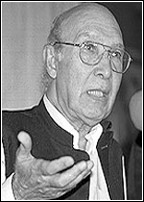 FOOD: In the short term, organized procurement is needed without harassing the growers. Besides, the poor has to be provided subsidized food through various means. In the medium term, it is a good opportunity to increase production. A crash plan shall be prepared in consultation with the provinces to increase acreage for the next season that shall enable us to be at least self-sufficient, if not an exporting country.
FUEL: A multi-sector plan is required to rationalise the energy scene that would lower oil import bill in the years ahead. Apart from conservation, there is little that can be done in the short term.
FINANCE: Government spending must immediately be cut by a minimum of two per cent. Even development expenditure needs a better focus to reduce spending, and we must say ‘no’ to luxury imports. For resource mobilisation, CVT and tax on corporate services shall be considered straightaway. Instead of taxing Agriculture, it is more prudent to make the sector re-invest its profits in terms of inputs and seed regeneration which would result in better yields.
Hafeez Pasha
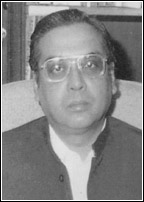 FOOD: Third World had always wanted better commodity prices. Now that they are getting it, the thing to do is to support agriculture and turn the country from being a net importer to a net exporter. Tax on fertilizers shall go and a subsidy on phosphate can also be considered. For immediate relief targeting the poorest of the poor, a Food Support programme shall immediately get underway, covering three million families.
FUEL: The profitability mechanism of OMCs and especially refineries needs a thorough scrutiny. Besides, the government’s GST earnings must be compared with spending on subsidy so that a clear picture about net revenue may emerge. Only then, the government would know how to proceed further.
FINANCE: Put a lid on borrowings from the State Bank NOW. In two years, the budget deficit must be brought down to four per cent of GDP. Do away with luxury imports by putting a heavy duty on all non-essential items. Capital Gains Tax on property – gradually on stocks – as well as GST across the Services sector are also immediately needed.
Shahid Javed Burki
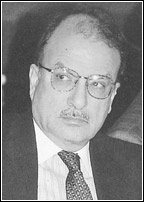 FOOD: In the face of the global trend we can either insulate ourselves or find ways to take advantage of the situation. The latter approach is definitely better. A three-pronged strategy for the poor, however, is essential, involving cash transfers; an extensive Urban Works Programme like the Latin American experience; and subsidised food through Utility Stores. Let the Agriculture sector have the market price they want, but tax them like we do the urban rich.
FUEL: The dynamics of international prices are beyond our control. Free market shall prevail along with targeted subsidy on kerosene and to a certain extent on diesel. A long-term approach is also vital on bio-fuels and the country’s broader energy mix.
FINANCE: Three key objectives must be kept in mind while bringing down the fiscal deficit: protect the poor; don’t hurt long-term growth prospects; and do everything possible to control expenditure on the current side, involving enormous but unjustified government spending. The World Bank Public Expenditure Review was ignored by the previous government. The incumbent must have a serious look at it.
Pervez Hasan
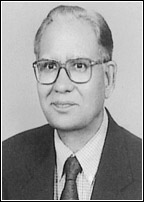 FOOD: Lack of anticipation of our managers has brought us where we are. Efforts to control prices will not work because subsidies will lead to inflation. In the short term, market will dictate prices, but in the long term we should target being at least a marginal exporter by encouraging the Agriculture sector. We can deal with the fluctuating prices by going for average pricing for, say, three years.
FUEL: We can do nothing but to absorb the oil shock. Again, delayed adjustment to international trends is the main reason behind our plight. The way ahead shall entail taking a broader view of our energy resources instead of focusing on oil alone.
FINANCE: Simple. Cut expenditure; widen resource base. The fiscal policy needs to be equitable that shall tax everyone according to his potential. Incomes of all sorts, however, need to be taxed. There is no harm in considering Gains Tax on stocks and at least a flat tax on agriculture. Besides, we need to have in place an external finance strategy to manage our forex reserves.
Qaiser Bengali
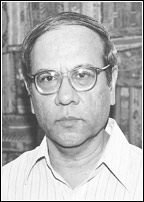 FOOD: There is a conflict between the price that needs to be given to the growers and the price that is charged to the consumers. The resolution of this conflict is possible only through relevant subsidies. The modalities can be worked out, but in principle the next budget should go for food subsidy. Increasing per-acre yield of staple crops is also vital. Export of rice shall be encouraged to earn foreign exchange with which we may import wheat which is the basic requirement.
FUEL: Fifty per cent of the fuel used in the country happens to be diesel, and 55 per cent of our consumption is on transport, mainly because 95 per cent of our goods transportation is by road. There is an urgent need to shift to the railways by introducing high-speed goods trains. This will bring down our oil import bill. Besides, a reasonable tariff policy for alternative energy sources is also required.
FINANCE: A cut in non-development expenditure is perhaps the only thing the government can do right now to overcome the financial crunch.
Faisal Bari
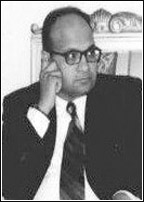 FOOD: The government has to ensure there are adequate supplies of staples in the country. If the private sector does not come forward on this count, the government shall move ahead with plan to buy from outside and managing strategic reserves where necessary. At the same time we will need to subsidise food for the poor through a targeted subsidy, and this system should be put in place quickly.
FUEL: Prices will have to be passed on, but specific sectors like public transport or specific uses, for example kerosene, can, and shall, be subsidized.
FINANCE: We have to raise money from outside, but for the medium term we have to get our manufacturing and agriculture sectors to produce and export more. The rupee has to be devalued, but slowly to bring it in line with the reality of a weak economy. For the poor, we have to create a strong, targeted social protection net: the contours of such a programme were developed a couple of years ago by the Planning Commission, but they have not been implemented.
Asad Sayeed
 FOOD: We are in the middle of a global crisis which means the government has its hands tied in many respects. By improving the country’s commodity reserves, things can be improved, but not entirely. Our best hope lies in the next crop when the government should provide financial and other incentives to improve the national wheat acreage which would gradually ease the mounting pressure.
FUEL: Again, it is an international crisis. The government and the consumers are the apparent losers, while the refineries and OMCs are having fun at their cost. Keeping an eye on them can make a difference.
FINANCE: The revenue base is too narrow because the last government did nothing much in this direction. The easy money in the wake of 9/11 allowed them the luxury to be whimsical. The tax-to-GDP ratio is in urgent need of revision, while GST on the Services sector is inevitable. Like most other taxes, Agriculture should also be a federal subject for taxation purposes. It also needs an upward revision in line with other sectors of the economy.





























