0
0

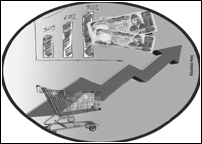 The glitter of a few cities should not lead one to believe naively that the country is on a definite development trajectory. Thus there is stark dualism concealed not only within these sprawling cities but also all across the country.
Poverty of the many has increased with the wealth of a few making it a case of chronic dualism. And, poverty has not decreased as claimed by the previous government. The contentions of some within have now been borne out by none other than the IFIs who are alerting the government to the issue of poverty not expected even by the IFIs to subside any time soon.
A few percentage points here or there notwithstanding, it is about one-third of the population that suffers from income poverty with another one-third that experiences serious deprivations of various kinds. In contrast, top 10 per cent got 26.3 per cent of income and top 20 per cent got 40.3 per cent of national income with the bottom 10 per cent getting four per cent and bottom 20 per cent getting only 9.3 per cent of the income in 2002 as per the World Development Indicators 2007. This picture has not undergone a drastic change in the last 5/6 years. With poverty and income inequality both pretty much unchanged, no transformation can be claimed in the economic landscape of the country.
Some might argue on the basis of the growing wealth of the wealthy that generates some externalities for some of the deprived that people are better off. While the wealthy are not all the people in the country, their growing affluence and its limited spillover is no sign of big change either. The rural-urban migrants who provide service to the affluent may be found using cell phones, riding motor bikes, and using some of the electronic gadgets and consumer products used by the wealthy; however, they experience other forms of deprivation that the affluent cannot even imagine experiencing. Their living conditions are miserable living in pest-/mosquito-infested shanties with sewage overflowing right behind many of the jhuggis. Despite the immune system that some of them develop, they remain vulnerable to serious ailments with access to healthcare limited as they cannot afford it. Nor can they afford education for their children who are pushed into labour at ages as young as ten or even less.
Early marriages are the norm with them which adds to their own and the nation’s dependency burden. As ignorance compounds, girl children are discriminated against blatantly. These girls grow up to experience violence within the confines of their homes with nothing to fall back on. All the electronic items they use fail to compensate for their decadent lifestyles likely to continue, inter alia, due to their higher fertility rates.
The maldistribution of assets and incomes, poverty, lack of education, healthcare, and employment opportunities all take a toll on them and on the nation. Underdevelopment is perpetuated. The income distribution index (Gini coefficient) may be higher in some developed countries. In these countries, however, a minimum level of income is guaranteed for decent life sustenance in addition to education, healthcare, and employment opportunities to get ahead on the basis of honest effort.
Again in contrast, even the basic food items such as wheat flour, rice, and pulses are getting dearer here thus enhancing the food vulnerability of the poor and the deprived segments. Poverty and income distribution are not likely to get better with the rising food insecurity also being experienced. So, a decrease in five percentage points in the share of agriculture in GDP during the last seven years could be no cause for glee.
It might be deduced simplistically that structural transformation is underway that ought to be a sign of development. Structural transformation makes sense when all available land has been cultivated intensively and labour is now surplus to make a transition to the urban modern sector. None of this is the case here. Of the total reported land area, about 40 per cent is cropped. Cropped area has increased by less than two per cent during the last seven years. Total cultivable area needs to be known out of the 60 per cent that is not cropped before a case can be made for rural-urban migration.
The plight of the migrants to the cities has been discussed above. Rural poor trace an even more pathetic sight of subjugation and deprivation commonly known in the country. Just because more village places can be accessed through Suzukis and land cruisers does not mean that the lives of the rural poor stand transformed just like the lives of the urban poor that remain virtually untouched by the roaring automobiles amidst which they live.
The recent consumerism is also considered to be a sign of growing affluence when most of it was credit-financed. In the absence of consumer banking policies that, in turn, developed not just from a shifting banking paradigm but also from a low fixed investment demand; the demand for consumer durables could not have gone up significantly. The middle class did not have purchasing power for all the cars and the consumer durables they bought since the launch of consumer banking in a big way. The ability to return the loans is yet to be gauged as we will know from the banks’ non-performing portfolio. To view consumerism as an economic transformation is to again look at only the surface.
There is a need to dig beneath the surface to know the trigger points of what looks like ‘change’ to some. It might be found that the more things change the more they stay the same. Or, they get worse. Food, energy, inflation, and terrorism are all crises that are manifestations of the gross socio-economic inequities and weak governance deeply rooted in our society. Unless the root causes are dealt with, a claim to transformational change cannot be made.
The perceptions of ‘change’ that we claim are not even incremental changes. These are devoid of a strategic direction that should first be given consciously and deliberately towards the desired goal of justice and equity for all and not for just a few. Since everybody is not factored into the equation, the society remains in flux with only the privileged few make a definite headway.