0
0

‘The world needs Pakistan to be a strong defender of human rights’
By Hajrah Mumtaz
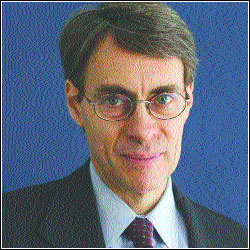
 Q: What are the most pressing human rights issues currently being faced by Pakistan?
A: Pakistan is at a pivotal moment. The new government is moving towards the restoration of constitutional rule and it has already done some very important things: there’s a re-flourishing of media freedom, political prisoners have been released. What perhaps sums up the new government’s approach was the response to the long march, which was clearly a movement in opposition to the government’s position. The government respected the right of people to gather and protest, in contrast to what the Musharraf government did to the lawyers – beat and detain them. That’s a very big improvement, as is the decision to commute death sentences and recognise trade unions.
But a number of important items remain on the agenda, beginning with the restoration of the judiciary. In our view, it is not possible to speak of the rule of law if a precedent has been set in which the executive is able to dismiss judges. That is the government controlling the law rather than subjecting itself to the law. That precedent needs to be reversed with the complete restoration of the deposed judges as soon as possible.
We are also disturbed by the continuing practice of the ISI to force disappearances. Being particularly vulnerable to torture and execution, it’s a matter of urgency that these people reappear and their detention be acknowledged by having them brought before a judge.
 We would to like to see the government announce a moratorium on any further death sentences and also reduce the extraordinarily large number of crimes that can give rise to the death penalty.
We would like to see a restoration of constitutional rule and make sure that the constitutional package does not provide indemnity for serious human rights abuses. That would set up a poor precedent, suggesting that governments can violate human rights and then beg for forgiveness in a future constitutional reform.
Q: How has the ‘war on terror’ affected the campaign for human rights?
A: What the Bush administration calls the ‘war on terror’ has been a huge setback for human rights, while terrorism itself is a serious human rights problem. The deliberate killing of civilians is an affront to everything the human rights movement stands for. So while the human rights movement favours efforts to contain terrorism, it is important that it be done with respect for human rights.
The Bush administration and to some extent General Musharraf chose to fight terrorism by disregarding human rights. Some of the excesses were encouraged by the US in Pakistan, but some were the Pakistani government’s own doing.
This effort to fight terrorism has become an excuse to ignore human rights, and it’s also been counter-productive. It is not enough to merely arrest terrorist suspects, we also have to undermine terrorist recruitment. Terrorists love it when their adversaries commit human rights violations . . . their websites are filled with references to Abu Gharaib and Guantanamo, because such abuses get people angry and are more likely to drive them into the arms of terrorists.
Making people disappear or torturing them is similarly not a smart way to fight terrorism in Pakistan. The best way to fight is from within the requirements of human rights law, by maintaining the moral high ground and presenting the state with a positive vision, as an alternative to the terrorist vision. But if you speak to the practices of the terrorist while yourself violating human rights, you lose the moral high ground and end up losing the battle against the terrorist recruiter – which is just as important as the battle with the terrorist himself.
Q: It is believed that a military operation in Fata would involve human rights abuses. What is your view?
A: I think that what is happening in Fata is still in the realm of police action, even though troops are involved.
Even if it were to rise to the level of a war, which I don’t think is the case yet, you can still ensure that you target only combatants on the other side, and that captured combatants are treated decently.
I don’t equate intense security operations with human rights abuses. It’s a question of leadership and making sure that those commanding the military operations insist upon respecting human rights.
That said, Fata does present a problem because the local authorities are themselves violating human rights. It is important for the Pakistani government not to allow there to be ‘rights-free zones.’ The Pakistani government has a sovereign duty to ensure that all citizens enjoy basic rights. Jus because Fata may historically have been outside the realm of federal government control, that does not justify tolerating atrocities such as summary executions being committed by the local authorities. It is the Pakistani government’s duty to see that this ends.
The effort to establish the state’s authority in Fata would include intensive development activities – and [access to] basic education and healthcare are human rights in themselves. One way to improve the perceived legitimacy of the state is to ensure that the state meets the basic needs of the people in its territory. One of the problems with abdicating official authority to the local leaders is that the state then also abdicates concern for the welfare of the people of those territories.
Q: You wrote in a recent article that much of the world has succumbed to the ‘wishful thinking’ of equating sham elections and democracy with the real thing . . .
A: Certain governments, of which the Bush administration is perhaps the worst offender, prefer to speak about democracy instead of human rights. That’s because when the Bush administration talks of human rights, people immediately think of Guantanamo, the CIA and secret detentions. But democracy is a sort of soft, fuzzy concept which does not have the same precise meaning in international law. No one quarrels with the fact that the US has democracy, but of course it has severe human rights problems. That is why the Bush administration has preferred the term democracy.
Yet by divorcing democracy from human rights, they divorce democracy from much of its meaning. As we’ve seen in Zimbabwe, merely holding elections is meaningless if you don’t have the basic rights that allow fair political competition. The same thing was seen in Pakistan, because after General Musharraf declared emergency rule, President Bush was still praising Musharraf for being on the road to democracy.
We want a commitment to a fuller concept of democracy that includes human rights and see that applied to all governments of the world, not applied selectively depending on whether the government happens to be a strategic ally or an economic partner. The Bush administration doesn’t push democracy too hard when it comes to Egypt or Saudi Arabia, but it’s quite willing to push at countries that don’t matter so much such as Myanmar or Zimbabwe. That kind of inconsistent, selective approach to democracy-promotion is not acceptable.
Q: Have there been any indications of change in Pakistan’s concern for human rights?
A: Pakistan was recently reviewed by the UN Human Rights Council as part of a new process by which every government is reviewed. It was a moment to reflect on the role that Pakistan played at the United Nations. Until very recently, Pakistan was one of the most vocal and vigorous defenders of dictatorships around the world. Even at times when there was democracy within Pakistan, the country’s foreign policy was at odds with its domestic policy. Pakistani diplomats were amongst the most vociferous defenders of abusive governments and constituted an intense obstacle to the enforcement of human rights.
That has begun to change over the past few months. Pakistan’s ambassador in Geneva, where the Human Rights Council is based, is beginning to reflect the values that his government is showing at home. It’s just the beginning of a change, but I hope it’s a process that continues. Frankly, the world needs Pakistan to be a strong defender of human rights. It should not be the government that comes to the defence of every two-bit dictator.
‘Pakistan, India must jointly fight poverty, illiteracy’
 A prominent Indian poet and broadcaster, Professor Obaid Siddiqui, who teaches TV and video production at Jamia Millia Islamia, New Delhi, believes that political and economic compulsions of the contemporary world have made it all the more necessary for the peoples of India and Pakistan to join hands to fight the common enemy – poverty, malnourishment and illiteracy.
Mr Siddiqui was talking to Dawn after the conclusion of a two-day international conference on the role of the media in the 1857 war of independence, organised by the Mass Communications department of the Federal Urdu University for Art, Science and Technology.
Prof Siddiqui said that in the age of globalisation and media explosion, it was not possible for either of the two governments to reverse the process of amity and cooperation.
“We must come out of the ‘enemy’ syndrome and benefit from each other’s capabilities,” he said.
Prof Siddiqui sounded more like a peace activist than a media functionary when he listed the advantages of treating each other as competitors and not the enemy. He said he believed that if both India and Pakistan accorded preferential treatment to each other and increased bilateral trade, it would automatically bring down prices and discourage hoarding.
He said Pakistan could also take advantage of the development of health infrastructure in India, besides importing basic raw materials used in the manufacture of medicine. He emphasized that both countries should decide that if there was a shortage of a certain commodity in one country, the other would supply from its surplus stock to discourage hoarders.
Mr Siddiqui, who started his career in broadcast journalism in the early eighties when he joined All India Radio as a programme executive and also worked for the BBC, talked about the phenomenal impact of the electronic media on the print media in India and said the electronic media’s proliferation had influenced the make-up and marketing of many newspapers, sometimes at the cost of information.
Mr Siddiqui claimed that the emergency imposed by Indira Gandhi was a testing time for the Indian press as it was subjected to severe restrictions. But even in those trying times, barring a few newspapers or journalists, the press by and large stood its ground and saved its reputation for posterity. But the situation changed dramatically in the early nineties to the advantage of the press, he said, adding that with the liberalisation of the Indian economy in 1991, in the wake of a severe balance of payment crisis and privatisation of airwaves some years later, the government lost the indirect control it had on the press.
With the establishment of the new economic regime, according to Prof Siddiqui, satellite television made inroads into India. Now scores of news channels are beaming in and out of India disseminating news and information even for those who cannot read newspapers. Satellite television further marginalised All India Radio and Doordarshan, which are still under government control.
“The most startling fact about the Indian media is that contrary to the general global trend, both new and old media are growing side by side and that, too, at a very enviable pace. Newspapers are recording growth in the number of readers and increase in their circulation; radio, which was declared dead not very long ago, is staging a comeback; TV is spreading its tentacles in all directions; the internet is attracting more and more users every passing day; and with the increase in the number of cellphone users, the number of people using the value-added services provided by cellphone operators, is growing fast,” he said.
“In a way, all these developments have enormously contributed to the freedom of the media in the country, but this is not the whole story,” he added.
Power through the backdoor
Realizing the power of the media, almost all big political parties and politicians are now directly or indirectly investing heavily in the media. For example in South India, there are TV news channels, newspapers and magazines which are openly and directly owned by political parties or politicians,” said Prof Siddiqui.
But for him the more worrying fact is that in order to increase their political clout and their bargaining position in the party they belong to, some big politicians are now heavily investing in media companies through the backdoor. According to Mr Siddiqui, professional integrity of all such newspapers, magazines and news channels is suspect, to say the least.
Ironically, though the increase in advertisement revenues because of the economic liberalisation is directly contributing to the growth of the press and electronic media in India, it has also posed new challenges to the freedom of the media in the country.
Upsurge in crime in capital worries police officers
 ISLAMABAD has registered an increase in crime in recent weeks, especially in murders, vehicle thefts and robberies. Carlifters have once again become active in the capital city — this time with new gadgets and a new technique that outwit the law enforcers.
The fortnight average showed that five citizens were deprived of their vehicles every day and two were murdered every week.
Over 350 vehicles were either snatched at gunpoint or stolen from different localities of capital city during the last six months.
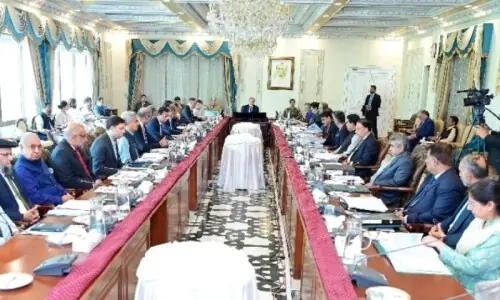
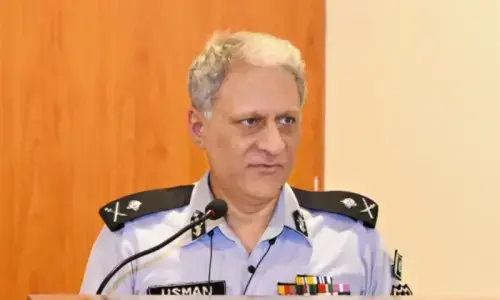
This was revealed in two recent meetings of the police high ups held to review the crime situation. The police high ups have expressed dissatisfaction over the performance of the law enforcers.
Harassment at police pickets and minting of money were also brought in the notice of senior officers at the meetings after lodging of hundreds of complaints by the victims.
However the SSP defended the police checking at these pickets saying that these were necessary to check suspicious persons.
The meeting directed all the sub-divisional police officers, station house officers, especially the anti car-lifting cell and Rescue-15 to enhance patrolling and surveillance in their respective areas to check crimes.
The culprits involved in car-jacking are smart and clever and have various tactics to dodge the police, who seem to be helpless in trekking them down.
Sources in the police department said a vehicle, which is either stolen or snatched from capital, vanishes within minutes and the law enforcers fail to trace it.
They believe that the culprits remain in their hideouts at different localities, like parking areas of markets, hospitals, vegetable and fruit markets, workshops or rented houses. When the situation gets normal they transport them to the Tribal Areas.
On June 23, the city police claimed to have busted five gangs involved in car-lifting, robberies, street crimes and selling stolen vehicles and arrested 14 members of gangs. Besides, they also recovered 10 vehicles along with CNG kits, tampering equipments, gold ornaments and three mobile phones from them.
The recovery of only 10 vehicles and tracing some other on the information of the arrested culprits is enough to satisfy their bosses.
During investigation the accused revealed that they used to take the stolen vehicles to a workshop at Sarya Chowk, Sector G-8 and Khana Bridge, after cutting the engine and chassis number, they soul them out.
The auto thieves easily open ‘China Lock’ with a piece of metal rod with a jerk. They demonstrated their ‘skill’ in front of the investigators.
On a query by the investigators how to make the vehicles safe, the culprits replied “use US-made locks for bolting the steering”.
Earlier, some months ago the police had arrested a gang of auto- thieves and recovered foreign and local made jammers from them, through which they blocked trackers Global Positioning System (GPS).
The recovery of the jammers, put the business of GPS providers at risk, as the car-lifters jammed the satellite tracking system, by inserting a device in lighter holder.
Majority of vehicle lifters preferred to steal small cars like Mehran and Alto. Toyota Corolla are also in their hot list. The preference, resulted in increase in insurance rate, besides the insurance providers avoiding insuring these vehicles without carrying tracker system.
Tehelka’s friendship designs
Nawaz Sharif air-dashed a video clip of his pronouncements on Indo-Pak relations. Asif Zardari emailed his ideas on the subject. Sherry Rehman could not make it. There was no sign of Lady Nadira Naipaul. Even Aamir Khan was missing. And many of those who could make it to the two-day Tehelka ‘summit’ in London last week presumably to design a new friendship mode for India and Pakistan, as expected, delved in the past and indulged in point scoring. There certainly were a number of sterling performances as well. From the Indian side young Sachin Pilot, a member of Indian Parliament, stood out. And from the Pakistani side youthful Arshad Bhatti, adviser, youth policy, government of Pakistan, impressed.
Jaswant Singh, former Indian foreign minister who inaugurated the summit was a big disappointment as he set the tone of the summit by exhorting out-of-the box thinking while repeatedly falling back on the past. Ram Jehetmalani, former Indian law minister who performed the last rites on the final day, could not have been more patronising when he made a passionate plea to the Pakistanis to become true Muslims.
Mushahid Hussain, secretary general of the PML-Q, excelled in point scoring and Asad Durani, former ISI chief, was frivolity personified. While Mushahid’s weakness for one-upmanship caused him to waste an excellent opportunity to win hearts and minds, Durani appeared to want to joke his way out of his ISI past. The two found their match in Manish Tewari, national spokesman of Indian National Congress, and A.K. Doval, former IB chief of India. In fact Mr Doval was found losing his cool at the slightest provocation.
Personally I had always thought Kashmir to be less of a bilateral problem between India and Pakistan and more of India’s problem as vicious as the one Pakistan had faced in the then East Pakistan in the late 1960s. And I was proved right when I heard Farooq Abdullah and Mehbooba Mufti talk more about their grievances against New Delhi than about Pakistan or the cross-LoC militancy. The former chief minister of Indian Kashmir even took the former BJP government to task for inviting Musharraf to Agra after having threatened not to talk until Islamabad handed over the 20 people wanted by India. According to Mr Abdullah, Agra happened because of Washingtons pressure on New Delhi. All this irked a number of Indians in the audience who took the floor to openly attack the two for being soft on militancy.
Sartaj Aziz, former foreign minister of Pakistan, and Tanvir Ahmed Khan, former foreign secretary, were perhaps more candid in their discourses than any from the other side. Sartaj recalled how Kargil sabotaged what was going to be a meaningful move by the two countries to resolve the Kashmir issue. Mr Khan mentioned about some handwritten papers of Jinnah which the first Benazir government had unearthed and in which the Quaid-i-Azam had expressed, at a time when the partition carnage was still going on, his desire to establish common customs regime with India. Imran Khan used the occasion to reiterate his pet political themes but still came out as a man of peace.
Interestingly, film-makers, authors, artists and poets representing their countries on one of the panels spoke much more candidly and without hang-ups. From the Indian side, Karan Johar (film-maker) and Prasoon Joshi (lyricist) impressed with their ideas for future relationship. From the Pakistani side, Mohammad Hanif (journalist-author), Kamila Shamsie (author), Hasan Zaidi (film-maker) and Naiza Khan (artist) were outstanding. All were young, confident and displayed no phobias or fixations. They represented the new generation of Pakistanis who look at India with no animosity or suspicion but with a lot of interest.
To be honest the ‘summit’ was hardly a sensational affair. But Indias media sensation Tehelka which has set new innovative standards in investigative journalism deserves a pat on the back for having tried to crack the elusive case of Pakistan-India relations. And Tarun J. Tejpal, Tehelka’s editor-in-chief, and his team did a fairly good job of keeping things from sliding into the usual blame game.
It is in the interest of Pakistan to have good, normal relations with India. So, such conferences wherever or whenever they are held are to be welcomed and participated in actively to win as many friends as possible from the other side. That we indulged in cross-LoC militancy in Kashmir is no myth but a stark reality. That Pakistan was carved out of India is also a fact of life that many in India naturally still find hard to reconcile with. That the army in Pakistan has been calling the shots all these 60 years or so is also a reality from which there is no escape. So, if the Indians have some peculiar notions about Pakistanis it would be foolish to take refuge in denial.