



 0
0

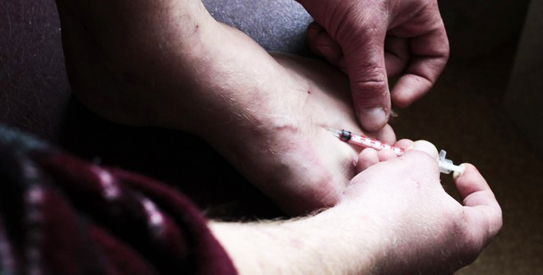
WASHINGTON: Persons addicted to heroin or prescription pain killers can get help kicking their habit by using an implanted device under the skin that delivers small doses of medication, researchers reported Tuesday.
A study led by Walter Ling of the University of California-Los Angeles found that persons receiving the implants of buprenorphine had more success in ending their dependence on opioids, which include heroin and prescription pain medications, with fewer symptoms of withdrawal.
“Those who received buprenorphine implants also had fewer clinician-rated and patient-rated withdrawal symptoms, had lower patient ratings of craving and experienced a greater change... on the clinician global ratings of improvement than those who received placebo implants,” the researchers wrote in the Journal of the American Medical Association.
Ling and his colleagues conducted a study of 163 adults diagnosed with opioid dependence at 18 locations in the United States between April 2007 and June 2008.
Of the group, 108 received buprenorphine implants and 55 got placebo implants. The implants were placed below the skin in the inner side of the non-dominant arm.
The implants, which gradually released 80 milligrams of buprenorphine, were removed after six months, as were the placebos.
Patients with buprenorphine implants tested negative for illicit drugs an average of 40.4 percent of the time compared to 28.3 percent for the placebo group. Additionally, 65.7 percent of patients in the buprenorphine implant group remained in the study for the full 24-week study period compared to 30.9 percent of patients in the placebo group.
The medication has previously been tried in treating addiction by administering the drug under the tongue, but researchers found that patients failed to rigorously follow the dosing schedule.
Patrick O’Connor of the Yale University School of Medicine said in an accompanying editorial that if the latest research is confirmed it “would represent a major advance in the substantial and continued progress that has occurred in the treatment of opioid dependence since methadone maintenance began in the 1960s.” — AFP


























