0
0

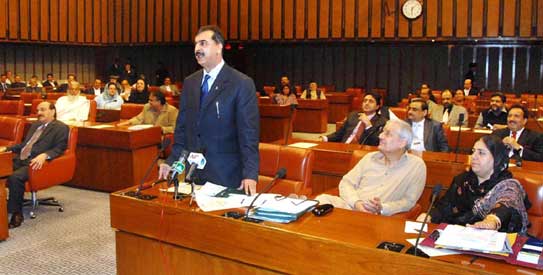
ISLAMABAD: The Senate on Friday approved the recommendations of the Standing Committee on Finance and Revenue pertaining to the Reformed General Sales Tax (RGST) Bill. The bill was approved by majority in the Senate. However, the Pakistan Muslim League - Quaid (PML-Q) staged a walkout against the endorsement.
Speaking to media representatives, opposition leader Wasim Sajjad rejected the bill, saying it would “bring a flood of inflation”.
Finance Minister Abdul Hafeez Shaikh said the Senate’s approval of the bill was historic. This would finally change the 20-year-old system of taxes in the country, Shaikh said.
However, Pakistan Muslim League - Nawaz (PML-N) senator Ishaq Dar said had the PML-Q not walked out of the session, the opposition could have blocked the recommendations from getting approved.
Earlier today, a rumpus was witnessed when the review report on the RGST Bill, prepared by Senate Standing Committee for Finance and Revenue, was tabled in the Senate.
Also on Friday, the JUI had moved two motions in the Senate rejecting the amended Finance Bill, 2010 and the RGST Bill, 2010.
The motions stated that the JUI rejected the bills and that they may not be passed by the National Assembly. Separately, Senator Wasim Sajjad had also moved a motion against the RGST Bill.
ISLAMABAD: Opposition members in the Senate on Friday said they would not allow the imposition of new taxes saying the measure would lead to increased corruption. Separately, the PPP-led government’s coalition partners maintained that they had taken a firm stand to oppose the Reformed General Sales Tax (RGST) Bill, 2010.
During the debate on the bill, the members said that instead of imposing new taxes, the government should adopt austerity measures and control its expenditure aside from reforming the existing tax systems.
The Senate will formulate its suggestions within a period of 14 days and will communicate them to the National Assembly, which would either accept or reject the bill.