0
0

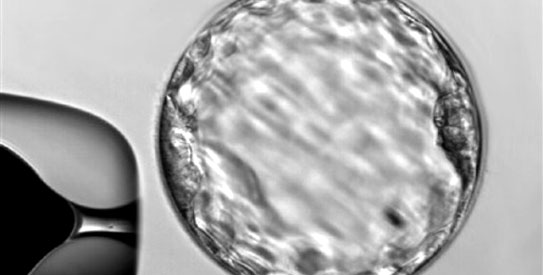
WASHINGTON: Stem cells can be transformed into the pancreatic cells needed to treat diabetes and into complex layers of intestinal tissue, scientists demonstrated in two experiments reported on Sunday.
In one, a team turned immature sperm cells into pancreatic tissue, while another team turned embryonic stem cells into complex layers of intestinal tissue.
Both studies show new ways to use stem cells, which are the body’s master cells and which can come from a variety of sources.
A team at Georgetown University in Washington worked with spermatogonial stem cells, master cells that give rise to sperm in men.
Ian Gallicano and colleagues used germ-derived pluripotent stem cells, which are made from the spermatogonial stem cells.
They nurtured these cells in the lab with compounds designed to make these cells start acting like pancreatic beta cells, which produce insulin.
When transplanted into diabetic mice, these cells produced insulin, acting like the pancreatic beta cells that the body mistakenly destroys in type-1 diabetes, Gallicano’s team told a meeting of the American Society for Cell Biology in Philadelphia.
Currently, children and young adults diagnosed with type-1 diabetes must take insulin for life.
A few may be treated with the so-called Edmonton Protocol, in which the missing pancreatic cells are transplanted from cadavers. But there is a shortage of these cells and the patients may suffer from graft-versus-host disease if the cells are not a good match.
Gallicano said men’s own cells could be used as a source of their transplants, and he said perhaps the approach may work in women too. “While these cells come from the human testis, the work here is not necessarily male-centric,” they wrote. “These fundamental aspects could easily be applied to the female counterpart, oocytes.”
Separately, James Wells and colleagues at Cincinnati Children’s Hospital Medical Center in Ohio turned two different kinds of stem cell into complex layers of intestinal tissue.
They used both human embryonic stem cells – taken from days-old embryos – and induced pluripotent stem cells – made from ordinary cells transformed by introducing certain genes.
Both types have the power to give rise to all the cell and tissue types in the body when cultured in the lab like the Georgetown team did.
Writing in the journal Nature, Wells’s team showed they could transform these cells into what they called organoids – batches of intestinal tissue made out of the layers of the various cells that make up intestine, including muscle cells and the cells that line the inside of the gut and that produce several vital compounds.
These organoids can be used to study intestinal diseases such as necrotizing enterocolitis, inflammatory bowel diseases and short-gut syndromes and perhaps could be used to treat them someday, Wells’s team said. – Reuters