0
0


NEW DELHI: For centuries, the stunning silk saris woven by hand in the holy city of Varanasi have been prized by Indian women, but an influx of cheap Chinese-made copies is destroying the local industry.
Badruddin Ansari, one of the few weavers still in business, says that most of his former colleagues now struggle to eke out a living as vegetable sellers, tea stall operators or rickshaw drivers.
“When a person loses his home and his livelihood, where can he go?” he asked angrily.
“I hope the art of making Banarasi saris will survive. The government must ban these imported saris or put a heavier duty on them to save the domestic industry.” Banarasi silk saris - named after Banaras, the former name of Varanasi - are famed for their embroidery and still sought after by northern Indian brides for their big day, even though the dresses are now normally made in China.
Rajni Kant, director of the Human Welfare Association, a non-profit group working with weavers in Varanasi since 1993, has seen the damaging effect of Chinese imports. “To give just one example, a 55-year-old man I know started weaving at the age of 15,” he said. “He quit the handloom three years ago and now works as a manual labourer. There are hundreds of thousands of people like him.” More than 60 per cent of the handloom industry has collapsed in Varanasi since 2003, according to Kant.
In 2007 reports emerged of weavers in Varanasi selling their blood to make ends meet as Chinese imitation saris flooded the market, costing about 2,500 rupees compared with at least 4,000 rupees for an original.
Official import figures for saris from China are low, but textile experts say much of the material is imported as fabric, not as tailored saris, and a lot makes its way into India as contraband via Nepal.
“It's doubtful whether these imitation saris even enter India as saris. They are probably imported as fabric, bales of silk which traders then cut and sell as saris,” said Ritu Sethi, head of the non-profit Crafts Revival Trust.
Weavers say that Chinese factories produce huge amounts of silk fabric at government-subsidised prices and send the finished cloth to India.
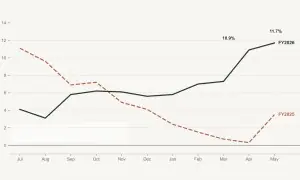
Registered Indian imports of silk fabrics from China increased by 23 per cent between 2008 and 2010, amounting to nearly 6.4 billion rupees despite India imposing an anti-dumping duty on silk fabric.
A. K. Shukla, deputy director for the Varanasi office of India's Development Commissioner for Handlooms, told AFP that the 14 per cent duty on silk fabric was too low. “We have to re-examine the issue,” he acknowledged.
The Indian government granted a patent to protect silk saris woven in Varanasi in 2009, but the certification has made little difference on the ground, weavers and lobby groups told AFP.
“We have a well-meaning government but the GI (geographical indication) act should get more teeth. Not one person has been hauled to jail yet for making or selling imitation Banarasi saris as the real thing,” Sethi said.
Many sari makers accept that customers know nothing of the made-in-Varanasi certificate scheme and often cannot tell the difference between an import and a genuine product.
Ansari, who runs a sari-weaving business with 400 weavers, said he could not predict how long he would be able to continue but that he was determined to keep going as long as possible. “We can't become dependent on China for everything,” he said.