0
0

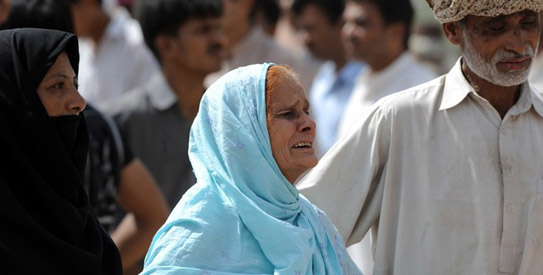
ISLAMABAD: Taliban violence and religious extremism grew in Pakistan in 2010, with the government doing little to improve the situation and often making things worse, Human Rights Watch (HRW) said on Monday.
In its World Report 2011, the New York-based rights organisation said militant violence was fostered by the passive acceptance of persecution of religious minorities and had active help from some elements of the intelligence agencies.
“Taliban atrocities aren't happening in a vacuum,” said Ali Dayan Hasan, senior South Asia Researcher for Human Rights Watch, “but instead with covert support from elements in the intelligence services and law enforcement agencies.”
Last year, hundreds of people died in militant attacks, 11 journalists were killed, target killings terrorised Karachi and minorities were singled out.
At least 80 Ahmedis, who consider themselves Muslim but who Pakistan declared non-Muslims in the 1970s, were killed in twin attacks, and bombings at Sufi shrines killed dozens.
Salman Taseer, the liberal governor of Pakistan's most populous province, was gunned down by one of his bodyguards for supporting changes to Pakistan's blasphemy law, and Senator Sherry Rehman, who also called for changes, is now a virtual prisoner in her own home because of death threats.
The government of the avowedly secular Pakistan People's Party, headed by President Asif Ali Zardari and Prime Minister Yousuf Raza Gilani, has done little to combat the growing religious extremism, distancing itself from Taseer and Rehman, and failing to curb calls for their deaths from mosques.
“The religious parties used (blasphemy) laws to blackmail the government,” Mehdi Hassan, chairman of the independent Human Rights Commission of Pakistan (HRCP), told Reuters.
“The religious right use these laws as a pressure tactic against the government and the government succumbs to these pressures.”
As Taliban violence expanded into the major cities from the northwest frontier regions, HRW said the Pakistan military violated basic human rights in its fight against militants, who HRW also accuses of “war crimes” for attacks on civilians.
Thousands of Taliban suspects have been illegally and secretly held in military detention, the report said, and some units of the Pakistan Army allegedly engaged in summary executions of prisoners. One such episode was caught on tape, and showed a firing squad lining men up for execution.
“An inquiry must be held and people should know what has happened,” said HRCP's Hassan. “We don't condone such violations even during the state of war.”
Spokesmen for the Pakistan Army and the main intelligence agency, the Directorate for Inter-Services Intelligence (ISI), were unavailable for comment.
HRW also criticised the United States for sending “mixed signals” by cutting off military aid to specific units suspected of committing atrocities — as required by US law — but also announcing $2 billion in military aid.
Journalists have been threatened, kidnapped, tortured and killed for their critical coverage of the military, intelligence agencies and the Taliban. Reporters without Borders recently said Pakistan was the deadliest country for journalists in 2010.
Religious minorities were also persecuted, HRW said, with the most celebrated case being Aasia Bibi, a Christian woman, who was convicted for blasphemy and sentenced to death. Efforts by Taseer and Rehman to soften the sentence or pardon her were blocked by the courts.
“It's sad that Pakistan's judicial system is using its newfound independence to undermine parliament and restore discrimination and abuse rather than to end it,” Hasan said.