



 92
92

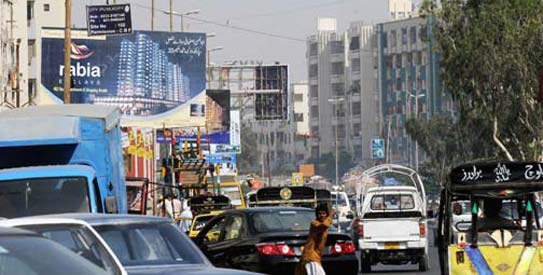
Mashal and I always say our prayers, but today we are making a special petition to God for a favourable performance on the final and an honourable grade for the semester. So far God has been kind to both of us, and we calculate our GPAs nightly, over boxes of Domino’s pizza and cigarettes. Anything higher than a 3.5 is good enough for me, but Mashal is not satisfied unless the numbers hit the 3.8 range. She writes down her GPA in a notebook; I am happy to keep it somewhere in my head, forgotten until the next night’s session where we eat even more pizza and smoke more cigarettes and talk about things that make us happy and sad at the same time.
“Look at this, I got this in my email today. Listen, listen, Sadaf.”
“Not another stupid forward, is it?”
“No, but it’s funny this time. Listen, na?” She pinches my thigh to get my attention. “You know you’re from Karachi when: One. You get shocked when someone stops at a yellow light.”
“Okay, ya. True. Go on.”
“Two: When someone asks you what there is to see in Karachi you never know what to say.”
“That’s not true. There’s Mohatta Palace.”
“And?”
“The beach.”
“And?”
“Uh... okay, shut up. What’s next?”
“Three: It’s December and you attend five shaadis and end up seeing the same people at all of them.”
“God, that’s so true. I hate weddings. Everyone asks me, ‘so, beta, when is the good news?’ I want to tell them, ‘Aunty, I’m only eighteen, for God’s sake! I just started college!’ Or slap them. One of the two.”
Mashal reaches for the box of cigarettes and taps out a new one, then holds it expertly between left thumb and forefinger, turns its head to the already lit stub in her right fingertips. “Eighteen’s not too young. You know what my khaala said to me when I was home last year? ‘You know, if you meet a nice boy, you should just get your nikah done. Otherwise if you just go on studying and working before you know it, you’ll be thirty and nobody will want to marry you because you’re too educated and too independent. And all the good boys will be gone!” She stubs out the old cigarette in the ashtray and inhales darkly and deeply from the new one.
“Hurry up, I’ve got to finish writing my paper, then study for that exam.”
“Four: You give an exam at Regent Plaza.”
“Oh God! The TOEFL. Do you remember? You and me and Shahid and Zulfy and four thousand melas all trying to get into community college in New Jersey. I can’t believe they made us take that bloody test. English fluency! I got an A in my English A-Levels!”
“Uh-huh, that’s number five. You categorise people as ‘burgers’ or ‘melas’.”
“I do not!”
“You just did. Burger.”
“If I’m a burger, so are you.”
“What is a burger anyway?”
“You know, someone from our side of Clifton Bridge. We like to eat hamburgers, not bun-kebabs. They call us burgers because they’re jealous of us. They don’t like that we speak English and not Urdu. Okay, now I’m getting tired of this list.”
I brush the pizza crumbs off my lap and stand up, patting my thighs apprehensively. I have put on fifteen pounds in my first semester at college. The Freshman Fifteen, they call it. I am not as careful about halaal food as Mashal, who still managed to stay as thin as she had been in high school. I resolve to go to the kosher dining hall on campus and restrict myself to fish and cheese on the other days of the week; maybe it will fulfill my religious requirements and help me lose a little weight at the same time.
“Wait, wait... you own a Corolla or a Civic... you never realised North Nazimabad is in the north. Wait, it is?... you’ve always wondered what ‘khayaban’ means... you blame everything on KESC... your school gets closed when it rains...”
“Bas, yaar. This list is stupid. And not true.”
“Oh really, Miss English A-Levels?”
“Ya, I got an A in my Urdu A-Level too. Khayaban means a big boulevard. Shandaar raasta. Now get back to work and stop wasting my time!”
Mashal laughs and throws a wadded up tissue at me. I hope it hasn’t got her chewing gum wrapped up inside. She chews nicotine gum during the day, when she is in class or the library, where you can't smoke, and then makes up for it by smoking half a pack at night. When you open her cupboards, sweaters and jeans jump out at you, hats and shawls rain down from a height onto your head and shoulders. She always asks me to do her obligatory session at the front desk of our dorm, minding the visitors and the telephone calls, because she’s got some other really, really important thing to do at the last minute that she forgot about and she’ll do both my shifts next week to make up for it. She never does, but I forgive her anyway.
Later, we walk together across campus to the small room in the basement of the chapel. We go down the stairs, smelling the cool, slightly musty air. Our footsteps beat in counterpoint to the muffled sound of radiators clanking and hissing the college chorus. Sss-sss-sss, sss-sss-sss. Ssstudy, ssstudy, ssstudy.
In front of the door, we look at the sign that’s been taped up:
MUSLIM PRAYER ROOM
Sacred space - please remove your shoes!
Last week there was a college professor who came in here, to meditate, she said, but she forgot to take off her shoes, so I suppose that’s why the sign is up there now. Mashal and I already know what to do here; it’s familiar territory to us, one small room of home in a whole country that’s sometimes terrifying and foreign. We take off our shoes and slot them into the shoe rack at the end of the room, then we take out our dupattas from our backpacks and arrange them on our heads. We turn towards the east and begin to pray nafils for our exams. Mashal used to say she felt bad asking God for help with something so trivial when there’s war and starvation in the world, but I told her that God wants us to become successful students so that we can change the world and make it more favourable for Muslims everywhere, so she no longer feels guilty.We planned to come together to America; we both applied Early Decision to the same women's college, were both accepted, and convinced each others’ parents that girls’ schools were much safer than coed universities, so they agreed to let us come here even though my father had his heart set on me going to London, and Mashal’s father wanted to send her to Lahore, to LUMS for a business degree instead.
“But, Abba, what is the point of taking fourteen O-Levels and five A-Levels,” Mashal said, “if all I am going to do is end up staying in Pakistan?”
And Mashal’s father said, “But you’ll be closer to home. It’s a dangerous time to be abroad. To be in America right now. Don’t you see that?”
“It will be all right, Uncle. We're girls. They don’t do anything to girls. And we don’t even wear hijab. We’re modern, we’re not terrorists, they’ll see that!” I said, wanting desperately to help build Mashal’s case. We were sitting next to each other on the sofa in Mashal’s father’s study; old Noor Jehan ghazals were playing on his stereo and at his hand on the leather-topped desk was a whiskey and soda.
Mashal and I held hands tightly, a sisterly clasp of solidarity. Mashal’s hand was cool and dry. Mine was slightly sweaty; I was afraid of the two dogs sitting at Mashal’s father’s feet: giant German Shepherds called Bogart and Gable, after Uncle’s two favourite actors. Uncle hand-fed them with scraps from his table and encouraged their every vice, not even minding when Bogart came bounding in to meet Uncle’s dinner guests and peed on the carpet in front of them. They were sitting down now, panting like two steam trains, their tongues enlarged to an almost unbelievable size and hanging out of their mouths. Uncle caressed their heads while he regarded the two of us with a look that for some reason reminded me of my nursery-school teacher. It said, You are silly children and we adults know what is best for you. But I will indulge you anyway, because I am so generous.
“Things will be calmer once we go, Abba. It’ll all settle down. Already they’re saying things are okay now over there. It’s as if nothing happened.”
Uncle picks up the whiskey from the desk and takes a cool, slow swig. He swallows and I watch his Adam's apple bob up and down in his throat. They say Uncle is one of the richest men in Pakistan; that he plays golf with Musharraf and hunts in England with the Sheikh of Qatar. “Have you forgotten what happened to Bilal, Mashal?”
Bilal is Mashal’s cousin, who went to university one week before September 11. He was in his first class when the planes went into the buildings, and by the end of the day, when he went out to get some dinner with his friends, a gang of men caught hold of them and gave them such a beating that Bilal had to stay three days in the hospital. He spent the next month cowering in his dorm room, because the university told them it was too dangerous for Muslim students or anyone who looked like an Arab to go out anywhere off campus. His parents had nearly died of fear when they got the phone call from the hospital, and everyone in school was so depressed to hear about the incident that some of us didn’t know whether to even try to get into college in America anymore.
“Yaar, I think I’m not going to apply,” said Shahid. The four of us - Shahid, Zulfy, Mashal and me - were sitting in the canteen having lunch at our usual table, plates of biryani and bottles of Coke and packets of chili chips scattered in front of us. It was always hard to hear each other in the canteen, the other kids made so much noise, hooting, hollering and snickering as if they were chimpanzees in the zoo. But we had important things to talk about; we leaned in close, heads and knees touching companionably, to hear each other over the din.
“No, you have to!” shrieked Mashal. “We’re all applying - you can’t just drop out now!”
“I don’t want to go there and end up in Guantanamo Bay just because the Immigration Officer doesn’t like my face!” It was true, Shahid was not very good looking; in fact he had a terrible case of acne and was always self-consciously touching his skin, which only made it worse. Mashal and I had told him to use herbal face masks and Multani clay to dry out his pimples, and advised him to stop eating chips and pizza, but he was always the type to give up the idea of anything before even trying to achieve it.
“Don’t be so dramatic, Shahid,” I said. “You’ll have your visa and your papers and everything. They’ll see you’re legitimate and there won’t be any problem. It’s just those guys who try to overstay their visas and forge their passports that have problems.”
“No, that’s not true,” said Zulfy. “Everyone who goes there now, every guy, I mean, between the ages of eighteen and forty-five, has to do Special Registration when they get there. I know, because my uncle goes to America all the time - he’s got a green card - but they still make him do it.”
“What is that?” I asked.
Zulfy drained the last of his Coke bottle with a loud hollow rattle, then rolled up the sleeves of his white shirt and planted his elbows on the table, resting his chin on his hands. His arms were long and skinny, like two coat hangers that had been pulled apart. He dropped his voice as if imparting a great secret upon us. “They pull you out of the immigration line, okay? And then they take you to a special room. You can’t have your phone on. They keep you there for five, six hours. Just after you’ve been on a flight for what, twenty hours? They ask you stupid questions. Who your grandfather is and when was the last time your father came to America. If your name is anything even close to Osama or Muhammed or Ali, they keep you there for God knows how long. And if they find anything wrong with you at all, anything... that’s it. You disappear.”
“Then what?”
“You know what! Guantanamo Bay!”
Mashal and I both shuddered at the invocation of that dreaded place. “Oh my God,” I whispered.
“I heard they torture them over there.” Shahid said, picking at a scab on his chin. Mashal slapped his hand away as if she was his mother. "Ow!" he exclaimed, and glared at her.
“Of course they torture them, stupid!” said Zulfy. “What do you think they’re going to do, sing lullabies and have a tea party?”
Mashal said, “I heard they make them eat pork.”
Shahid said, “That’s nothing. They have to watch while the guards rip up the Quran in front of them!”
“They probably make them eat the pages of the Quran,” said Zulfy
“But is that really haraam?” I asked.
“Of course it is!”
“So what does Muhammed Ali do when he has to travel?” said Shahid,
Zulfy looked confused “Who?”
“The boxer, Muhammed Ali. Does he have to go through Special Registration?”
“No, stupid. He’s American. And he’s sixty-five or seventy. It’s only young men, guys our age, who might be terrorists.”
“And he has some disease, Alzheimer’s or something. They wouldn’t do that to a sick man,” I added.
“No, they would. My uncle said even a guy in a wheelchair was being questioned in the next cubicle. I think they were asking him where it was made and if it had any heroin inside its wheels.”
“B*******!” said Shahid loudly. "Damn America!"
A couple of kids from the other tables swiveled their heads to look at us. We didn’t care, though. This was the cool table, and we were the cool kids: the best students in school and the ones who had traveled abroad the most and whose parents belonged to the Sindh Club and knew the President. We all knew we were going to study in America because our parents could afford to send us and they’d gone to America themselves, and we could either stay on there after our degrees and work for a big bank in New York, or come back and work with our fathers’ companies. We would eventually marry from amongst our privileged circle. The course of our lives would be safely circumscribed by our family names, and by being the elite of the elite, life in Pakistan would be lived in the same way it would had we been living in London, Dubai, or New York.
In the end Mashal's father relented; we would apply for college, and if everything stayed all right in America, he'd let her go - but only if I went to the same place as she did. My father also agreed, thinking that if we were in the same place, we’d at least be able to keep an eye on each other; so we registered for our TOEFL exams and filled in a dozen application forms, wrote essays and got recommendations filled out by our teachers, the idea of studying in America, even with all the Special Registration and what happened to Mashal’s cousin Bilal, too appealing to give up. We all wanted to run away to America, to a place where our parents would be 6,000 kilometers away from us, where there would be clubs and parties and no curfews, and malls and Starbucks and the kind of freedom that you just couldn't find in Karachi.
Sure, we party in Karachi, but they are stupid affairs, where boys sneak in the booze and girls get escorted home by drivers and bodyguards at the end of the night. And the boys, if they get too drunk, make their guards fight each other and the girls have to change into their proper clothes before going home so that our parents don’t know what we are up to. Girls and boys make out, and there are drugs too, charas and worse, but Mashal and I are not into that kind of thing at all, and Zulfy thinks drugs are for losers and Shahid’s too scared to upset his mummy and daddy, so we all lead really boring lives at home, watching TV and going out for dinners and movies at the one Cineplex that our parents will allow us to go to.
As Mashal and I begin to say our prayers in the small, musty Muslim Prayer Room on our college campus, I remember how I thought going to America would be all about partying and coming home at four in the morning, using a key to open the door to my own apartment, not telling anyone where I would go, what I did, or who I would talk to. I thought it would be about wearing what I liked and not having to worry that someone would see, someone else would talk, or that my parents would ground me for the rest of my life.
But when I walk home at four o’clock on a winter’s afternoon, the night covering the day in a blanket of darkness, my boots crunching against the snow, the thoughts of my Ammi and Abba back home in Karachi filling my mind until the tears freeze under my eyelids before they can even slide down my cheeks. I have to stop in the snow, my arms stiff around the bags of groceries I’m bringing home from the store, and I think of Karachi’s gentle afternoon breezes, palm trees swaying in the wind, neem trees scenting the air, the calls of the Bangladeshi parrots and mynas sweet in my ears.
That’s when I realise that no matter how far away I go from Karachi, I can never leave it behind.
As Mashal and I bow and kneel, kneel and bow, and then lower ourselves to the ground for the final salaam, I can’t help but hold up my hands in wonder, and say to God, in a lowered voice, Look, I’m here, in America, and no stupid terrorists or George Bush have been able to stop me. All praise is due to you, Allah, the Sustainer of all the worlds, please bless both the one I’m in and take me back safely to the one that I came from. Ameen.




























