0
0

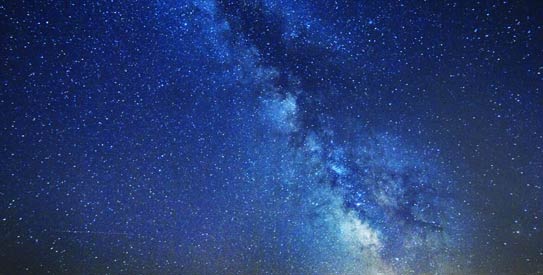
WASHINGTON: Scientists have estimated the first cosmic census of planets in our galaxy and the numbers are astronomical: at least 50 billion planets in the Milky Way.
At least 500 million of those planets are in the not-too-hot, not-too-cold zone where life could exist. The numbers were extrapolated from the early results of NASA's planet-hunting Kepler telescope.
Kepler science chief William Borucki says scientists took the number of planets they found in the first year of searching a small part of the night sky and then made an estimate on how likely stars are to have planets. Kepler spots planets as they pass between Earth and the star it orbits.
So far Kepler has found 1,235 candidate planets, with 54 in the zone where life could possibly exist. Kepler's main mission is not to examine individual worlds, but give astronomers a sense of how many planets, especially potentially habitable ones, there are likely to be in our galaxy. They would use the one-four-hundredth of the night sky that Kepler is looking at and extrapolate from there.
Borucki and colleagues figured one of two stars has planets and one of 200 stars has planets in the habitable zone, announcing these ratios Saturday at the American Association for the Advancement of Science annual conference in Washington. And that's a minimum because these stars can have more than one planet and Kepler has yet to get a long enough glimpse to see stars that are further out from the star, like Earth, Borucki said.
For example, if Kepler were 1,000 light years from Earth and looking at our sun and noticed Venus passing by, there's only a one-in-eight chance that Earth would also be seen, astronomers said.
To get the estimate for the total number of planets, scientists then took the frequency observed already and applied it to the number of stars in the Milky Way.
For many years scientists figured there were 100 billion stars in the Milky Way, but last year a Yale scientist figured the number was closer to 300 billion stars.
Either way it shows that Carl Sagan was right when he talked of billions and billions of worlds, said retired NASA astronomer Steve Maran, who praised the research but wasn't part of it.
And that's just our galaxy. Scientists figure there are 100 billion galaxies.
Borucki said the new calculations lead to worlds of questions about life elsewhere in the cosmos. ''The next question is why haven't they visited us?'' And the answer? ''I don't know,'' Borucki said.