0
0

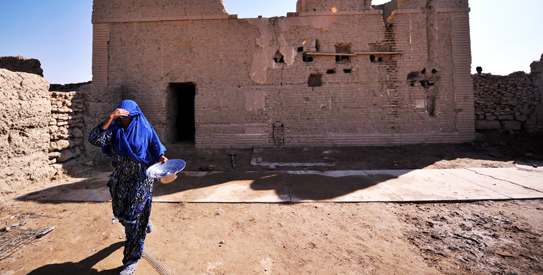
KABUL: At a secret women’s shelter in Kabul, a mother with sad brown eyes who fled with five children all born after relatives raped her explains her fears over Afghan government plans to take over the refuges.
The 28-year-old left her home in Laghman province, east Afghanistan, three months ago and now lives at the shelter, which keeps its windows whitewashed and curtains drawn so neighbours do not guess what it is.
“My husband wasn’t a good person and all the time he was out and we didn’t have any food. When I told my husband’s father and his brother to bring food, they abused me,” she told AFP while breastfeeding her youngest, aged six weeks.
She plucked up the courage to flee her home but now her father-in-law has followed her to Kabul to try and force her to come back, she says.
“He came to the Ministry of Women’s Affairs and said ‘I want the children.’ I’m very worried about this,” she explains, speaking on condition of anonymity because of safety fears.
Her story highlights concerns among activists that plans, announced last week, for the women’s ministry to take control all 14 of Afghanistan’s women’s shelters will make it easier for abusers to track down their victims.
The move has drawn criticism from the United States as well as rights groups including Amnesty International and Human Rights Watch (HRW).
Activists say government-run shelters are more likely to yield to pressure from families to hand back abused women than if they are run by independent NGOs, as is currently the case.
HRW has accused President Hamid Karzai’s government of making the announcement under pressure from powerful conservative, religious elements in Afghan society.
“The government is increasingly dominated by hard-line conservatives who are hostile to the very idea of shelters since they allow women some autonomy from abusive husbands and family members,” HRW’s Afghanistan researcher Rachel Reid says.
Shafika Noori of NGO Humanitarian Assistance for the Women and Children of Afghanistan (HAWCA) says the new rules would force women to appear before an official committee and face intimate forensic examinations before being admitted to shelters.
“When the women are with us, we can make them safe but when it belongs to the ministry, we think they will give back the women to those people (abusive families) and there will be a deal between the influential people and the ministry,” she adds.
She and the 28-year-old rape victim are speaking at a HAWCA-run shelter which was forced to move a few days ago after a controversial national TV show threatened to broadcast the location of all safe houses.
The same show previously suggested that women’s shelters acted as a front for prostitution.
In fact, most residents end up at shelters because they face domestic violence or being forced to get married while still children, Noori says.
Another resident, who did not know her age but said it was “less than 20”, told of how she fled from war-torn Helmand province in southern Afghanistan because her brothers disapproved of her lover.
“I wanted to marry him but when I told my brothers, they didn’t accept it and they beat me,” she said, scars still visible on her arms.
The man bought her a mobile phone so they could stay in touch but her brothers heard about this, she added.
“When my older brother found out, he said: ‘Now I don’t want to beat her, I want to hang her tonight.’” As the rest of the family ate dinner, she escaped to a nearby international military base.
“I put on my brother’s clothes and turban and left the house,” she said.
Karzai insists the government does not plan to take control of all shelters, saying that only “one or two” were causing problems with corruption and “wastage.”
But the US says it is “concerned” by the issue, while Amnesty calls the proposals a “terrible piece of legislation.”
Women’s activists in Afghanistan say the issue highlights how their work overall has become harder in recent years, despite efforts by the international community to encourage gender equality.
“There are some political issues behind this. It’s not just safe houses, I think it’s to close down the voice of women in Afghanistan,” Noori says.
Another campaigner, speaking in a low voice on condition of anonymity during a meeting at a cafe, adds: “Every year it becomes more dangerous for us.
The government is with dark-minded people, you can’t be open any more.”