0
0

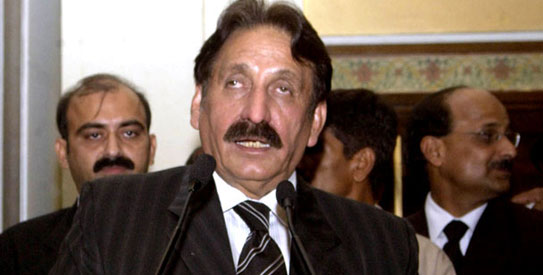
KARACHI: Chief Justice Iftikhar Mohammad Chaudhry said on Saturday that whenever the judiciary supported an unconstitutional action such a decision created disorder and the consequences of constitutional deviations were there for everybody to see.
Addressing a gathering after administering oath to the newly-elected body of the Karachi Bar Association on the premises of the Sindh High Court, he said: “Any system other than that of law and Constitution would prove fatal and people will have to suffer its consequences for years to come.”
Recalling the Supreme Court’s judgment of July 31, 2009, the chief justice said the verdict restrained judges from following any unconstitutional measure and it was made part of the Code of Conduct, prescribed for judges of superior courts.
He said there was a drastic change in the country since the success of the lawyers’ movement as every organ of the state started functioning and realising its goals. “It is a bitter reality that previously the institutions have not been allowed to flourish according to the law and Constitution. Instead, they were governed by the personalities and not by law which became the main reason for their weakness,” he said.
Justice Iftikhar was of the view that nobody should be given preferential treatment by courts.
“Sometimes the executive does not feel happy that the judiciary should work independently and justly, but fair and impartial dispensation of justice is imperative for the country to march ahead in the path of economic growth, through establishing peace in society and ensuring the security of investment, commerce and trade.”
He said that delayed disposal of cases was not an issue in Pakistan alone. “Until the number of judges is increased, the objective of access to justice at the doorstep and quick dispensation of justice cannot be achieved,” he added.
He pointed out that lack of cooperation by state institutions had also contributed to delay in the disposal of cases. Most of the cases, he said, were related to immovable properties and if revenue and police departments performed their functions according to law, many could have been solved with approaching the courts. “But here also officials of revenue department and police create unnecessary problems,” he deplored.
As for corruption on the part of district judicial officers, the chief justice observed that recent measures taken by the judiciary had led to self-accountability, “but still there are two or three per cent judicial officers who are a stigma on this noble profession”.
He said a cell for eradication of corruption from judiciary had been established for disciplinary action against corrupt and incompetent judicial officers and court staff.
He said three district and sessions judges were compulsorily retired and one civil judge was demoted in Punjab. “Similarly, three district and sessions judges were retired compulsorily and one additional and sessions judge tendered resignation. In Sindh, four judges were compulsorily retired and 11 were suspended,” he added.