0
0

LONDON: NMS International has taken to hiding its website behind a password and director Louis Oliver gives a false name when he answers his phone.
The company -- based in the small town of Market Harborough in central England and employing less than a dozen full-time staff -- provided equipment and training to the police forces of Libyan leader Muammar Qadhafi. But after Amnesty International posted video of one of the firm's armoured police buses pushing through protesters in Tripoli in the early days of the uprising, NMS became a target for rebuke from British newspapers and activists alike.
It's not the only one. A host of companies piled into the North African country during its rapprochement with the West over the past few years. Now the unrest that has swept Tunisia and Egypt's presidents from power and pushed Libya to the brink of civil war has many western firms, universities, politicians and others scrambling to protect dented reputations.
The Arab uprisings have already claimed foreign scalps. French Foreign Minister Michele Alliot-Marie resigned last week over her ties to the ousted Tunisian regime, and in particular a holiday she took in the country shortly before the uprising. A few days later, the head of the London School of Economics Howard Davies resigned over a 1.5 million pound ($2.4 million) donation from the family-run Qadhafi Foundation.
Some of those caught out seem genuinely surprised. As well as the armoured buses, NMS provided Libya with riot shields and equipment including baton guns which fire tear gas, smoke and rubber bullets. The company also used former British police and military instructors to train local police. But Oliver says his company did nothing more than try to help bring Libya in from international isolation and teach its authorities to handle dissent without killing people.
“Everything we did was legal and with the knowledge of the British government,” Oliver told Reuters by telephone from the company office. “We never sold anything lethal to Libya or anyone else. It looked like the regime was improving, and it was right to encourage that.” 'I HOPE WE HAVEN'T SOLD THEM SOMETHING'
That was then. As the old order unravels across the Middle East, even the most innocuous deal or political friendship can suddenly look like appalling judgment. Rights groups, political dissidents and ordinary citizens in the Middle East and elsewhere have long complained of abuses and repression by security forces, corruption and a lack of democracy. As people have taken to the streets, western allies, backers and suppliers have come into the spotlight.
“Companies and governments haven't been paying nearly enough attention to what has been going on in the countries in which they were working,” said Amnesty International's senior director for international law and policy Widney Brown. “We've always known they knew that things were happening -- and WikiLeaks proves it -- but it's often been deliberately ignored.” One official at a western defence firm, who like many interviewed for this story asked not to be named to protect their commercial or career interests, says the public reckoning has people in the industry on edge. “Every time one of these countries goes, everyone starts worrying: 'I hope we haven't sold them something,'” he said.
Reputational damage is notoriously hard to cost. But companies have lost customers and had to change strategy before: Barclays in its dealings with apartheid South Africa, cosmetics companies over animal testing. Gem giant De Beers has spent years working to rehabilitate its reputation after being accused of trading in “conflict diamonds”.
Some firms can bounce back -- usually at a cost. Private military contractor Blackwater still has lucrative US government and other contracts after several high-profile scandals in Iraq and elsewhere, particularly around alleged excessive use of force. But to make a break with the past it chose to rebrand itself Xe.
The fallout from recent weeks goes beyond defence firms. Telecoms, banks, construction companies, public relations consultancies, universities and politicians have all received an unwelcome reminder that dealing with authoritarian regimes is a riskier game than they had believed.
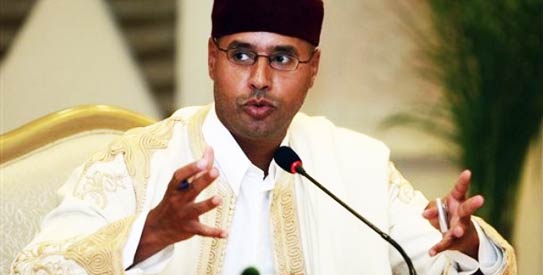
“The governments caught up in the recent fuss were not deemed 'dodgy' to most people until very recently,” said the chief of one London-based public affairs company. “They were merely places where democracy was accepted as being practised “differently” and where it was expedient for the old ways to be accepted.” The London School of Economics initially defended its decision to accept the Qadhafi Foundation donation. Qadhafi’s son Saif al-Islam attended the school for his Ph.D. and spoke at an event organised by the university. But as the outcry grew, the university asked a senior judge to investigate its ties to Libya.