0
0

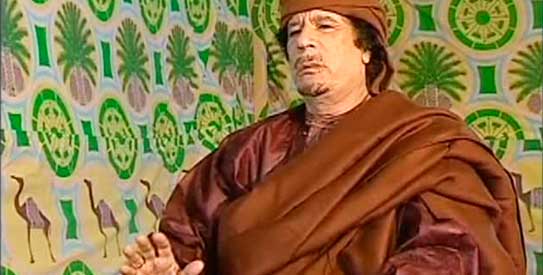
BEIRUT: Arab states that urged the imposition of a UN-backed no-fly zone on Libya showed little enthusiasm on Friday for joining any military action there -- even before Libya surprised the world by declaring a ceasefire.
The wary Arab response to a UN Security Council resolution authorising “all necessary measures” to protect civilians from Libyan leader Muammar Gaddafi's forces reflected Arab queasiness about Western military intervention in another Muslim country.
But to some, any Arab failure to put military muscle behind verbal opposition to Gaddafi would smack of hypocrisy.
“People talk of Arab honour, solidarity and dignity. Nobody has trampled on those things in the last 40 years more than Muammar Gaddafi,” said Beirut-based commentator Rami Khouri.
“If there's a resolution -- Arab consensus and international support and the Libyan people are clearly for it -- then the Arabs should stop being so hypocritical and engage in providing military, economic, political, diplomatic and humanitarian support ... and end this nightmare of the Gaddafi regime.”
He was speaking before Libyan Foreign Minister Moussa Koussa said his country had declared a ceasefire to protect civilians and comply with the United Nations resolution adopted overnight.
Arab League chief Amr Moussa said the UN resolution aimed to protect civilians, not to authorise any invasion of Libya.
The participation of any Arab country in any action would be discussed bilaterally because the League's own resolution backing a no-fly zone had not specified other steps by states.
“We don't want any side to go too far, including Libya, by attacking the civilian population. Our main task is to protect the Libyan civilian population,” Moussa told Reuters in Cairo.
The Cairo-based League suspended Libya over its handling of the revolt and called for a no-fly zone on March 12, a step that was crucial in securing US and European backing for the move.
Only Qatar had vowed to join “international efforts aimed at stopping the bloodshed and protecting civilians in Libya”, but the Gulf state did not say if this would include military help.
EGYPT ARMING REBELS?
The Wall Street Journal reported that Egypt's military had begun sending weapons across the border to Libyan rebels with Washington's knowledge. There was no official confirmation.
In Lebanon, which co-sponsored the UN resolution with the United States, Britain and France, former Foreign Minister Fawzi Salloukh welcomed the measure as a means to stabilise Libya.
“From what I can see, some Arab countries will take part in the implementation of the resolution, but I can't say which ones until they themselves declare it,” he said.
Saudi Arabia, at the forefront of last week's call by the Gulf Cooperation Council for a no-fly zone in Libya, appeared unlikely to contribute to any military effort there.
“I don't think Saudi Arabia will get involved in this,” said Saudi political analyst Khalid al-Dakhil.
“Firstly, it is too far from Libya and secondly, the Saudis have their hands full with events in the Gulf, with Oman and Bahrain. Libya's neighbours would be in a better position to do that -- Morocco, Egypt or Algeria,” he added.
Saudi Arabia despatched 1,000 soldiers to neighbouring Sunni-ruled Bahrain on Monday to help the authorities suppress pro-democracy protesters, mostly from the island's Shi'ite majority.
“It would be slightly strange if the Saudis got involved in Libya because they are sending their troops to Bahrain to put down a revolt,” Khouri said.
In Bahrain, a Shi'ite woman entering a mosque for Friday prayers said the U.N. resolution was correct, if late. “It gives us optimism that if conditions get worse in Bahrain, we would also get U.N. help,” she said, declining to be named.
PUBLIC OPINION DIVIDED
Opinion on the streets of Cairo was divided between sympathy for Libyan rebels and suspicion of Western motives.
A 27-year-old accountant who gave her name only as Mina said the Libyans, not outsiders had to liberate their country.
“This could turn into a form of colonisation that would lead into chaos, and we already saw that happen in Iraq.”
But Salah Mohamed, 64, said: “This military action should not be viewed as a war because they are moving to stop Gaddafi who wants to wipe out his own people, which is madness.”
Safinaz Mahmoud, 58, a housewife, said she backed military action under the U.N. umbrella to defeat the “tyrant” Gaddafi, but said Egypt's army was too busy with domestic issues to help.
“Egypt has its own problems now and is trying to overcome the counter-revolution,” she said, referring to perceived threats to the movement that overthrew President Hosni Mubarak.
In Beirut, distrust of the United Nations also vied with a desire to save Libyan rebels from Gaddafi's advancing forces.