9
9

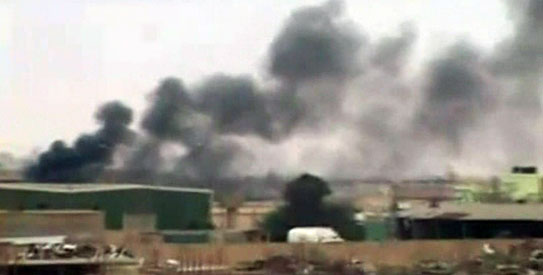
March 17 officially marked one month to the Libyan struggle, although the rebellion itself began two days earlier on February 15. According to opposition figures, about 10,000 Libyans have been killed one week. If you have come across pictures and videos from Libya, you’d look for a superlative of gruesome as an identifier of this struggle. The people of Libya are abused, shelled, gunned-to-kill and kidnapped-to-disappear for a whole month, fighting against Maummar Qadhafi’s 42-year-old undemocratic regime. As Qadhafi’s brutality grew with tanks, bombings, high-caliber guns and helicopter shootings, it took the UN Security Council about 32 days to finally authorise all necessary measures to impose a no-fly zone over Libya and to make an effort to protect the civilians under attack.
What happened during this tardy period with Libyan rebels, fighters and civilians is beyond ignominy. Families of victims in Libya tell the real stories that only confirm evidence of why this fight was necessary after all.
As I write, the power station of Ajdabia has been reportedly bombed (as of March 18, 11:00 pm EST). This fire, raging from the power station next to fuel tanks is perhaps, and evidently so, another act of aggression from the government against the people.
Haasin a university professor who left Libya amid the rift, took one of the last flights that left the country to escape the situation. “You find protestors on the streets like ants; there are so many. Everyone is out there and the people’s force is great, but they are also dying. There is too much blood. As the machine guns open-fire, you watch five blood splashes in one minute. It’s terrifying.”
The main cities under attack are Azzawiya, Musrata, Ras Lanuf and Ben Jawwad. People protest saying “Qadhafi get out, but he lashes back” adds Haasin. There is a blood bath on the streets of Libya. The Red Crescent has warned of an exodus into Tunisia.
“They are crazy. Do you know how it is to watch someone screaming in protest along with you and then just killed infront of you?” asks Haasin
The Libyan people no longer believe themselves to be slaves to Qadhafi. They have broken those shackles of mind for good. But it is a tough war.
“From 3:00 am to 6:00 am in the morning, the shooting did not stop,” said Haasin, the night before he got on the plane.
Alaa Kubbar, currently living in Doha and lost her uncle in Tripoli in a massacre, “That night, I slept a martyrs’ niece”. Later next week, another uncle got kidnapped. “They came in the night, and took him away. Nobody knows where. No body knows if he is alive.”
“A week earlier I woke up in the morning, switched on the TV and everybody was celebrating victory? Qadhafi is quite a good liar”. The false propaganda forcibly portrayed via media that the government has won, was believed to be true by many but anonymous sources inside of Libya say, “What they show on TV isn’t true," says Alaa.
Qadhafi is desperate to control things and has been protecting any truth of his brutality from catching fire in the media. Hamza (below) says, “journalists were literally forced to speak at gun-point about his victory.”
Alaa’s mother is from Zawiya while her father is from Tripoli. Being in touch with family is not easy with all communication channels broken. It hence adds to the urgency to ensure everyone at home is safe.
Any minute could be a bad news. Any call can be a good-bye note.
The situation is completely different in both the major cities. While Zawiya is under severe attack, in Tripoli there is maximum security. People can hardly step out of their homes. “My aunt who is a doctor, takes 20 minutes to get to the hospital and on her way has to stop by at two check points for security checks” says Alaa.
Doctors have been reporting that most patients coming to the hospital are so scrupulously injured, that they either die on their way or are wounded in the head, chest, eye and other sensitive places. They are shot to kill. “It’s horrible!” Alaa added.
Qadhafi is doing everything to recruit more soldiers, from kidnapping young teenagers to forcing men to fight in order to save their own families. Alaa tells, “They take young teenagers and chain them inside tanks, making them fight.” They can’t leave the tanks because they are chained to the tanks. Most military soldiers are very young; many are 16-year-olds. “My friend’s cousin was taken away and forced to fight. He said no. They shot him on the spot,” Alaa says, terrified of the further consequences.
According to one anonymous source, in Zawiya the “military takes the wives and children away and makes them stand in a line, threatening them to shoot unless the men join the army against rebels. If not, they open fire on the wives and kids”
Everyday approximately 300 people are dying in a country with a population of 6.4 million. This has obviously discouraged businesses and markets to continue as per routine. Most people have stockpiled their food but it won’t last much longer. Many people are sharing food supplies within neighborhoods as well. Although general stores do open, most shop owners are terrified especially after the massacres getting severe in East Libya.
Alaa says, “I would like to urge the world leaders to make hasty decisions because Libyan lives are on the line. The longer this revolution lasts, the more lives are lost.”
Hamza is a medical student in the US and has family in Tripoli. He is “extremely worried about them” as they don’t want to reveal much on the phone (due to tapping). The only way Hamza is finding out anything about the situation is through his friends whom he speaks to via Skype.
Hamza’s friend tell him, “Gunfire is becoming a sound that wakes you up in the morning.” It is really surreal. Incidents are so intense, like they were in WW1.
According to his friend, “They come in the night and destroy things in the house. Although they don’t abuse women, but many times they take the men away.”
Financially trying to paralyse people, the government is not only making sure that banks do not let people take out much cash but reportedly there are also incidents of theft from personal accounts of people. In Tripoli they aren’t allowed to take more than a certain amount of money, (about 200 dinar) out of the bank. Hamza says, “My friend went to the bank and tried withdrawing cash only to find out that there was none. The bank account was empty.” Could the government be mishandling or literally stealing people’s property?
Two days ago (on March 15) a hospital was bombed. “Qadhafi seems to have lost his mind, if he thinks it is okay to target hospitals. But he is clever. He knows how to control people. He can sell somebody and buy somebody. If his followers are greedy, he will give them money, if they want power, he will give them that and if they are scared he will manipulate them and weaken them,” Hamza added, frustrated at the thought.
In spite of all this, people are in high spirit. There is a lot of volunteer work. In most active cities like Benghazi and Zawiya etc, “people are cooking for each other, helping each other and living very simply.”
March 15 was a big day in Benghazi. The National Transitional Council (the freedom fighters) took down Qadhafi’s supporters. They attacked around four battleships and many military trenches making the soldiers retreat 40 kilometres away. Qadhafi lost two warships, while the freedom fighters captured seven tanks, 300 soldiers and a heavy amount of artillery. Many soldiers joined hands with civilians to fighter against the forces. Two fighter jets that were ordered to create menace, gave up and joined the NTC.
On the 17th, demonstrations erupted in Souq Al Jummah in Tripoli and those demonstrators were shot at. But this won’t stop the people. Qadhafi is running out of money, soldiers and their morale. People are hopeful, as Hamza adds with a spark, “I have no doubt that the people will win”
Maumar Qadhafi has used tanks, helicopters and war planes to pound the protesters. The security forces of the country are killing civilians, bombing neighborhoods and hospitals to patronize people who have yet not been scared away. As hopes continue to diminish from any promises of peace, the international community needs to change gears and take a step forward. No one deserves to fight alone.