0
0

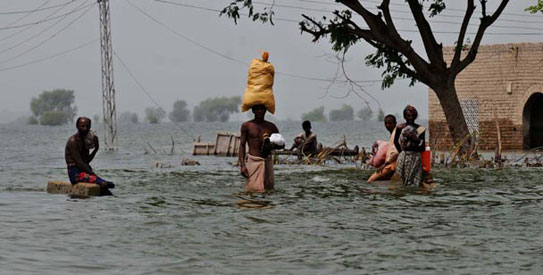
ISLAMABAD: Speakers at a seminar here on Monday warned that highly populated South Asian Association for Regional Cooperation (SAARC) region is vulnerable to the extreme hydro meteorological disasters like flash floods, monsoon flooding, tropical cyclones and storm surges.
They were addressing the SAARC workshop on “Science and Technology issues on Climate Change” arranged jointly by Ministry of Science (MoST) and Technology and Pakistan meteorological Department (PMD) at the headquarters of COMSTECH – The Standing Committee on Scientific and Technological Cooperation of Islamic countries.
While addressing, the Federal Minister for Science and Technology Mir Changez Khan Jamali said 2010-floods in Pakistan is the recent most example in which Pakistan received exceptionally heavy monsoon rains and about 2000 lives were lost besides damages to property and infrastructure.
Vulnerability to various natural hydro-meteorological disasters have increased and re-shaped the boundaries for the areas affected, he mentioned.
He further said that important climate change threats to South Asia includes considerable increase in frequency and intensity of extreme weather events, and also projected recession of Hindu Kush, Karakoram Himalayan glaciers, threatening weather inflows into Indus River System.
While addressing, Director SAARC’s Ministry of Foreign Affairs, Hassan Wazir said climate change is invariably harming this region by social, environmental and economic impacts.
All these treats, he said, may lead to major national security concerns for countries in SAARC region in terms of its water security, food security and energy security.
He was of the view that globally the climate change at present is a priority agenda. The only option available for dealing with adverse impacts of climate change is adaptation and S & T inventions wherever it is possible.
Earlier giving welcoming address, Director General PMD Arif Mehmood said S & T and climate change effects are vast fields which address number of issues and require comprehensive discussions and deliberations.
“We all are agreed that climate change may be one of the greatest threats facing our planet”, he said, adding recent years show increasing temperatures in various regions and frequency of extreme weather events.
While giving keynote address, Advisor on Met and Climate affairs Dr Qamar-uz-Zaman said the workshop will explore climate change impacts on fast growing S & T fields and will recommend steps to redress or minimize these effects so that S & T could better serve the humanity.
He said vulnerability to various natural hydro-meteorological disasters have increased and re-shaped the boundaries for the areas to be affected.
Qamar-uz-Zaman said the workshop will serve as forum to address progress and future plans for climate research to prepare scientific synthesis and assessments on key climate change issues.
He was of the view that the deliberations during this workshop will be helpful in evaluating the current state of observations, modeling or other research and its appropriateness for use in decision making at different scales.