



 0
0

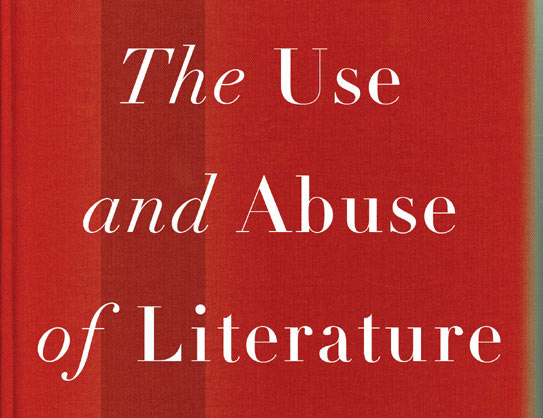
''The Use and Abuse of Literature'' (Pantheon Books), by Marjorie Garber: In an age that prizes short bursts of electronic information, Harvard English professor Marjorie Garber asks whether literature still matters. As might be expected of someone who has spent her career teaching Shakespeare to undergraduates, she answers with a resounding ''yes.''
Garber sets the stage for her examination of literature by citing a report from the National Endowment for the Arts, which found that less than half the adults responding to the 2002 U.S. Census had read any novels, short stories, poetry or plays in their free time.
To her credit, she doesn't take this as a sign of the collapse of Western civilization; on the contrary, she acknowledges that someone who might not know the line ''Do I dare to eat a peach?'' - from T.S. Eliot's great poem, ''The Love Song of J. Alfred Prufrock'' - may very well be fluent in the visual language of videos, film, television, advertising and rock music.
What scares her more than ignorance of Eliot is unmistakable evidence that the study of literature is no longer considered essential for a well-educated individual; it appears to have been pushed aside by science and technology.
Rather than studying the humanities to understand humanity, today's college students, and even their professors, are more likely to look to the insights of neuroscience to grasp the complexities of the human mind.
For Garber, of course, literature does matter. ''Language does change our world,'' she writes. ''It does make possible what we think and how we think it.'' Echoing an argument made by the eminent literary critic Harold Bloom, Garber claims for literature a sort of stem cell-like power to generate fresh and new imaginative experiences in those who read it.
If you don't believe her, here's Virginia Woolf on why reading poetry can be a transformative experience: ''Our being for a moment is centred and constricted, as in any violent shock of personal emotion.'' And here is Eliot himself, to explain why poetry matters: ''When a poet's mind is perfectly equipped for its work, it is constantly amalgamating disparate experience ...''
For anyone who's taken a survey course in English literature, or, God forbid, majored in English, this book will send you back to the canon. Whether Garber and her English Department confederates can persuade a generation addicted to YouTube and Twitter to download Woolf, Eliot and Shakespeare to their Kindles remains to be seen.

























