



 0
0

A leading contemporary art fair, Art Dubai has become the essential gathering place for collectors, artists and art professionals from across the Middle East, North Africa, South Asia and beyond.
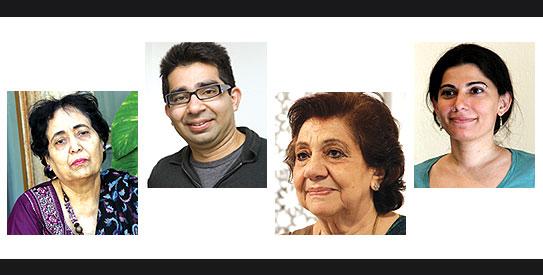
The fair’s fifth edition brought together more than 82 galleries from 34 countries across the world and hosted a collateral programme of events including Global Art Forum_5, Art Park, the Abraaj Capital Art Prize, exhibitions, film screenings, talks, installations and performative tours. Five art professionals (dealing with Pakistani art) attending the fair were posed this question:
Is the Art Dubai platform advantageous for Pakistani art and artists—if so how can the art community here best avail this opportunity especially with regard to art production and marketing strategies among other aspects?
They gave the following answers.
Hammad Nasar, Green Cardamom, London.
It was a banner year for art from Pakistan in the UAE. Hamra Abbas was one of the five winners of the Abraaj Capital Art Prize (the first Pakistani). Imran Qureshi won a Jury Prize at the Sharjah Biennial. And Noor Ali Chagani and Aisha Khalid were announced as two of the finalists for the V&A’s Jameel Prize. Earlier, Bani Abidi was one of the three artists worldwide selected for the Sharjah Art Foundation Production Grant.
This confluence of prizes coming out of the UAE suggests that art from Pakistan is finally beginning to get the sort of attention it deserves, and is being welcomed and lauded by the wider MENASA (Middle East North Africa South Asia) region. This was borne out in the Art Dubai art fair, where there were seven galleries presenting art from Pakistan. But it is interesting to note that of the seven, only two were based in Pakistan (there were two Mumbai galleries and three London-based ones). Why such paucity of participation from Pakistan?
While the business of art that an art fair is ostensibly about is easily dismissed as being commercial and somehow impure, let’s not forget that in an impoverished art infrastructure like Pakistan, the contribution of the commercial sector and its associated not-for-profit sector is immense. Speaking for ourselves, through participation in the art fair, we were able to introduce senior curators (and several directors) from some of the most influential institutions all over the world including MOMA, the Tate, the British Museum, LACMA and the Guggenheim to not just some of the brightest sparks of the contemporary art scene from Pakistan (Hamra Abbas, Bani Abidi, Ali Kazim, Ayaz Jokhio, Ahmed Ali Manganhar among others), but also stalwarts whose contribution to art history is only now being acknowledged (Anwar Jalal Shemza and Zahoorul Akhlaq).
The story (stories) of art from Pakistan needs many authors, and the Gulf region—through its museums, art fairs and biennials—is one of the closest and viable platforms for its telling. What remains to be seen is how artists and art organisations will be able to leverage it to further the cause and resources for art production and promotion in Pakistan
Sumbal Khan, Curator, Poppy Seed, Karachi.
She was selected as a Global Art Forum Fellow to represent Karachi and share her professional experience at Poppy Seed, along with five other curators and artists from other cities in the MENASA region.
Sure, being an international art fair, Art Dubai is certainly advantageous as a venue for greater exposure. Any international fair is not as much about immediate sales as it is about a longer term investment in being a global player for artists as well as for galleries. So the question of it being an opportunity waiting to be availed is not a simple one which can be answered in any undifferentiated sort of way.
For the artist, participation is dependent on the gallery. For the gallery, participation is dependent on the priorities it defines for itself: the financial stakes are high and a one-off presence does not promise anything substantial, so it has to be a careful call. This is probably why we’ve seen Pakistani artists represented by foreign galleries, or ‘off-shore’ galleries with roots in Pakistan. Production and marketing are really not the issue here at all, it is a question of economics and how you position yourself within that schema, that’s what the commerce side of the fair is about.
Art Dubai, however, is growing into a more inclusive enterprise, bringing in experimental, commercial and non-commercial ventures from the region that take on more than just ‘selling’ of artwork. This year, two of their programmes, Marker and Global Art Forum Fellows invited two Pakistani initiatives, Grey Noise and Poppy Seed, for the creativity of their vision and diversity of their modus operandi. This is a promising route of exposure for Pakistani artists and curators who dare to go against the grain.
Zohra Hussain, Director, Chawkandi Art, Karachi.
Before Art Dubai the art of this region was not only marginalised but totally ignored in art fairs held in the western capitals. For the first time the focus is totally on the art of the South East Asia and the Middle East. The fair may only be a commercial enterprise but it is stimulating great artistic activity in the region .The participating galleries bring their artist’s works to the attention of international critics and curators creating an opportunity for the work to be included in important private and museum collections as well as developing a secondary market for them. The Pakistan presence was strong compared to the last year when some Indian galleries were representing Pakistani artists. Chatterjee & Lal was exhibiting Rashid Rana, one of our leading artists while Grosvenor Vadehra ( UK and New Delhi) was representing Faiza Butt, Lakeeran from Bombay had works of Waqas Khan, an immensely talented new comer.
On the downside, due to high costs involved the galleries tend to showcase works which are commercially viable rather than stimulating works by new comers. Such participations will undoubtedly raise the price for Pakistani art and bring it closer to international level but with the falling price of the rupee it will soon be out of reach of local buyer
Riffat Alvi, Director. VM Gallery, Karachi.
There are several fairs going around the world but the Dubai Art fair is the nearest to Pakistan—I have been attending it since 2008 and feel it is definitely an advantageous platform for Pakistani artists and galleries. Even this year the response has been fantastic. I felt so proud to see Shazia Sikandar, Imran Qurehsi, Ayesha Khalid, Zeeshan, Faiza Butt, Adeela Suleman and many more represented by different galleries. The initial effort to participate by Green Cardamom, Grey Noise and Ghandhara Art has paved way for more Pakistani galleries to enter but the high prices of the exhibition booths plus travel, boarding and lodging and other minor expenses are the main hindrance. And then it should not be a one-time participation—one has to make a regular presence at the Dubai Art fair.
The question arising here is where and how should Pakistani artists generate sponsorships—should they turn to the corporate sector to sponsor and provide finances? What should be the marketing strategy? Dubai is an expensive city but it is not far from Karachi, showing individually or in a group outside the fair would not be very expensive. This is one option that can be explored. A group of artists/galleries should make an effort to seek a single or multiple sponsors to facilitate exhibition of their works during the duration of the fair to avail the exposure to an art crowd of connoisseurs and academics that is there especially to attend the event.
And there are number of collectors definitely looking for good works even with high price tags. One foreign couple questioned me as to why the galleries from Karachi were missing. I had to answer her positively that they will be there in the coming years.




























