KUWAIT: Pakistan will not be able to afford subsidies on fuel this summer and much of the rising oil price burden will have to be shifted to the consumer, the country's minister of water and power told Reuters.
Pakistan, where tens of millions of people live in poverty, is struggling to control inflation.
“Pakistan has not yet recovered from the 2008 oil price rise and we have no planned subsidies for the summer months because we can't afford it,” Syed Naveed Qamar told Reuters in an interview on the sidelines of a ministerial meeting in Kuwait.
Pakistan imports about 80 per cent of its oil and spent around $3.99 billion on the import of 6.9 million tonnes of petroleum products and $2.45 billion on 4.3 million tonnes of crude oil in the first seven months of the July 2010 to June 2011 financial year.
“Every time oil prices rise this leads to instability in developing countries like Pakistan,” said Qamar. “And since the start of the year the government had tried to put subsidies on an on-and-off basis, but it's really putting a strain on our economy,” he added.
Oil prices had reached $127 a barrel this month, the highest level in 2-1/2 years amid unrest in North Africa and the Middle East. Signs of slowing demand was one factor that had already led top oil exporter Saudi Arabia to slash its output by 800,000 barrels per day in March.
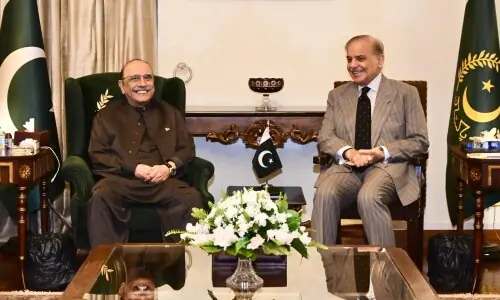
Earlier this month, Pakistan raised fuel prices by up to 13 per cent, which political parties were quick to criticise as fear built about the rising cost of living. The fragile coalition led by President Asif Ali Zardari halved the increase in petroleum.
“The subsidy issue is always a very sensitive one and causes a political stir,” said Qamar.
However, Pakistan faces external pressures from the International Monetary Fund, which has kept the country's economy afloat with a $11 billion package agreed in 2008, wants the government to take unpopular decisions which include raising tariffs to help generate funds for the power sector.