0
0

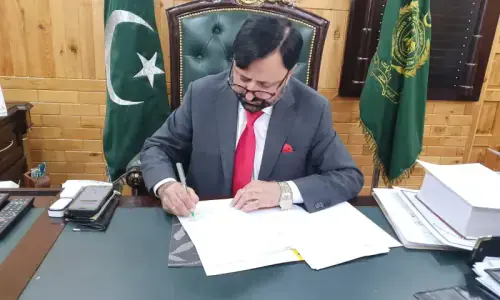
ISLAMABAD, April 26: Federal Secretary Environment Khawaja Mohammad Naeem on Tuesday called for making innovative policies and plans for sustainable management of land and water resources, terming them critical for food security and economic development.
“This will require renewal of political commitment by our national and provincial governments, as well as the international community,” he said while chairing the inaugural session of the two-day national workshop on “Review and Gap Analysis of National Action Program (NAP) to Combat Desertification in Pakistan”.
“Sustainable management of land and water resources is critical for our economic development, food security and poverty alleviation,” he said.
The gathering observed that commitment was imperative for mainstreaming sustainable management of land and water resources into country-driven strategies and development frameworks like Vision 2030, new growth strategy and targets, set for the Millennium Development Goals (MDGs).
Earlier in his welcome address, Additional Secretary of the Ministry of Environment Kamran Ali Qureshi said the National Action Programme to combat desertification and mitigation impacts of drought was prepared in 2002. He added that it identified key factors contributing to desertification and suggested measures to combat desertification and mitigate affects of drought in Pakistan.
“Many changes, including increased climate change impacts, have taken place since the programme was prepared. So there is a need for its realignment,” said Mr Qureshi.
UNDP Country Director Toshihiro Tanaka highlighted that dry-lands occupied 41 per cent of the global terrestrial area. The livelihood of more than a billion people, almost a fifth of the entire population of the globe, was now at stake.
He said the UN General Assembly would convene a meeting on the “desertification, land degradation and drought in the context of sustainable development and poverty eradication” in September this year.
Meanwhile, Minister for Environment and Women Development Samina Khalid Ghurki principally approved the draft of climate change policy while chairing a core group meeting on climate change here on Tuesday.
The minister said Pakistan was the most vulnerable country due to global warming and climate change. “Pakistan is a low contributor of pollution, but it is one of the most affected countries.”