



 0
0

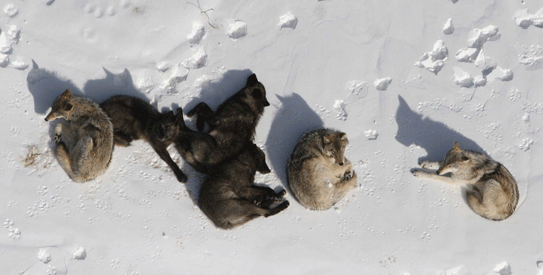
WASHINGTON: The US government said Wednesday it is formally removing about 1,300 gray wolves in the Rocky Mountain region from the endangered species list, capping a legal battle that has dragged on for years.
The Interior Department will also seek to remove thousands more wolves in the western Great Lakes region from the endangered list because they have recovered to “healthy levels,” Interior Secretary Ken Salazar told reporters.
The issuing of the final rule follows an order of Congress last month and means that states will manage the animals and that hunting will resume in Idaho, Montana, and parts of Utah, Oregon and Washington.
Gray wolves in Wyoming will remain under federal protection until that state develops a suitable management plan, he said.
“The recovery of gray wolves in the US is a tremendous success story of the Endangered Species Act,” said Salazar.
“From a biological perspective, gray wolves have recovered. It is now time to return their management to states that are prepared to ensure the long-term health of the species.”
The move ends a long political and legal battle that dates back to 2008 when the Fish and Wildlife Service took steps to remove wolves from the endangered list, though lawsuits brought by environmental groups kept the change from taking effect.
Last month, an annex was added to the highly disputed budget bill, removing the wolves from federal protection, marking the first time Congress has ever been involved in the removing of an animal from the endangered species list.
The bill was approved and environmentalists had to admit defeat after years of fighting in court to preserve the endangered status of the gray wolves.
Wolves had all but disappeared in the mainland United States by 1974. In 1995, 66 gray wolves from Canada were released in Idaho and near Yellowstone national park in hopes that their numbers would multiply.
Their protected status has allowed them to reach a total population of 1,651 across the entire Rocky Mountain region, including Wyoming, which is not affected by Wednesday’s decision, said the Sierra Club.
Those who oppose the move to delist the wolves say the population is genetically isolated and disconnected, and urge more time to allow their numbers to grow. But ranchers say wolves are a nuisance to livestock and could even threaten humans if their population grows too large.
The Fish and Wildlife Service said it would accept public comments on its proposal to delist as many as 4,100 wolves in Minnesota, Michigan and Wisconsin before acting further, likely by the end of the year.
It also considering a proposal to delist another type of wolf, known as the eastern timber wolf.
“To be sure, not everyone will be satisfied with today’s announcement,” Salazar said.
“Wolves have long been a highly charged issue but let us not lose sight of the fact that these delistings are possible because the species has recovered in these areas.”


























