



 0
0

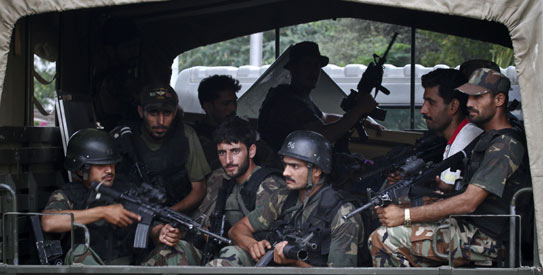
WASHINGTON: The Obama administration strongly condemned on Monday the terrorist attack on a naval base in Karachi but avoided getting involved in the media debate on the security of Pakistan's nuclear weapons.
State Department spokesman Mark Toner noted that the attack underscored the need for continuing cooperation between the US and Pakistan in the war against terror despite differences over the May 2 raid on Osama bin Laden's compound.“We strongly condemn this terrorist attack and we're committed to working with Pakistan… in a joint effort to combat this kind of violent extremism,” Mr Toner told a briefing in Washington.
“It just illustrates that Pakistan is under enormous pressure and threat from these kinds of groups. And they suffer… considerably from this kind of violent extremism,” he said.
The attack also “speaks to the ongoing need for close counter-terrorism cooperation, even or in spite of some of the questions raised by the Bin Laden raid,” he added.
British Foreign Secretary William Hague also noted that the “attack once again demonstrates the seriousness of the threat that Pakistan faces from domestic militancy and extremism.”
Like the US, Britain also offered to help Pakistan combat violent extremists responsible for this and other attacks in the country.
While officials were cautious in their reaction, media outlets across the globe linked the Karachi attack to the question of security of Pakistan's nuclear arsenal.
“And what does it imply for security at other key installations, not least those associated with Pakistan's nuclear deterrent?” asked BBC's defence and diplomatic correspondent Jonathan Marcus.
The Washington Examiner newspaper adopted an alarmist approach, claiming that “the attack points out to the increasing radicalisation of the armed forces of Pakistan, as such an attack could not be planned and executed without some inside help from someone inside the Pakistani Navy”.
The newspaper warned that “if the terrorists can get hold of any IRBM and nuclear materials, a few Indian and Israeli cities, and a few thousand Nato soldiers in Afghanistan might go up in smoke.”
The attack “underscored the insurgents' ability to penetrate fortified security installations,” The Washington Post noted. It quoted several analysts as saying that “it was likely they were helped by people inside the base.”
The incident “dealt another embarrassing blow to a powerful military that has faced harsh domestic criticism over the US operation that killed Bin Laden,” the Post added.
“The Bin Laden raid also raised questions about the safety of Pakistan's nuclear arsenal, and defence analysts said the Karachi assault renewed those doubts,” the Post added.




























