0
0

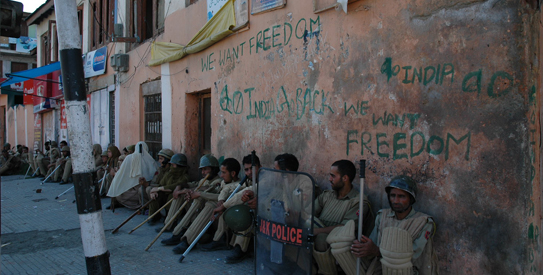
To mark International Press Freedom Day on May 3, the Herald focuses on certain trouble spots in South Asia – Pakistan, Afghanistan and India – looking at the lives and works of photojournalists documenting conflict in the region, defying the odds as they deal with terrifying moments.
In India with a highly nationalist media, reporting what happens on the ground in conflict zones, especially Kashmir, offend not only one’s contemporaries but also the powerful security and state institutions leading to constraints. In Afghanistan as the nation rebuilds itself at snail’s pace and the media tests the limits of its newfound freedom, death and tragedy are part of everyday life for a photojournalist.
In the second of a two part article on South Asian photojournalists, we speak to professionals in India and Afghanistan to record and report their lives and work.
INDIA: Reporting Without An Agenda
Dilnaz Boga is an Indian journalist based in Mumbai. She has been covering Kashmir for nearly a decade and recently received the Agence France-Presse Kate Webb Award 2011 for her work. Boga holds a masters degree in English from the University of Mumbai (1999) and another masters in Peace and Conflict Studies (2004) from University of Sydney, where her dissertation was focused on the impact of violence on children in Kashmir. She has worked as a subeditor, reporter and photojournalist for the Hindustan Times, Kashmir Dispatch, The New Internationalist and other international publications. Currently she does freelance projects.
Q. You have done both photojournalism and journalism. Which one do you relate to?
A. I would not call myself a photojournalist only. I have held four photography exhibitions in Mumbai. But my prime identity is that of a journalist, solely because many photojournalists are trained in the art while [my interest in photojournalism] matured from a hobby. I take my camera everywhere and shoot whatever interests me. I covered Kashmir because I was interested in the region.
Q. What kind of experience was it working in Srinagar?
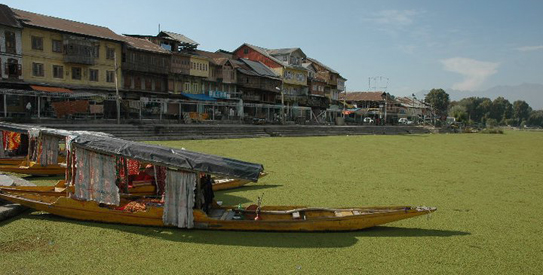
A. Srinagar is like a small town. The local journalists helped me out – I did not even have my own vehicle – and the other photographers took care of me like they would a sister. Of course, there was no medical insurance and you worked there at your own risk.
Q. You covered the rioting in Shopian last year. Tell me about that time.
A. It was a highly-charged conflict zone so it was difficult to manoeuvre. The protestors on the streets were not afraid of death. They were mostly unarmed, and had come out on the streets to pelt stones. Some boys were as young as 10.
It was emotionally-taxing. I had not attended as many funerals in my life as I did then — at times I covered three funerals in one family in a single day. I was attending funerals for days and weeks and there was no time to process those emotions. You just become mechanised as you have a responsibility to report.
The reports from Shopian were obfuscated. There were contrary reports from the government agencies, and some people were being obviously shielded. The authorities wouldn’t give you access nor would they confirm any violence. Once as I clicked pictures, a paramilitary soldier charged towards me not to do so, so I told him off: “I am doing my job, you do yours.”
The authorities came down heavily on those who testified against them. Our Facebook accounts were deactivated and 13 Facebook users were arrested because they had posted pictures and videos of excesses by the paramilitary forces without any sort of provocation. They had invoked the Public Safety Act — it was very 1984, Orwellian.
Q. How important is ground reporting from a conflict zone?
A. For a place like Kashmir it is important. A lot of young Indian journalists want to go there and work but it is a complex conflict and they can be manipulated easily. So I am very sceptical about young interns going there.
On the other hand, I think senior journalists should go there more often and think about the harsh statements they write sitting in other cities. Kashmir is not only about terrorism, it is also an historical issue.
Q. What is the reaction of your peers to your decade-long work in Kashmir?
A. The mainstream media is very nationalist and it’s not easy finding a job with contrarian views.
AFGHANISTAN: An Insider’s Perspective
Massoud Hossaini is a photojournalist based in Kabul. Hossaini’s family fled to Iran in the 1980s, where he grew up and stayed until 2001. The 30-something photojournalist studied journalism in Mashhad, Iran, and came to Kabul in search of his grandparents shortly after the fall of the Taliban in 2001. Since then he has worked there for local and international publications and is now working with Agence France-Presse.
Q. Why did you choose photojournalism?
A. I really liked photography. It is an exciting job and I like being part of exciting moments and capturing them. It was a hobby and then one thing led to another and I selected news photography. When I moved to Kabul, I enrolled at Aina, an institute that was providing training to aspiring photojournalists.
Q. Why did you move back to Kabul?
A. Mashhad is a small city, which has nothing to offer to an immigrant in terms of jobs. I started an underground publication for Afghans with a few friends and soon after 9/11 when we criticised Iranian policy vis-à-vis Afghanistan. We were scared that our criticism would lead to a crackdown by the intelligence and security personnel, so we ran away. From Mashhad I went to Herat, then Kandahar and finally Kabul. The Taliban were no longer there so it was safe but everything was destroyed.
Q. You’ve been in Afghanistan for a decade now. What changes have you witnessed while covering the politics of this country?
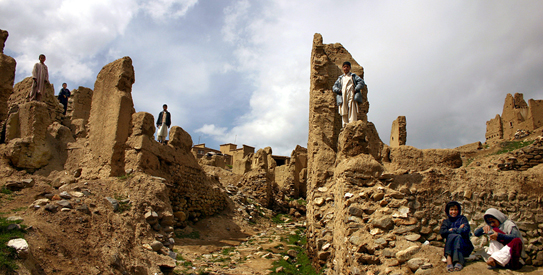
A. In 2001, it was not as insecure. There was no war, just sporadic attacks. I still remember the first suicide car bomb at the culture ministry that killed 12 people. I was barely five minutes away and commuted through that area everyday. That was the first bomb blast I experienced. Then people were not scared, they were just afraid. Now before anyone leaves their home, they think and consider, “We can’t go to that area, an attack could happen.”
Q. Have you or your colleagues suffered bodily harm?
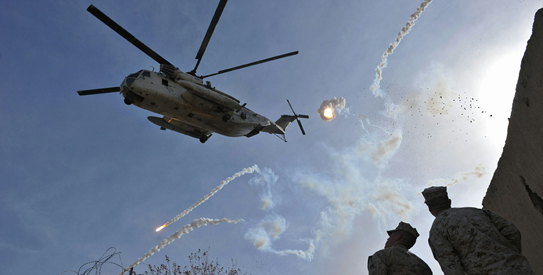
A. I have had minor injuries but nothing major. Last October, however, I was embedded with a big group of journalists covering the Kandahar Operation in Arghandab River Valley. I was supposed to accompany Joao Silva, a New York Times photographer, but changed my plans. That day he stepped on a landmine and lost both his legs. That was very disturbing.
Q. Foreign journalists want to come to Afghanistan and cover it. Do you think they have any advantage over local journalists?
A. It is not easy for foreigners to cover whatever we cover. The same goes for international troops. We [the locals] know what the problem is: take, for instance, the recent protest over the burning of the Quran. Now if the foreigners were to cover the mobs, they would be targeted as well. Whenever and wherever [the foreigners] want to move, they ask local journalists and fixers.
Q. What dangers are you most likely to face on the job?
A. After every suicide bombing, the Taliban are around observing the aftermath. So the danger of being targeted then is very real. At times even if we arrive on the spot before the security forces, we can’t set about working immediately. There is also that risk of being kidnapped. When we cover insurgent areas, they have snipers around as well. My last embed was right before Christmas in Helmand, and I saw a 22-year-old British soldier shot dead in front of me. The British army has pulled out of two locations in Helmand because they lost too many soldiers.
Q. Given the violence, how do you deal with trauma?
A. We went to a mass grave under a hilltop in Chamtala Desert, Nangarhar, north of Kabul, and a small hole led to it. It was a two metre by two metre space, filled with rotting corpses and bones. Nobody knew who those people were: mujahideen or civil war fighters. I was really upset at the sight. It does upset me when I see people in Kabul dying. The last bombing was at a supermarket close to my office; I would often shop there. An Afghan couple with their three children died in the incident. When I went there and saw them and their small child, whose entire body was burnt and his hair singed, I cried for them on the spot. And then some other colleagues joined in as well. We all cry when something bad happens, but we can’t do anything about it. We are helpless. We can go and post pictures on Facebook and blogs, but we can’t change anything.
This article appeared in the May 2011 issue of Herald magazine.
The Herald is Pakistan’s premier current affairs magazine published by the Dawn Media Group every month from Karachi.