0
0

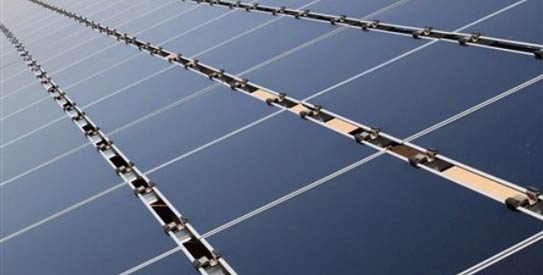
LONDON: Plastic solar cells may be commercially available in five to 10 years, said a British scientist whose group announced on Monday a new understanding of how to produce the cheaper alternative to silicon solar panels.
Installed global solar power is rising rapidly in response to government incentives to find low-carbon alternatives to fossil fuels.
But that increase is from a low base, accounting for only 1-2 per cent of the world’s electricity now.
Most solar panels currently comprise cells made from sliced, ultra-pure silicon.
The attractiveness of a plastic alternative is to make panels more quickly and cheaply using a printing or coating process.
A group of British researchers from Sheffield and Cambridge universities and a range of other agencies said they now understood the manufacturing process better. Other research groups are focused on the efficiency of plastic solar cells.
“I think you’ll get large-scale production in five to 10 years,” said Richard Jones of the University of Sheffield, adding that remaining hurdles included designing systems with a longer life.
A printing press process could make solar panels at a rate of an area of several football pitches at a time, he added.
The researchers had shown how two different light-sensitive substances separated by themselves into layers of positive and negative conductors, forming an electric circuit, while a plastic film was setting.
“We demonstrated that in a particular system and process they did indeed go the right way,” said Jones.
The advantage of the process is that it happens at a low temperature, allowing the use of plastic films and a printing press style of manufacture, rather than for example evaporating silicon at high temperatures onto a more rigid foundation such as glass or metal, as at present.
“If you want to run a printing press you want to run it on a plastic film. That will give this technology a distinct advantage if people can get everything to work. The process is there.”