2
2


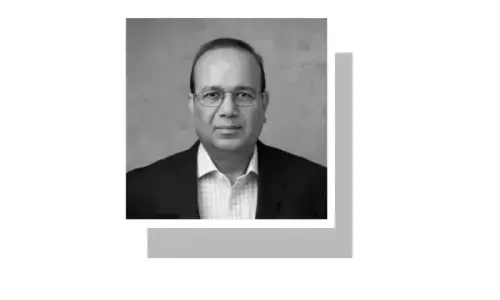
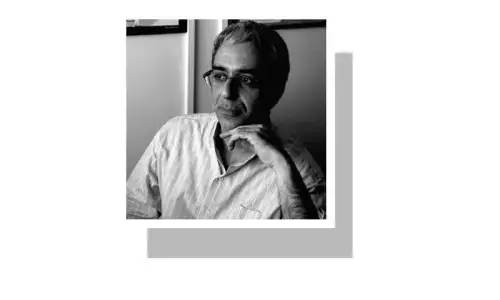
A huge bougainvillea-lined brick house that would easily qualify as palatial in Lahore is where cousins Kamiar Rokni and Tia Noon host the House of Kamiar Rokni. It is also known as one of the most sought-after hubs of high fashion, stocking retail and the four distinct lines falling under the KR umbrella.
One walks through a sprawling garden offset by a coterie of staff quarters to see chefs busy lining an outdoor tandoor (clay oven) with flat bread for lunch. In the sizzling heat of a summer afternoon, a usually alert German Shepherd opts for the lazy shade of a mango tree instead of his customary ferocious welcome.
This seemingly rustic setting is a reflection of Rokni and Noon’s Punjabi roots; their designs have often alluded to this heritage, the Jalwana Collection being one example.
The ethos of this highly coveted brand, however, travels much farther and borrows from Rokni’s Iranian lineage and Noon’s European exposure. They are both equally involved in the design process. That said, while Noon takes care of the administration of the brand a bit more, Kami (as he is known) has more of a “red carpet presence”. As a brand, Kamiar Rokni is one of the top-most fashion labels in Pakistan today, enjoying a strong brand identity at all of the country’s fashion weeks as well as an enviable retail presence at a cross section of multi-brand stores in Pakistan and Dubai. The brand will be representing the Pakistan Fashion Design Council at the Prêt à Porter Paris fair this year (along with six others) and as far as the future is concerned, Rokni’s is secure in a faultless aesthetic and a rapidly strengthening logistical infrastructure. Both designers talk to the Herald about the path the fashion industry is trotting.
Q. Despite the recent success of Pakistani fashion, what in your opinion is still holding the industry back from blazing ahead?
Rokni. At the end of the day, you still have many designers who are a small-scale business making made-to-order clothes. The trend is now changing where you have bigger companies that are stepping in. Outfitters has just started an ethnic line and you have Sheep.
Noon. This trend is still very, very new. We’re still learning to walk. It’ll take companies time to figure out the market.
Q. What is the market for fashion these days?
Rokni. These are times of economic recession and designers who are catering to a wider audience at a lower cost are probably doing better compared to those only doing specialised, high- end clothing. A wider range and lower-cost product actually does quite well during a recession.
Q. You easily oscillate between both types of clothing. How difficult is that to manoeuvre?
Noon. The clientele in Pakistan has a habit of coming in and ordering unique, one-off clothes. They still feel that they need to own something that no one else does. It’s a habit that they’ll find hard to break.
Rokni. Also, when you’re doing ready-to-wear clothes you have to think of a wider cross section of society. I may want to take the plunge of a neckline a certain number of inches lower but will stop myself when designing something ready-to-wear fearing that women won’t wear it. I won’t use a fabric I may love if it’s going to raise the price of the outfit too much. Ready-to-wear has to be done much more carefully.
Q. Couturiers have always preferred designing two expensive bridal outfits a month instead of slogging over low-priced ready-to-wear. Yet you are going down the path of ready-to-wear. Is it worth it?
Rokni. Yes, totally. You see, you may have two outfits one month but what about the next? The bridal industry is so competitive now; a designer may get 15 bridal orders in one month and then just three the next. You can’t depend on something that is so erratic. Ready-to-wear is certainly more substantial than made-to-order.
Q. Between Lahore, Karachi, Islamabad and Dubai you stock in four completely different cities to equally diverse clientele. How do your designs differ accordingly?
Rokni. We don’t modify designs as per city but design a collection and send appropriate pieces to different cities. We send out a blend. What works where is a mystery we still haven’t managed to solve. Short shirts, for example, are selling in one shop in Islamabad and long shirts in another. Our experience with the buying pattern has been the shop that we stock at.
Noon. What sells depends on what kind of clientele the proprietor brings in.
Q. Have fashion weeks helped in creating a larger market for fashion?
Rokni. Fashion weeks have helped in brand-building and in making an international profile. We do get a lot of interest from international boutiques after each fashion week because it floods the Internet. Many buyers who haven’t even come may call with queries, like a Kuwaiti woman from Anohata. We weren’t even showing at the last fashion week, yet she wanted price quotes for our products. We have people show interest from England and America especially, and from the Middle East. Brand-building is serious business though I don’t know whether anyone has gotten a serious, lucrative deal out of fashion week yet. It is not bad for two seasons, though it will have to evolve into a serious business eventually.
Q. Yet it has brought you the Prêt à Porter Paris.
Rokni. Yes, we have been invited to show at the Prêt à Porter Paris fair. In this fair there is an area called Atmosphere and a bunch of designers who have been selected by Alexandra (Senes) [French fashion entrepreneur and journalist] and who can afford to pay to go are going [the cost of participation alone is around 10,000 euros]. We’re working on a 20 piece collection [for the fair].
Q. Who else is going?
Rokni. There’s Feeha [Jamshed], Muse, HSY, Nickie Nina, Adnan Pardesy and Zaheer Abbas. Isabella Balu, a French designer has been hired to guide us. What we’ve learned is that we really need to work on the silhouette, the shape and the finish of each garment. Our clothes will never look modern until we use the right kind of zips, incorporate leather etc. Hardware is so important. We’re looking into all of this now. Hooks and eyes are not going to work; they don’t like most of our buttons. The fabric and price is just as important. They’re fussy. But we already had most of this feedback from our agent in Paris.
Q. Why Paris instead of London, for instance?
Rokni. Nobody goes to London to do serious business. It’s no secret that the largest number of fashion buyers from all over the world come to Paris. The Parisians have so far found our stuff too ethnic but the Arabs love it. We got a huge order from a Qatari store called Al Oojh. And we got another order but couldn’t meet the demand.
Q. How simple is it to export clothes around the world?
Noon. When we send an order, we just pay whatever duty we have to pay for the export. We don’t export to India as it’s illegal directly and it’s too complicated to go via Dubai. We do everything legitimately. From the other end, there’s more concern about where the clothes are made, the quality of fabric and that it’s all correctly labeled.
Q. What’s the most difficult part of exporting to the western market?
Rokni. It’s not easy and sometimes it’s very tempting to just make clothes for the local market. Quality control is the biggest problem. It’s not easy to cater to the western market — you have to be a real perfectionist. What maybe considered ‘wow’ and fantastic in Pakistan isn’t necessarily ‘wow’ and fantastic there. They’ve seen all the embroideries that they need to. At the end of the day it’s just good clothes with good price points and some sort of an interesting story that they’re looking for. We didn’t have a good time when we were doing the Al Oojh order because finishing that stuff was a nightmare. We’re not used to it because we are not doing that level of finishing for our clients. Standards need to double and triple. It was satisfying at the end but not during production because master sahib [the tailor] is not going to get it.
Noon. They [the tailors] smoke cigarettes, drink chai and the rooms where they work are not painted white. They don’t wear gloves and have no idea of quality control.
Q. Is the effort still worth it?
Rokni. It is totally worth it. You need to know how it happens and how it works. You need to know how to fill out a spec sheet and an order. You should know these things.
Noon. Pakistan has great export. We export knitted jersey and garments. We export leather and local factories have managed to set up infrastructures where they manufacture things under quality control. Designers need to up the level too.
Q. How is the Paris exercise going to help?
Noon. It’s good publicity to have people say they went to Paris but then there is the business side of it. What you sell there you can never make money on here and vice versa. You can be king of one thing but you can’t be the court jester of both and end up being nowhere. You have to decide what you’re good at and focus.
Rokni. If I’m going to invest time, effort and energy into a European market then I’m going to have to cut down on the time, effort and energy I spend on the traditional market. That said, what I learn there can be implemented here and that is what will eventually up the game.
The Herald is Pakistan’s premier current affairs magazine published by the Dawn Media Group every month from Karachi.