0
0

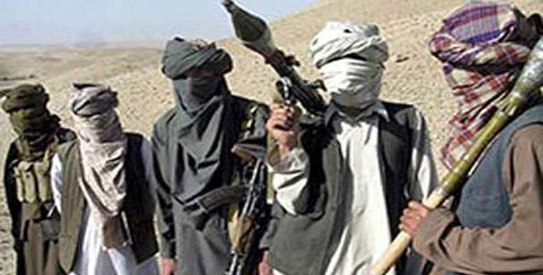
NOTWITHSTANDING Rahman Malik’s claims about Israeli arms in Karachi, at least once in our history arms came to Pakistan from Israel in a big way, and they came with full official approval and for a purpose that served the cause of all the right parties eminently well. The dubious credit for importing arms from Israel, and the misfortunes which Pakistan has been suffering since then, goes to Ziaul Haq, the lord of misrule.
On Christmas eve, 1979, the Soviet Union invaded Afghanistan. President Hafizullah Amin, who had himself assumed power after Noor Mohammad Taraki was murdered, suffered the same fate as Babrak Karmal belonging to the Parcham faction of the Afghan Communist Party came riding a Soviet tank to destroy its Khalq faction. In his wake came a 100,000-strong Red Army: the Soviet occupation of Afghanistan was complete.
In Pakistan, Ziaul Haq ruled. Ever eager to ingratiate himself with the Americans, Zia wanted Islamabad to play Hanoi to Afghan Vietcong. He knew he couldn’t afford to organise anti-Soviet resistance on his own and needed western or west-backed economic and military aid at a level that could sustain resistance for long and tire the Soviets out. However, the man in the White House had a strong distaste for the despot who had assumed power with the pledge to hold elections within 90 days and then gone on to murder his prime minister.
With his stature soaring high because of his Camp David success in bringing Anwar Sadat and Menachim Begin to the conference table, Jimmy Carter ruled out American military aid to the military regime. Pakistan was already under American sanctions because of its nuclear programme, and Carter said aid to Islamabad at that stage would send wrong signals to the world at a time when he had a strong human rights agenda.
A month before the Soviets barged in, a furious mob had burnt the American embassy in Islamabad down for reasons that had nothing to do with America — the siege of the Grand Mosque in Makkah by Saudi dissidents on Nov 21, 1979. That served to further harden feelings against Pakistan in America, where, to quote author George Crile, American liberal opinion regarded Zia as a “third world thug”.
Yet, like all American presidents, Carter had limits to his foreign policy ideals, for the US has multiple centres of power and pressure which often serve to keep the White House in check. For the diehard cold warriors in the CIA, Congress and the Pentagon the Soviet invasion of Afghanistan offered an opportunity which they were determined not to miss to settle an old score with the old rival.
Under pressure from both Republicans and Democrats, Carter grudgingly agreed that the anti-Soviet resistance needed to be helped, but he was categorical on one point: under no circumstances were the ‘mujahideen’ to get American arms, for they could fall into Soviet hands and give Moscow a propaganda victory. So long as his administration was kept out of the picture, Carter said, he wouldn’t mind some covert economic and military aid to anti-Soviet fighters, his reservations about Zia notwithstanding.
The man who worked out the clandestine relationship that was to develop between the Mossad, CIA and ISI was Charles Wilson, Democratic Congressman from Texas. Even though both the CIA and Mossad initially regarded Wilson with suspicion and doubted whether a relationship between Pakistan and Israel was possible, eventually the Congressman had his way.
On a visit to America, Zia was asked by Wilson, who had secured an F-16 radar for Pakistan, whether he would be willing to accept arms from Israel. Zia replied, “Just don’t put any Stars of David on the box.” This was the go-ahead, and crates full of arms from Israel started flying into Pakistan. They contained Soviet arms captured by Israelis during the many wars with Arab states.
Ayatollah Khomeini denied Carter a second term. Republican Ronald Reagan moved into the White House, Carter’s human rights agenda was ditched, and massive doses of America’s economic and military aid started pouring into Pakistan, some of it bypassing official Islamabad and reaching America’s beloved mujahideen — today’s terrorists — direct. A monster was born.
So popular were the mujahideen at Langley that many CIA officials started wearing shalwar-kameez and a few became Muslim. George Crile’s book, Charlie Wilson’s War, gives a fascinating account of this phase of Pakistan’s history.