



 3
3

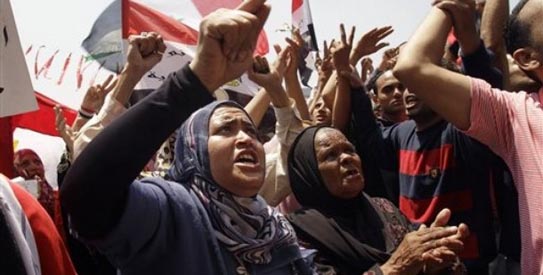
CAIRO: Helping drive the January revolution in Egypt were women: young, old, married, single, mothers, daughters and sisters. Their contribution to the cause could not be overstated. They were in Cairo’s Tahrir Square in droves, creating the change that had eluded Egypt for decades. It was not just a man’s world on the streets.
Now, as Egypt looks to a new future, women are again being pushed aside in favor of the “politicians” (read here, men). There are no women on the constitutional committee; there were no women among the ten opposition leaders chosen to “negotiate” with the government during the revolution. It is a sad fact that Egypt must come to terms with in order to promote a new vision, and new society, that can be Egypt.
In March, Egyptian activists who had led the protest movement were apologising for the sexual assault on CBS correspondent Lara Logan in mid-February, as the country celebrated the end of the Hosni Mubarak era. Although saying sorry might seem appropriate, where are the apologies to the millions of Egyptian women: they have no voice, are pushed aside and society at large continues to live in denial of their worth.
There is the perception that non-Egyptian women, as evidenced by the Logan apology, are more important than the country’s citizens. Just ask Heba, a recent university graduate who was assaulted on the streets of Cairo’s upscale Zamalek neighborhood. When she went took the perpetrator to the police, they told her to forget the matter. “When I was about to leave after nothing was being done, the same captain turned to me and said ‘thank God it wasn’t a foreigner or a diplomat’s wife’. This is the problem, we Egyptians are not even treated with respect as citizens,” she believes.
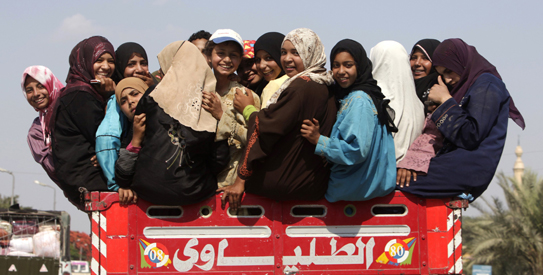
According to the Egyptian Center for Women’s Rights (ECWR) nearly 70 per cent of Egyptian women can relate a story of sexual violence. It is the hard truth facing Egypt in this transition period.
One of the new young leaders of the revolution, Google Executive Wael Ghonim, wrote on Twitter that “we need more girls” in reference to only one young woman being part of discussions with the military on the country’s future.
Ghonim is right: Egypt needs more women actively participating in politics. There were thousands of Egyptian women in Tahrir during the revolution, leading the push toward change. Unless we’re mindful of their involvement, though, they could very well be left out of their country’s future.
The fact remains that if Egyptian politicians and leaders wanted women to be more involved, they would be. There are a plethora of intelligent female leaders in the country, from opposition leader Gameela Ismail to the scores of young women who risked their lives for the betterment of the country in recent weeks.
Egypt has, for the past few weeks, talked about change. Women must be the number one priority for change for the country. The many women who took charge of the protests have been outspoken critics of the government, against sexual violence and have unified the country in ways that Egyptian men had been unable to do for decades.
Nehad Abu Komsan, the head of the ECWR, told me recently that until society’s mindset changes, stereotypes and misogyny will continue.
“Egyptians need to understand that this is a major problem that only in the past few weeks have we as a society been able to speak openly, but too many people are focused on the politics, while the social problems remain as concrete as ever,” she said.
Talking of the importance of women’s empowerment is all good and well, but the reality is that societies do not change through talk. Just ask Egyptians. What needs to happen is a concerted effort to locate those women who have invested their lives for the country, ask their opinions and put them on leadership councils and in direct discussion with the military.
Over the years, Abu Komsan and other leading women’s rights figures have repeatedly talked of the need for dialogue and a conversation to be sparked. This is the ideal time, she said, for such a debate to take place. The future of the revolution depends on the education and empowerment of Egyptian women. It can be done and doing so would, in Abu Komsan’s words “establish a new cultural understanding of how women are an important part of society.”
Egyptian women deserve better. It is their time to make a new country, for themselves and for their fellow citizens.
The writer is an American journalist based in Cairo and is the Editor-in-chief of bikyamasr.com


























