1
1

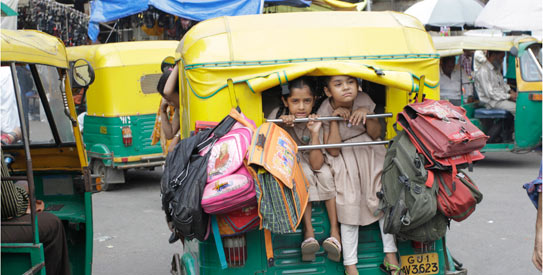
BHILWARA: Her fate looked sealed when her family began organizing the nuptial celebrations. But the bride-to-be, a shy schoolgirl from a remote village in western India, wasn't ready to say “I do”.
In a region where patriarchy and age-old customs dictate a woman's life from birth to death, 15-year-old Sapna Meena in April joined a small but growing number of girls who are standing up against the widespread practice of child marriage in India.
“My family was in the midst of planning my wedding,” recalled Sapna, her black hair pinned in a bun and a gold stud in her nose, as she sat on a step outside her home in Badakakahera village in Rajasthan state.
“My grandfather had decided that while he was alive he wanted to see that I get married and settled. I was scared to say anything against it at first.”
“I went to my mother and told her I wanted to study more and get a job, and only after that would I get married,” added the girl, who is from a subsistence farming community that ekes out a living by growing crops like wheat and maize.
But Sapna didn't stop there. She went to local officials in the city of Bhilwara -- some three hours by bus -- to seek advice and press home the point to her family that the legal age for marriage in India is 18.
The authorities played a mediating role and her family suspended the wedding plans. What's more, Sapna was awarded a certificate of gallantry by the government for being an “agent of change” in her community.
Gender rights activists say Sapna is proof that, through education and exposure to the modern world, girls are beginning to take decisions over their own lives and are helping to lift the curse of early marriage that has plagued India for centuries.
FORTRESSES AND CHILD BRIDES
While India's rapid economic growth over the past decade has exposed more people to new ideas about anti-discrimination through media, the Internet and tourism, early marriage remains a reality for almost half the country's female population.
Some 47 percent of young women aged between 20 and 24 years married before 18, according to the government's latest National Family Health Survey.
And despite social welfare programmes that have improved the lives of many rural women, experts say the practice remains one of the biggest obstacles to the development of women in India.
Rural, poor, less educated girls and those from central, western and eastern regions of the country are most vulnerable to the practice, rights groups say.
They add that the issue cuts across every part of woman's development -- creating a vicious cycle of malnutrition, poor health and ignorance.
A child bride is more likely to drop out of school and have serious complications during pregnancy and childbirth. Her children are also more likely to be underweight and lucky to survive beyond the age of five.
Rajasthan -one of India's premier tourist destinations where millions flock annually to its ancient fortresses, camel-back desert safaris and forests teeming with wildlife -- has some of the highest rates of early marriage in the country.
At religious festivals such as “Akha Teej”, hundreds of girls as young as 10, dressed in traditional red saris and adorned in gold, are married off in dusty villages and small towns across this poor, drought-prone region.
“A lot is to do with the family economy,” said Ranjana Kumari, director of the Centre for Social Research, a think-tank focusing on women's rights. “Parents think the sooner they marry their daughters and get rid of the financial burden, the better.
“It's also about family honour. There is a whole lot of hysteria woven around the issue of maintaining a girl's chastity before marriage and attaching honour to it. So parents want their daughters married quickly before something happens.”
ADOLESCENT CAMPAIGNERS
India tightened laws prohibiting child marriage in 2006, with parents, priests, police or local leaders liable for imprisonment of up to two years and fines of 100,000 rupees ($2,253).
But activists say the law is poorly enforced -- with few prosecutions and even fewer convictions -- and deeply flawed.
Prosecutions can only happen if the child herself complains officially -- a huge hurdle for most girls who know little about their rights, are under immense societal pressure and have little access to sympathetic listeners.
Even so, education and other initiatives by non-governmental agencies are making a small yet important impact on girls in some of India's poorest villages where conservative, male-dominated views are ingrained.
For example, adolescent girls clubs run by organizations like Unicef provide a space for rural girls to get together and find solidarity in issues that concern them, such as not being able to go to school or being forced into marriage.
“They learn about their rights such as the legal age for marriage, or the right to education,” said Sudha Murali.