



 0
0

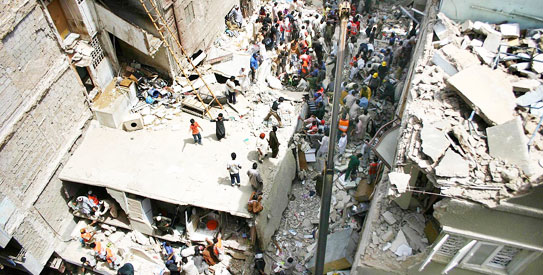
KARACHI: “For us, the monthly rent of Rs150 meant we had a roof on our heads, no matter how dilapidated it was. Now, all I know is that my flat is gone and so are my children,” said Razia, a resident of the now collapsed Qasr-i-Ruqqaya building in Lyari, who lost her two children in the tragedy.
When the building collapsed, Razia was just at five-minute walk from the apartment block. Her husband was out too but in the flat were her six children between the ages of eight and 22.
Sitting in the Civil Hospital Karachi’s Orthopedic Ward No II, she wiped her tears often as she affectionately looked at her daughter, Kiran.
The teenage survivor with a fractured pelvis was pulled out of the debris almost six hours after the tragedy struck.
“My husband drives a donkey cart and I work as a maid servant. For us it’s a fight for our survival everyday as we barely live on Rs200 a day. But never in my wildest dreams did I expect this to happen,” she said.
Her eldest son, Bilal, was a victim and so was her youngest daughter, Ayesha.
As the search for the remaining bodies completed on Monday with the recovery of four more bodies from the rubble, it`s the survivors who face an uphill task, with ‘a place called home’ being their biggest worry.
In a city like Karachi where housing remains a major issue, the victims of Qasr-i-Ruqqaya now add to the number of homeless people.
“I have moved to my mother`s place but it’s a one-room apartment. With a family of six now, it’s hard to live here and for how long [can we stay here] is a question I avoid thinking about,” said Razia.
“The money we make is hardly enough for our survival. Now I don’t know how to make both ends meet.”
“Maybe if I had died or one of my kids had, it would have satisfied everyone. We have lost our home, too,” lamented Razia’s daughter, Aalia, lying on the hospital bed opposite Kiran’s in the same ward. She too suffered injuries, with her pelvis fractured in the freak accident.
The family had been living on the top floor of the building for the last many years. “Whatever happened has happened. The government must help us all in finding a place to live in,” she said.
Administrative wrangle
“The victims were offered housing by the commissioner in the Workers Welfare Board Apartment near Gulshan-i-Maymar, where people displaced by last year’s floods were residing, but they (the victims) did not show much interest in the offer,” said District Coordination Officer of Karachi Mohammad Hussain Syed. He explained that they wanted to live in the same vicinity, as their jobs or means of livelihoods were based in that area.
“Also, we are working out a plan where maybe we can rent a building in that area for a year or so and keep them there while a new building is constructed. Meanwhile, compensation has also been announced so let’s see how things go.”
However, a local government official said that the issue would die eventually. The decision to house them in the flats was announced by the commissioner, however now that the LG system was in place, it’s a different ball game for the administration and each department would try to pass the blame on to another, he added.
Speaking on the issue, urban town planner Arif Hasan said, “The government has a plenty of accommodation that can be used for providing shelter to these people.”
He added, “When Rangers needed accommodation, the government vacated building on a day’s notice. In this case, too, it must step forward and help these people.”
“As there are three parties involved — the owner, tenants and government departments — they must sit down and chalk out a deal that is feasible to solve the matter amicably.”



























