


Karachi – Pakistan’s biggest, most cosmopolitan and certainly its most complex city – is in trouble again.
To many Karachiites it’s the same old story: Some 25 years worth of bloody tales of ethnic rivalries, politicised crime, sectarian tensions and a bulging population that keep going under only to remerge over and over again to keep this maddening metropolis’ economics, politics and culture afloat.
Karachi is a stunningly diverse city. Many western scholars with an eye on Pakistan believe that if ever Karachi’s diverse ethnic, religious and sectarian groups manage to strike a workable socio-economic and political consensus, Karachi can become an ‘Asian New York’.
But that hasn’t happened. Unfortunately Karachi’s ethnic diversity, especially after the mid-1980s, has remained to be a venerable entity in the hands of both military dictators and civilian politicians who have continued to exploit this diversity to encourage ethnic and sectarian cracks in Karachi’s varied polity to meet their own selfish, short-sighted and exploitative aims.
So much has been written about the perils of this city – once the thriving economic hub and entertainment capital of Pakistan. A city that still remains to be the country’s economic nerve centre, as well as perhaps Pakistan’s most liberal and secular conurbation. But it is also one of the most crime-infested cities in the region.
Mohajirs (Urdu-speakers) constitute 41 per cent of the city’s population followed by the Pushtun (about 17 per cent), Punjabi (about 11 per cent), Sindhi (about 6 per cent), Baloch (about 5 per cent), Sariki (about 3 per cent) and those from Hazra and Gilgit (2 per cent).
There are the ever-growing Afghan and Bengali migrant populations in this city plus Burmese, Nepalese and some Sri Lankan communities too. Karachi also has an enterprising and well integrated Chinese community mostly made up of the Chinese who migrated to Karachi during Mao’s Cultural Revolution in late 1960s.
Urdu is the most widely spoken language of the city, especially a layman and bazaar dialect of Urdu that also includes expressions from Pushtu, Punjabi and Sindhi languages.
The majority of Karachi’s population is Sunni Muslim (about 65 per cent) and it also has a significant Shia population (about 30 per cent). There are Hindu, a prosperous Zoroastrian, and vibrant Christian communities in the city as well (5 per cent). No wonder then, speeches made by the country’s founder, Muhammad Ali Jinnah, in which he most overtly advocated secularism were almost all made in Karachi.
The politics of the city mainly revolves around three political parties: The secular/Mohajir nationalist Muttahidda Qaumi Movement (MQM), the ‘left-liberal’ Pakistan Peoples Party (PPP) and the secular/Pushtun nationalist Awami National Party (ANP).
Other parties such as the fundamentalist Jamat-i-Islami (JI), the militant Sunni Thereek (ST), Jamiat Ulema Islam (JUI) and Pakistan Muslim League-N (PML-N) also have a presence in the city but are electorally weak.
Many see the violent eruption of ethnic riots of 1986 as the starting point from which Karachi never really managed to recover.
But was Karachi ever any different? It was. It was cheese to what has been chalk ever since 1986. In fact if one even briefly glances at what the city was like till about the late 1970s, they are bound to agree with those who claim that Karachi once had the potential of becoming Asia’s New York.
Before the lights went out
The 1970s witnessed the peak years of tourism in Pakistan. It would never again see the amount of tourists that thronged the streets of Karachi, Lahore and Swat from 1970 till about 1979.
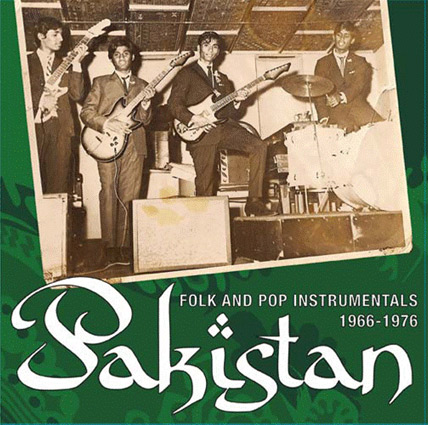
A compilation album cover of music by famous karachi club bands of the 1970s.
Most of the tourists that arrived in Pakistan during the country’s tourism heydays were young western bohemians (Hippies). Pakistan was one of the many countries that lay on a celebrated path that was called the ‘Hippie Trail.’
The Hippie Trail was first taken by early hippies in the late-60s. These were young men and women who were rebelling against the “social constrains” of western societies.
To find “enlightenment” and “more organic cultures,” many young Europeans and Americans headed out towards India and Nepal on cheap cars, buses and trains, hitchhiking across East Europe, Turkey, Iran, Afghanistan and Pakistan along the way.

A bus in karachi specifically catering to western tourists (1972).
Though the backpacking travelers lived and travelled cheap, the Hippie Trail spawned a thriving tourist industry in the areas that the Trail ran through.
Shaping in from Greece to Turkey to Iran and Afghanistan, the Hippie Trail then curved straight down into Pakistan through the Khyber Pass from where it ended either in India or Nepal.
Of course, like Iran and Afghanistan in those days, Pakistan too was a very different country than what it became many years later.

Z. A. Bhutto arriving at karachi airport.
During the peak years of the Hippie Trail (1971-76) Pakistan was under the leadership of Zulfikar Ali Bhutto.
Karachi was the country’s economic hub and entertainment capital. Between the 1950s and late 1970s, Karachi had over five hundred cinemas; over three dozen night clubs, numerous bars, a well maintained race course and what are still perhaps some of the finest natural beaches in the region.
Hashish was easily available, but people still didn’t know what heroin or a Kalashnikov was. And though alcohol and gambling were legal, there was comparatively less crime.
“Men, women and children could walk the streets of the city till late at night and no one would bother them,” a 69-year-old Babu Ali told me. He used to run a small eatery in the Old Clifton area in Karachi in the early 1970s. “There was crime, but it was nothing compared to what we have today,” he added.
By the late 1960s tourism as an industry in Karachi was flourishing, so much so that in 1972 the government created the country’s first dedicated tourism ministry and department, with the main offices of the ministry situated in Karachi.
There was still no concept of the dreaded Pakistani fanatic in those days or the ethnic cleanser. From the Khyber Pass hippie travelers used to come down to Rawalpindi, took a train to Lahore and from Lahore entered India by another train. Many would venture down to Karachi as well, especially for its beaches.

Western tourists with a local at a Karachi beach (1971).
Like other cities that were on the path of the Hippie Trail such as Athens, Istanbul, Tehran, Kabul, Delhi, Goa and Katmandu, in Pakistan Karachi too saw the springing up of hundreds of cheap hotels, restaurants and taxi and bus services. Thousands of Karachiites were employed here.
Most of these hotels were situated in the Saddar locality, while the famous Zainab Market, the Old Clifton area and the beaches at Hawkesbay and Sandspit were always packed with tourists, especially in the winter season.
A number of nightclubs did a roaring business too. The most famous were The Excelsior in Saddar, Oasis and Playboy on Club Road, The Horse Shoe on Shara-e-Faisal and Cave-Inn on Bandar Road. Alcohol was freely available in bars at these clubs while special liquor shops sold beer, whisky, vodka and rum, both local and foreign.
“Most beverages were made by local breweries (Murree and Lion brands),” says Haroon Raees who ran a liquor shop on main Clifton Road just opposite the Teen Talwar area in Karachi between 1969 and 1977.

Karachi's famous nightclub 'Oasis' (1974).
His shop was destroyed by Jamat-i-Islami activists in 1977. “During the opposition parties’ protest campaign against Bhutto sahib’s government (in 1977), hundreds of liquor shops were attacked. But most of the attackers used to come in chanting Islamic slogans, destroyed the shops but instead of breaking the alcohol bottles, looted them for their own consumption!” He said, laughing.
He continued: “Nobody in those days had even heard of drugs like heroin. But look what happened after they banned alcohol?” He asked. “People turned to deadlier substances. Heroin and kupie (inferior whisky) usage spread. Drug mafias came up and crime shot up.”
Apart from the bustling nightclubs and the beaches and shopping areas like Zainab Market, other favorite spots for the free-wheeling tourists were the Kemari fishing harbor, and a large hut colony of fakirs behind Abdullah Shah Ghazi’s shrine in Clifton. It was in the 1970s that the city’s famous “crabbing” scene was first developed for tourists in Kemari.
But was the crime rate in Karachi really that low in those days?
Ghazzanfar Shahid who worked as a librarian at the Soviet Embassy in Karachi says yes. “There used to be infamous ghoondas (hooligans). But they were nothing compared to the hooligans of today. Young men used to get into drunken brawls and gang fights, mostly over women and student politics, but guns were hardly ever used. They used fists, knifes, chains…but nobody ever knew what a TT pistol or a Kalashnikov was.”

A poster of the radical National Students Federation.
Saran Ahmed, 47, an economist and senior manager at a bank agrees: “If you go through the economic stats of the era (1960s-70s), you will find that there was a lot less economic disparity between classes in Pakistan, especially in Karachi. The rat race to outdo one another, even if that meant committing a crime to become rich, basically started in the 1980s when money from Pakistanis working in the Gulf nations started to pour in and when we got involved in the Afghan war.”
He suggests that 1980s was the era that saw the emergence of a growing class of the nuevo-rich (nau-daulti), and society started to transform into something totally new, something more moralistic on the outside by totally amoral on the inside.
Karachi’s politics before the 1980s was vastly different as well. In his book, ‘Political Dynamics of Sindh: 1947-1977,’ Tanvir Ahmed Tahir describes Karachi’s politics (till 1977) as being scattered but lacking in any serious tension. No single political party held sway in the city.
Famous architect and sociologist, Arif Hassan, in his book ‘The Unplanned Revolution,’ suggests that though the city’s Mohajir majority was one of the most socially liberal segments of the population, politically they were conservative.
This political conservatism was born from the Mohajir’s awkward sense of being migrants (from India) and not being the ‘sons of the soil’ (like Sindhis, Punjabis, Baloch and Pushtuns).
In his autobiography, ‘My Journey,’ MQM chief, Altaf Husain explains how the Mohajirs of Karachi ended up supporting right-wing religious parties like the Jamat-i-Islami (JI) and Jamiat Ulema Pakistan (JUP) because it was important for the Mohajirs to invest more in parties talking about Pakistan as a single nation.

A karachi university bus. Also seen in it is a student by the name of Altaf Husain (1975).
Interestingly, in the university and collages of the city, leftist politics thrived, so much so that Karachi became the centre of the left-wing student movement against Ayub Khan’s dictatorship in 1967-68.
Apart from JI and JUP, the other party that managed to find support in the varied city was the PPP, especially in the city’s working-class areas and slums.
After the 1980s, though JI and JUP’s support largely withered away with the rise of MQM (in 1984), the PPP still holds the support it began gathering in areas like Lyari and Malir in the 1970s.
“What a city it was,” remembers Wali Abdullah, who was a student at the University of Karachi from 1972 till 1975. “People just didn’t seem to have any hang-ups. Even the Jamaties (members of Islami Jamiat Taleba) used to have girlfriends!” He laughs.
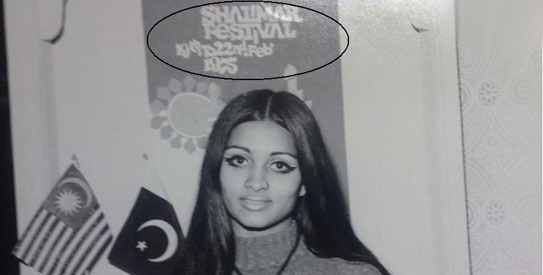
A famous 1970s model at a festival in Karachi (1975).
Wali, now in his early fifties, added: “Today they call Karachi Pakistan’s most liberal and secular city. But they should have seen it in the 1970s. It would shock today’s kids! We used to sit at roadside cafes on Tariq Road and sip chilled beer just like young people today have bun-kebabs outside chaat shops!”
“And yet, no one was judging you,” says Wali. “No one was questioning your faith, religion or ethnicity.”
Of course, things were not always quite as rosy. The 1973-75 oil crises due to Arab-Israel War (1973) considerably slowed down Bhutto’s economic reforms.
Karachi’s Mohajirs became weary of Bhutto’s ‘quota system,’ his failed quasi-socialist nationalisation process, and the (perceived) rise of Sindhi nationalism. Then together with the JI and JUP, Karachiites put the city at the heart of the protest movement against the Bhutto regime.
And anyway, as an era began shutting the sociology and politics of Karachi, an era in the region too was coming to an end.
By 1979, the Hippie Trail years were as good as over. A civil war in Afghanistan and an Islamic Revolution marked the Trail’s closing. Pakistan too started to change. A conservative military dictatorship overthrew the Bhutto government in 1977 and started laying the foundations of a more myopic, violent, and crime-ridden Pakistan.
A Pakistan that is yet to recover, with its largest city becoming a hunting ground for all sorts of misguided and greedy social, sectarian and ethnic engineers.
Nadeem F. Paracha is a cultural critic and senior columnist for Dawn Newspaper and Dawn.com.
The views expressed by this blogger and in the following reader comments do not necessarily reflect the views and policies of the Dawn Media Group.












Great article
Good job by Nadeem for sharing history of Karachi
Wel I read all of the comments, but realy sorry to say no one,absolutly no one gave the suggestion to bring back our society to itz previous position.. This is our place we have to give suggestion for making our karachi "centre of peace" for us and for our coming generations.. so please do something constructive, we can not move in 1970's time but we can make our future much better than so called 1970's era.. This is my suggestion "do something constructive" to save our city..
Good read !
Mohajirs (Urdu-speakers) constitute 41 per cent of the city’s population followed by the Pushtun (about 17 per cent), Punjabi (about 11 per cent), Sindhi (about 6 per cent), Baloch (about 5 per cent), Sariki (about 3 per cent) and those from Hazra and Gilgit (2 per cent). Excerpt from the article.
There is some miscalculation in stats. A whopping 15% missing. I am generous enough to add it to Muhajirs since they account for largest majority increasing 41% to 56%. Although I have strong belief it is more than that. In addition, I have strong doubts the stats of non-urdu speakers as many of them still holds domicile from other areas of the country and a large majority evade taxes as it is fashionable in other parts of the country. So collecting stats on them is not only hard but impossible and showing 17%, 11% and 7% percent figures seems like extrapolated figures at best.
Out of curiosity, could you kindly site the "Western scholars" that believe Karachi could be Asia's New York.
I don't mean to be pointing any accusatory finger at you Mr. Paracha, but it almost seems like you made that up for the sake of your article. And in journalism, I believe there must truly be some journalistic ethos we must live by. Otherwise, what's to differentiate us from all the scores of liars out there?
It has become fashionable by the decimate in pakstan to blame all the ills of Pakistan on Zia's rule. The fact is pakistan has been ruled almost all the tome by mostly secular feudal lords, army officers ( remember Yahya !) and burrucrats who could not provide safe drinking water(while enjoying expensive wine / liquor) for a single person in Pakistan till now! No reliNle electric supply or free education for the masses. This is the bitter harvest we have to reap as economic pie shrikd and population explodes.
Major poets of our era, I would not name them, they all consumed alcohol. I am a witness to that. Ghalib, in his time, was no exception. Further, considering the crime rate was low in Karachi when alcohol was readily available proves that alcohol is not the culprit that it has been made out to be. Right now we see that "Allah Hafiz" crop of Muslims has more criminal traits than the not so religious, alcohol consuming Muslims of the 70s like myself. How else can you explain the current state of Karachi? There was a time when alcohol was also prohibited in the United States. The outcome of that ban was criminals like Al Capone.
Good job by Nadeem for sharing history of Karachi. It is not the current or future goverment which will change the destiny of Karachi. It is the civili society needs to come forward and get rid of all the criminals. I strongly believe that most of the people in Karachi are not gangsters. How come the people of Kaarchi is not taking any actions against criminals, ploliticians and all those who are taking lives of inncocent people. Let people like Imran Khan or younger educated take over country to a better future. It is possible. I pray to Allah for honest leadership in Pakistan.
I love this post! Thank you for the beautiful words about a city that has lost its glory. Its important to remember the past to have perspective, and to have hope as well. If this is how Karachi was today, then there won't be any expatriates like me anymore
Thanks NPF for sharing Karachi's fab past. I love karachi.. and it hurts so much to see my home burning and crumbling more and more everyday…
NFP the article is what I remember KHI as a young kid. Remember one of my Uncles taking me on a very long tram ride as it was going to be closed soon. Remember going out at night and sitting at the corner BQB wala and see the people come have a drink at the bar and take a BQB plate eat and off they went. I never ever as a kid felt unsafe in KHI, but now I can not imagine even visiting the city with my family. KHI was a much better place when we had all the communities living in harmony regardless of their religious/ethnic/political/social backgrounds. Come on ppl. no one was forcing drinks down anyone's throat. so if some wanted to drink why not, what about UAE muslim country. In Pakistan "Islam" is used by people for their own benefit, and not, what it stands for.
Cheers to KARACHI !
no doubt a very good article.i believe we will see Karachi as same as it was in past……………BEST WISHES for PAKISTAN and specially for KARACHI…………..
i am from india and do not realize it is that bad in Karachi now. Despite the other issues India has, atleast there is lot of freedom and opportunities. Tears rolled in when reading comments wishing the good days to return. Hope one day pakistan will be back as propsperous nation.
Appreciate your thoughts brother
Dude Thank You! A lot of Respect for you and your country! =)
yea its bad in karachi but not as bad as the situation in east india……… pakistanis are honest journalists and cover all aspects of our country, good and bad. unlike indian media that covers only the good aspects of india and completely ignores the bad parts…… fewer people are dying in karachi compared to east india where maoists are even killing police officers.
please dont feel bad for our lack of "freedom and opportunities"…..i cry every day for the lack of freedom and opportunities in east india.
Why do you have to turn everything in to an India vs Pakistan ego size? Ravi's comment was honest and innocent, why do you take everything which such negativity.
Alcohol was always tolerated in Indian Islam. We have celebrated Urdu poets like Ghalib, who have written in praise of Alcohols,
Examples below
Zauq! Jo medresse ke bigre hue hain mulla Un ko maikhaane mein le aao sanwar jaayenge
Zauq! Bring the mulla misled by a medressa To the tavern, it will correct his ways
Lutf-e-mai tujh se kya kahoon, zahid Hai kambakht tu ne pee hi nahin.
How do I describe, o priest, wine's joy to you? A drop has never passed your misbegotten lips
Har chand ho mushahda-e-haq ki guftagu Banti nahin hai badah-o-saaghan kahe baghair
Let us discourse, each moment, of truth divine How do we talk without the strength of wine?
Kahan maikhana ka darwaza Ghalib aur kahan waaez Par itna jaante hain, kal wo jaata tha ke ham nikle.
Where is the tavern door, Ghalib, and where the priest! But this I know: yesterday he entered as I was leaving.
Sharaab-e-kuhan phir pila saaqiya Yahi jaam gardish mein laa saaqiya.
Pour me that familiar wine again, saqi! Fill the world with the same wine, saqi!
Zahid sharaab peene de masjid mein baith kar Ya wo jagah bata de jahan par Khuda na ho.
Priest, let me sit and drink inside the mosque Or tell me that place where God can't be found
and hundereds more..
Wah! maza a gaya aaise gazab ke sher padh kar.
Displeased.Being moderate and tolerate doesn't mean tolerating alcohol.It means tolerating minorities, differences of opinion, women's rights,etc.I am pro-tolerance if being 'tolerant' and 'moderate' means these things
Mr. "Indian",excuse me.You are giving a bad name to Indian Muslims by telling us that we tolerate alcohol.Alcoholics are still reviled by us.And Ghalib is famous and respected not for his so-called progressive views, but for the quality of his poetry.
And also:" ye masail.a.tasavouf yh tera bian Ghalib- tujhe hum wali samajhte jo na badakhar hota"
Alcohol or 'sharaab' is used as a metaphor for being lost in the love of God. It is used to describe the intoxication of being in deep love with God and does not mean actual Alcohol or sharaab. It is widely used in poetry even today to describe one's affection to God. Bar, pub or 'maikhaana' as we would say actually refers to the state in which one would feel that way.
Thus the poet says when you are misled by a madrassa, take yourself to that state in which you are intoxicated with the thought and love of God. This is a Sufi kalam and I have studied Ghalib, Bulleh Shah and all other major poets from the subcontinental region. Don't be misled by their poetry, they are no referring to actual alcohol.
Pakistan ka matlab kia?This slogan is never kept in mind by all of us.
Bhai, that slogan was coined by Zia regime not Jinnah. Kindly learn your history.
What is the proof of this claim of yours?
Read the history books and statements issued by the Muslim League at that time Ali.
Your article makes me painfully bereaved NFP. I wish i was born earlier to experience such peace and tolerance and of course the thriving nightlife that u mentioned. Can only obscurely recreate it in my head now with the help of articles like yours and accounts from my dad…
Hey Guys,
By reading the article, I assume that Karachi was a far better city than many cities of the time in India in the '70s. Excellent article. I believe that crime increases when there is unemployment. We all see that the employed peoples do not indulge in crime unnecessary, they even refrain from any kind of violent movements. The militant groups take advantage of the unemployed and lure them with money, food etc. Thus crime seems to increase.
Pakistan needs to create more and more jobs and remove unemployment as much as it can.
My best regards to Nadeem Sahab for the excellent article and Pakistan on whole.
Well written and quite insightful. Though never witnessed the 1970's era but for few minutes it took me there.
It is unfortunate how the city transformed from cultural hub to a battlefield and it is all because we as Pakistanis neglected the city.
1964 was the turning/starting point when Gohar Ayub and his associates opened gun fire on unarmed people of Karachi for supporting Fatima Jinnah and he didn't get any punishment for this heinous crime, that frustration finally led to the formation of MQM in 1970.
@bilal: quite right. That was the turning point. In 1972, police also fired on Bihari demonstrators who were going to 70 Clifton to see Bhutto. How can NFP talk about ' perceived' Sindhi Nationalism? It was and is very real. That's the whole reason APMSO was formed. In the 1970 election PPP won many seats from Karachi but were disappointed because he pandered to Sindhi nationalists.
Thank you Nadeem bhai for telling us the wonderful history of our city which now seems like a fairytale. I was not born at that time but would have loved to have spent my younger years then when people actually unwinded in their lives. I think what really made it a good time was that people were free to do what they wanted without fear, persecution, hate, finger pointing or violence. People were much more tolerant, understanding and open hearted. Unfortunately Pakistan never found leadership that looked above ethnic, religious or party lines for the betterment of the people and the country. One day we will. Till then ill pray that my beloved city and country slowly goes back to the era of peace, freedom and prosperity once more.
Awesome piece. Although a teetotaler myself, I'd rather see alcohol in the streets than guns and bomb blasts.
Fascinating article. There's this documentary made by an english journalist on youtube that show you the Pakistan of the 60's and it amazes me how we've gone backwards as a society instead of moving forward.
Wonderful pictures.
Mr. Nadeem F. Paracha I fully agree with you. I loved those old days of Karachi. The Mullahs have done a job on Karachi as well as Pakistan. Kamal Ata-Turk had to save Turkey from Mullahs by clamping down hard on them and making Turkey a secular state. I hope and pray that we can stop our slide backwards.
I was a school going kid during those times when karachi was at its brilliant best. I heard those stories from my aunts and uncles which you brilliantly portrayed in your article ( God bless you ). Although I have left the city but inside my heart I truly believe I am and will always be a karachiite. I shed tears of blood of what is happening to my beloved city.
NFP , Thanks for this article…Its really amazing to read this beautiful story…I am sepcially very happy to see the
University bus pic… Girls and boys sitting together, no burqas and all . This really shows how understanding and
mature people of Karchi were at that time… Its very sad that due to politics we have become so intolrent
and extrimist with time…I believe fall of any city is only due to poor Policies and cheap politics.. These are
ruining our cities no matter whether its India or Pakistan…People have become intolrent .
Our political parties are simply using people for their own sake And WE THE PEOPLE are simply dancing on their tunes… Its high time we should start applying our mind and think what is really wrong and what is not …. Hats off to you buddy for this article !!
Karachi will always be known as the city that could never live together.
excellent article.. i want to go back in time and live in peace n harmony… our country is so beautiful and full of opportunity but "our so called leaders" and indifferent attitude has destroyed it all… can't even move freely around my country … sad!
Karachi with all thy faults I love thee still. Oh the Karachi I grew up in the 60′s will never be the same ever no matter how hard we try to bring it back.I grew up at Guru Mandir which was the most sought after area to live at that time. I remember taking trams from Soldier Bazaar to Lyric Cinema to see 3:30 show …I remember walking with friends on Victoria Road and stopping by Cafe George to sip a cup of tea with a delicious pastry. Going to Saint Joseph Fair or playing cricket match at the Tanki ground.I can go on and on and on with these narratives but what good will it do. The past is gone for ever and it will never come back. I single handedly hold the politicians and military for this debacle and especially Zia who destroyed Pakistan.
My ancestors are from the Karachi area having lived in Sindh for thousands of years. They had a lumber mil and other businesses. After the Muslims got their Pakistan most Hindus had to run away with only their shirts on their back because otherwise they would have been massacred. Karachi was majority Hindu at the time of Partition with a slim majority but the Sindhi Hindus and the Sindhi Muslims lived in peace. During Diwali it was a tradition that Muslims would light the lamps for the Hindu festival. Things changed when the muhajirs arrived and started attacking Hindus and Hindus had no choice but to run away to India. Sindhis in India and in the rest of the world are extremely prosperous. had they stayed on in Karachi it would have been the richest city on the subcontinent. Most of the best schools, colleges and hospitals were founded by Hindu Sindhis. All Sindhi Muslims are converts from Hinduism. So there is abond there. We can never get back there because the demographics have changed.
In some of y travels around the world I have noticed that Muslim communities are already living in the "ghettos". Detriot, Michigan, near the railroad tracks in European cities such as Brussels. The Jackson Heights and Devon Street neighborhoods of NYC and Chicago are all esentially emerging communities of middle class Muslims living in "ghettos" overseas. Interestingly enough these are the places one would go to to have the best meals!
Thank You for your informative article, so beautifully written….. I wish I was in Karachi in the 1970's…And I hope with all my heart that your people- somehow, some way, will eventually return to the Trail of Love and Peace…….I hope the same for my own war-mongering nation……Many there are who reject the "hippies" of that 'Woodstock generation' of the 60's and 70's, yet, in truth, the ideals of Love and Peace are surely of eternal value for all 7 billion members of our family
Nice article. Just makes you wonder if we can ever see that 70's Karachi in our lives? Or for that matter our 70's Pakistan.
I would love to live in karachi of that era………..i have heard stories of karachi being better than wat it is now but never knew abt the nite clubs n concept of sipping beer on roadside cafes, will I cant digest tht. I would love to meet someone who had lived through that golden days of karachi……now a days we have to go to different destination to fulfil our desires n not to be judged or looked down upon unfortunately only few can afford it
What a wonderful article, brought tears to my eyes, my home my city, I have lived throug that golden era in Karachi, what a shame, I bet people of my age are crying when they see what happened to our city.
I don't have the words, thank you for writing such nice analysis. Thanks.
Excellent article! It would touch anyone who has ever lived and experienced Karachi! =)
Very very nice article, Paracha.
brilliant editorial '''''''This political conservatism was born from the Mohajir’s awkward sense of being migrants (from India) and not being the ‘sons of the soil’ (like Sindhis, Punjabis, Baloch and Pushtuns).'''''''
BUT I WOUD LIKE TO ADD THIS
well i think you are right nadeem but some where u are wrong too its not the mohajirs who do not accept to be the sons of the soil its the people around them who make them realize that u r not the son of this soil, i will give u an example i moved to karachi when i was in grade 8 and till grade 10 i was convinced that i am a mohajir as there were people telling me that i speak balouchi iam balouch, i speak phusto i am pathan , i speak punjabi i am from punjab "wat do u speak " and i said URDU ohhhhhhhh that means u are a MOHAJIR …..
so we had to accept it ,, as no body wants to accept us but its a long story.
i have another gud example from lahore but its no use sharing it here any way gud luck
I read and admire NFP's articles but this specific one made me cry. I was brought up in RawalPindi/Islamabad but my extended family (Khala, chacha, taya and mamoos) live in Karachi. In our childhood and early youth time (late 60's,70's and even early 80's) we use to spend our summer vacation in Karachi almost every year. I vividly remember, what NFP mentioned, the peace and security in Karachi. Now it is just a sweet memory. I would like to thank NFP for writing with such depth and honesty.
Pakistan needs a nonviolent Anna Hazare like Movement
Bottom line: Provide people with an entertainment alternative and and a good life and they will quit extremism.
NFP, Karachi was even better before 1960. I was student between 1947 and 1960.I still have asweet memories about Karachi.Sadly it became a victim of conspiracies by our own leaders after the Liaquat Ali Khan.If you need to know more about Karachi 1947-1960,I would be too happy to tell you.
whatever the old days were happy times. I am from India and lived in Pune. Though we were very poor at that time yet we were very happy. even a small piece of toffee would give us loads of happiness as kids. when i went to school I would carry 5 or 10 paise in my pocket to buy something during the recess. NFP writes some very good pieces and I admire him.
Onlything similar was Karachi 2005-2008
I was karachi university student in 60's most beautiful and peaceful days i had.Many times missed the bus to town had to walk to old sabzi mandi to get the transport without any problem .Moved to New York in 1970 mugged twice on the street in day light on gun point and twice in Newark N.J.Thanks NFP I am proud to be a resident of that wonderful city at that time.And now when i read the news about the city and the country it is depressing.GOD BLESS PAKISTAN.What went wrong It is soul searching time for every one.
Finally an article not revolving around NFP's irrational hatred or rather revulsion of Imran Khan. Good article and hope to once again start reading some more good pieces from you.
The cities of the Sub Continent are decaying not because of over population but because the citizens are not paying their TAXES properly. Enver Khorasanee
It was such fun city growing up!
By God I was in tears when reading this article these corrupt who call themselves politicians have destroyed my city and ruined the lives of karachites. Nadeem u did not mention the beautiful wide clean streets and the play grounds in every neighborhood I used to live and still live in one of Karachi's kuchi abadi but even we had the opportunity and the luxury of playing in five different grounds And now we don not have even one. The wide streets are gone the trees are gone. The question of alcohol I have heard these stories from my father. He is a practicing musalman but had friends who would go to these bars after their offices closed. My father didnot hate them because they drank , he would hangout with them in these bars and help him self with their peanuts and snacks. And the ghundaas were also honorable people in those days unlike these throat cutting bigots and sayasi karkuns
I was there in the early 70's and remember an amazing city. Pakistan is still with me with great affection. Karachi was a cosmopolitan and thriving. On a personal note I owe my life to a Pakistani man who helped my family just outside of Karachi. It is a long story but it was during the brief war of Dec 1971. We were helpless on the side of the road after hitting a bull. He took us to the Inter-Continental Hotel and a few days later we flew out. You've written a good piece of journalism that captured well what Karachi was like. Thank you.
Take Me Back to the 60-70's Karachi? Or lets recreate that environment at least in a certain part of Karachi?
Excellent!! I belong to the generation that came out in the 80's and my experience of Karachi is very different from what you write about. Inspite of being 'deprived' of the Karachi of the 60's and the 70's, I still love the Karachi that I experienced. There is still no city like it in the world. Walking through its ancient streets and experiencing the eternal optimism of this city invokes a great sense of pride and belonging in me. No matter where I go in the world, no matter where I live…. I am forever a child of Karachi. Things will turn for the better… I know it. Welldone Sir!
A very good past of Karachi is been told at the same time writer did not mentioned the negative attitude of Zulfiqar Ali Bhutto, Where real problem was started, He brought Sindhis in, Made Sindhi compulsory in schools, nationalized schools gave jobs on domicile basis and not on merit just for personal gains I am Urdu speaking from Karachi, I have spent all my life with Pathans Punjabiz and Baloch and never had any problems with Shiaz as well. We were all like families I remember that until Z A Bhutto killed it all and gave chance to Mullaz Then came "9 sittaray HUll Nishan" kind of thing and Zia era
This is a declaration of love to Karachi's past – "What a city it was" & "No one was questioning your faith, religion or ethnicity". It seems to be so far away. Would love to visit Karachi of those days with a time machine… Thank you Nadeem, for the comprehensive overview!
NFP…Nice article from you, after a long time….Ur Karachi (1970s) Looks exactly the way Bombay was in 1970….I wished it would have been on the same path. Alas! Long live the spirit of the people who want the old days back. Awesome article NFP. God save Kolachi
Bombay too is decaying due to the same reason – Overpopulation. Pakistan has multiplied its population 6 times in the last 60 years. There is a limit to which any city or region can bear. Food riots are destined in the sub-continent unless population is checked urgently.
I fail to understand how alcohol which is haram in our religion can be legal or included as a symbol of the golden years. Such views make liberals as much extremists as the religious extremists. I am sure Mr. Paracha finds the pre-independence period equally golden.
There are a lot of things which are haraam and openly being done. Why single out alcohol ? Now that there is no alcohol – Karachi should have been heaven.
I think its about city of Karachi, as how peaceful it was. Lets put aside this debate of haram and halal. It was the golden period of Karachi in every aspects and didn't think will be same again only people will find it in video clips or in photos.
NFP is just showing you that Karachi was a lot tolerant in the 60s/70s – as one could even sip chilled beer on the roadside without anybody pointing fingers at you – A symbol of tolerance that even though the majority of the population considers alcohol haram, had you been sipping some at a road-side cafe nobody would lambast you. Try doing that now and i'm sure some students of a nearby madressah will declare you wajib-ul-qatl.
i agree with ur point.
It's because of people like Raza who are always judging people by their religious inclination and not judging if they are good people or not that we will not get the Karachi of the 70s back.
Agree with you Raza, I fail to understand things which are not allowed how can they be a part of the "golden years"? Maybe some other things were good, but to equate development and peace with nightclubs and alcohol drinking is rather senseless.
India Nepal and many African nations have alcohol available, but that does not make them "developed" or "tolerant".
It is the inidvidual's right. His belief system is not the business of the state and certainly not the business of a select group of men who have taken upon themeselves to judge others. It was indeed a glorious time. Those inclined to their religious beliefs kept their faith but didnt judge. While others didnt judge who tended to keep to their religious beliefs a bit more than the others. Something to aspire to.
Open your mind. Our most important common link is that we are Pakistanis. Cherish that! Respect that!
Raza – who are you to judge if I am liberal or drink. If its haram then I will be dammed. This is the problem with Pakistan today. There is no tolerance for anyone or anything. Is today's Pakistan better with brutal killings during Ramazan, kidnappings, rape and so forth. Why don't you speak up against that or better do something about it. When someone drinks in Dubai in a restaurant does that bother you? Why should it, that is also an Islamic country. But there is tolerance for all faiths and religions. Something that we have lost in the past 30 years trying and portraying to be pure Muslims.
Very Nice!
An excellent article…….. Karachi was a paradise in the 1970s and the early 1980's ,has now been destroyed completely…….it has now become worse than Beirut of 1980s.
Wish could wipe out zia's era, name n his deeds from Pakistan's history – true that successive military takeovers has destroyed the very fabric of the society!!!!
Mr. Adnan I fully agree with you.
Excellent piece about Karachi's superb past. I always heard these types of stories from my father, elder cousings, and seniors colleagues at my work. Being in my early 30s, I'm afraid of not having lived in that excellent time – a time I always admired to experience myself…. Well done NFP. This piece would've required alot of research. Nice photographs too… I loved the one with Karachi University students… none of the men had beard
"none of the men had beard." LOL! Great observation, Shahid. Also notice lack of hijabs and burquas and girls and boys travelling together.
We as a society seem to have run backwards instead of forwards.
Fantastic piece, NFP. Jeetay raho!
Rao and Shahid, you guys complain about the lack of tolerance yet you are one of the most intolerant people. Probably it is time you show tolerance to people who sport beard and who wear hijab.
Sameer,
Roa and Shahid are just providing their personal opinions on the situation of the society. I am sure they have enough tolerance and have no plans or desire to kill any body on the basis of burqa or beard.
Sameer, I think you are missing the point, they are correct because these are the people with beard, burqa and hijab who have made this society full of intolerent people, I hope you are not one of those.
But some of those people "who sport beard and who wear hijab" are not tolerant of anyone who does not!!!
what's more important: Beard or hijab. or not stealing, telling lies, and murder.
Karachi's current conditions are the natural culmination of social engineering undertaken by rent seekers controlling the helm of affairs in this country. We require a vocal minority that can convince the masses about the economic & social utility of a pluralistic society today, as it existed in the past.
Excellent Article, very well researched. I dont know when will we ever get the opportunity to see Pakistan that it used to be ever again.
What is the source of figures of ethnic and religious composition given in this article?
Funny how the article seems to suggest as if presence of nightclubs, bars, cinemas, etc was the reason why Karachi had low crime and other problems…even though the real issues have also been identified simultaneously in the article e.g. widening socio-economic disparity, emergence / growing prominence of ethnically focused political parties, armed sectarian wings like Sipah, Lashkar, etc, development of drug and arms culture, etc…all of which were more due to Afghan war and Pakistan's involvement causing influx of Afghan refugees, drugs and arms, increased insecurity among Muhajirs…
please! we need more factual and unbiased articles….this one clearly preaches "Secularism"…
Arey bhai, NFP is not answering anything but questioning. One such question he raises is simple: How come crime and violence in Karachi was lower compared to what happened to this city after Zia's reactionary regime and rules were imposed. Try to answer this instead of issuing knee-jerk condemnations.
Dear SJ, I think the writer wants to highlight here that growing Islamisation of the society has not done any good to the society rather it contributed and is the only cause of the deterioration of our society… The reasons mentioned the article and also pointed out by you are all linked with the Zia-ul-Haq's Islamisation process…
Well said Shahid. Islamization and fanaticism, burquas and beards have not made us better people – but worst than humans from the situation we see all over Pakistan.
This article is not suggesting that at all dude. It just mentions the fact that even with existence of these 'evils' Karachi did not have the troubles it has now, not even marginally close to them.
@ SJ and there is nothing wrong in being secular. Secularism do ask you to stop practicing your religon. It just say do not impose it to rest of the world.
Zia was the best ruler ever, Pakistan has seen. Stop bashing Zia for every crime comitted in the name of horrible system called "democracy". Zia days were the only peaceful days in Pakistan.
Come out of the well my dear friend.
Dude are you out of your mind?
The history of Muslim downfall shows that whenever rulers of the time became zealots and started to leave the path of secularism,the decline started. look what happened in Spain, Iraq and India during Aurangzeb and so on. for Pakistan Ziaulhaq brought the same calamity as other religious zealot did. unfortunately we ignore the fact that Europeans and Americans can not favour nations who criticism their culture. look today Japanese Vietnamese Chinese Germans who killed so many during war are respected and enjoy cordial relation and are proud to be their friends. This shows education and cultural revolution of 21st century must be adopted by Muslims to be accepted in this world by Europeans Americans and Koreans Chinese and Vietnamese. otherwise the days are not far away when majority of Muslims will live in GHETOS.
What kind of history do you read? Muslim empire in Al-Andalus was secular regime. Probably that is why they had Islamic law instituted in those days
Oh, so you like satire too.
Agreed with Altaf… Bhutto was favouring glory and success for Karachi but opening bars and cinemas and having beers common in the city was making it easy for teens to be part of that activity. If it has to be allowed then it should be done in certain restricted areas, not openly. Zia did a good job. It was later the politicians looted Pakistan and did things for their own good, rather than country.
Karachi has all the ability to become one of the most technological city in the world. Companies like, Cisco, HP, IBM, Oracle are seeking highly educated people in this region to support their customers. Economic Justice and good governance is the way forward. But running this city through Lala Falullah, and 86 years old veteran Qaim Ali Shah is a joke. Karachi is unlucky in the sense that it never got a dynamic leadership which help it to retain it status
What about mustafa Kamal, how do you rate him?
awesome! I know you were just a kid in the 1970s, but by talking to people who were in their teens and twenties in 1960s and 1970s, you have certainly presented a very accurate picture of what karachi was like before the 1980s and zia. kudos.
NFP: Loved it.
Fanaticism – Religious, Ethnic, linguistic, …… coupled with political backing is enough to destroy any region.













