0
0

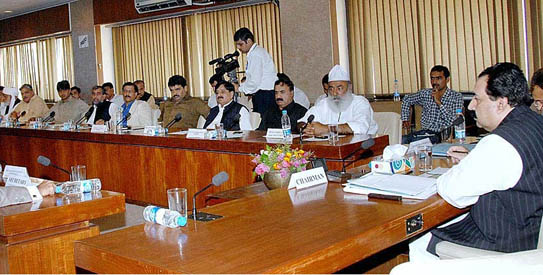
ISLAMABAD: The first test burn at the underground coal gasification (UCG) project in Tharparkar will be carried out on September 19 in the presence of four experts from Uzbekistan.
The chairman of the project, Dr Samar Mubarakmand, told the National Assembly’s standing committee on petroleum and natural resources at its meeting here on Tuesday that although his team of scientists and engineers had expertise in metallurgy, mining, testing, blasting and other relevant fields, the Uzbek experts had been invited to oversee and ensure success of the test burn.
He said Uzbekistan was successfully operating a UCG project near Tashkent.
He said the Thar project would start producing 100MW electricity from December 2013 and its capacity would be gradually increased. “If the project is successful it will produce electricity at Rs2 per unit.”
The committee was informed that the total cost of the project was $115 million. An amount of $9.2 million was released in 2010-11 and $8 million allocated for the current fiscal year.
Dr Mubarakmand said civil works, installation of compressors and gasifier had been completed, adding that the process involved over 36,000 feet of drilling and 18,000 feet of steel-casing.
However, Sindh Coal and Energy Secretary Muhammad Younis Dagha said there was no technical study or verification of the claims made by Dr Mubarakmand. He said the UCG projects launched in Australia and the United States had been shut down. Besides, Chinese and Uzbeks are not producing electricity from their UCG projects.
“There are also chances of severe underground water pollution.” The committee chairman Talib Hussain Nakai asked Dr Mubarakmand to clarify the points raised by Mr Dagha.
Dr Mubarakmand said water in Thar was very saline and unusable for any purpose. Besides, he added, there was a 35-metre solid rock layer between water and the coal-bed.
Officials of the Geological Survey of Pakistan said if the UCG pilot project succeeded it could be taken up in nine other areas of the country.
The committee was informed that projects relating to mining and electricity generation from coal would not be shelved even if the UCG project succeeded.
The committee was informed that Block-I had been allocated to the Chinese Global Mining (CMG) company which planned to mine five million tons of coalfield a year to produce 900MW of electricity, to be gradually increased to 2,100MW.
Australian Continental Energy had submitted a proposal for mining six million tons of coal annually and increasing it to 18 million tons. The company intends to generate 1,100MW in five years, 2,000MW in 10 years and 3,000MW in 15 years.
Despite concerns expressed by Nawab Yousuf Talpur over the project, the committee gave a go-ahead to the UCG pilot project.