0
0

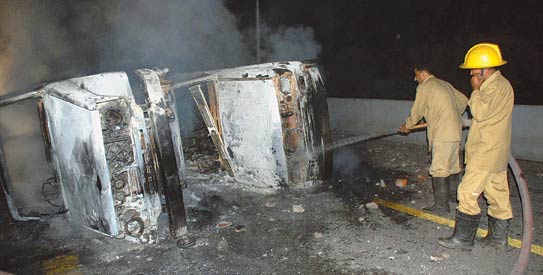
Violent riots broke out in several cities across Punjab as electricity supply gap suddenly rose to almost 8,000MW, resulting in power outages of up to 20 hours a day.
Small business owners and daily wagers, whose livelihoods largely depend upon availability of electricity, came out on the streets to vent their anger against outages by burning tyres, vandalising private and (in a few instances) state property, while even attacking fellow citizens at some places.
PML-N Nawaz Sharif spurred the protests by instructing his party men to join the protests as part of his campaign to keep the PPP government in under pressure. The party tried to resurrect its public image damaged by the spread of dengue fever in Punjab, while the PPP government in Islamabad scrambled to recover from the blow to its credibility because of the latest power crisis that gripped the country for almost one week.
Even the PPP supporters were reluctant to defend their government’s inability to reduce electricity shortages during the last three and a half years.
“Sure, it is no longer a good idea to blame the Musharraf regime for the electricity woes. No one is ready to buy this argument any longer. People ask us: what has the PPP government done to rid us of loadshedding? We don’t have an answer,” concedes a Punjab PPP leader. Requesting anonymity, he says the prime minister had in his inaugural speech pledged to eliminate power shortfalls but he has failed to deliver on his words.
“The people suffering because of the non-availability of electricity don’t want to know the reasons - no matter how valid and legitimate those may be, for the government’s failure. They want to see serious effort on the part of the government, some tangible outcome of that effort,” the PPP leader says.
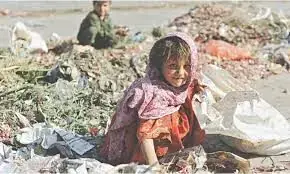
Power shortages are believed to be the biggest constraint to growth, costing the economy 3-4 per cent of GDP per year. Besides affecting the daily routine of people, the shortages have resulted in business and industrial closures - especially the smaller ones having no alternate source of energy -, job losses and production cuts. The latest crisis is blamed on a sudden drop in hydro generation, closure of Chashma nuclear power plants due to technical problems, reduction in gas supplies to generation companies, disruption in fuel oil supplies to Hubco and Kapco owing to Pepco’s financial problems and the rise in demand due to higher temperature. “As a result of this, the supply gap rose to over 7,000MW with demand peaking at 16,000MW and led to longer power cuts to consumers,” says Pepco managing director Rasul Khan Mehsud while talking to Dawn.
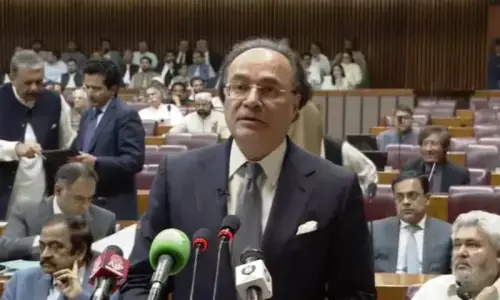
He regrets that “some people” had tried to politicise the issue of recent electricity shortages and called for cutting supplies to Sindh and Khyber-Pakhtunkhwa against the spirit of federalism. At the same time, he admits that domestic, commercial and other consumers had to face more problems because of his decision to provide electricity in spite of shortages to the industry in the larger interest of the country and economy. “We need to keep the wheels of economy rolling in order to create jobs and growth. But if the people don’t want it, we will review our priorities.”
Khan says, the Pepco has now formulated a two-pronged strategy - increase generation and withdraw exemption to the industry from loadshedding -to resolve the issue. “The government has released Rs10bn to power companies for fuel, which will help us increase generation,” he says.
A former managing director of Pepco, who does not want to disclose his identity because he is still in government service, blames ad hoc policies and appointments in Pepco and discos (distribution companies) and poor management of the situation for the latest power crisis. “The Pepco management or the minister in-charge was not available to the people to address their grievances or chalk out a plan to resolve the problem immediately, which exacerbated the situation and led to violent protests.”
“You cannot blame the president or the prime minister for the current crisis. We are no doubt facing electricity shortages but the government is working on new projects. The PPP government has added over 3,000MW to the national grid during the last three years. Many new projects - Guddu, Nandipur, etc are scheduled to come on line next year adding to the country’s power generation. The real problem is the current management of Pepco and discos. You cannot hope to solve the crisis permanently without changing the management and improving governance of power sector.”
While new generation capacity has been added to the national grid, the government has done little to address the longstanding issues - heavy dependence on expensive imported fuel oil for generation (46 per cent of thermal capacity depends on oil), huge imbalance in thermal/hydro (71:29) mix, subsidy of almost Rs2 per unit, line losses and theft (of over 23 per cent of the total production), inability of Pepco to recover its dues (amounting to Rs300bn) from government and private consumers, etc - plaguing the collapsing power sector that brought sharply into focus by the last week’s crisis. Experts argue that even the additional generation capacity will not help solve the problem of power shortages without addressing all these issues and restructuring the entire power sector to attract fresh private investment. Mehsud indirectly agrees with this line of argument.
“We have an installed generation capacity of more than 21,000MW. Yet the dependable capacity is not more than 16,500MW against the peak demand of 19,000MW in summer,” he says. “At present, for example, we are getting less than 3000MW of hydro power against installed capacity of 6,500MW. Four gas-based IPPs - having capacity of producing 800MW each - are closed due to gas shortages. If we run them on oil, the cost will go up substantially. The government is paying a subsidy of Rs2 per unit, which will go up if fuel oil is used to produce more electricity. You cannot run a shop if you are losing money at this scale. How can you expect to run the power sector?,” he wonders.
Others agree with him. “The government has provided more than Rs1.2tr in electricity subsidy over the last three years. This money could have been used to build substantially large hydro capacity in the country,” says Gohar Ejaz, former chairman of Aptma. He advises the government to eliminate power subsidies and determine different tariffs for different discos based on their line losses and theft. He argues that elimination of subsidies will ensure 100 per cent availability of whatever amount of electricity we can produce at the moment.
Second, he says, the government must take steps to clean up circular debt hampering fresh investment in cheaper power generation in the country besides restructuring Pepco and discos on modern lines to remove inefficiencies and corruption.
Third and the most important, Gohar contends, the government must undertake efforts to change the power generation mix.
“While we need to increase our hydro power generation as much as we can, we should also strive to reduce our dependence on fuel oil in thermal generation and switch to gas and coal to reduce the price of electricity.
In India, less than one per cent of its total thermal capacity is run on fuel oil. “It is time that we make a long-term strategy for developing the energy sector and reduce dependence on imported fuel oil just as India did in 2000. The salient features of this policy should be to improve the thermal/hydro balance and increasing the use of domestic fuels and sources for generation.