



 0
0

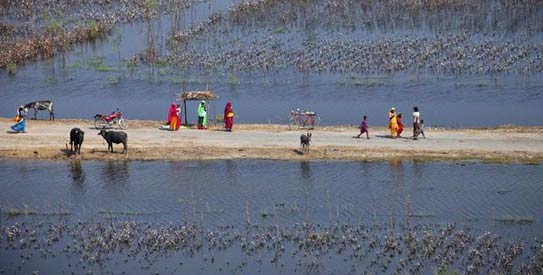
LONDON:The challenges of human migration due to climate change have been underestimated as millions of people will either move into or be trapped in areas of risk by 2060, rather than migrating away, a British government report showed on Thursday.
The report, by the government-backed Foresight Programme, examined the likely movement of people both within and between countries to 2060. It found the greatest risks will be borne by people who are unable or unwilling to relocate.
Those risks may also be made worse by policies which seek to prevent migration.
“We have assumed mass migration away from affected areas, but millions of people will also migrate into vulnerable areas and there will also be those who cannot migrate out,” John Beddington, chief scientific adviser to the British government, told reporters.
“They pose different challenges to the international community,” he added.
The United Nations estimates there were 210 million international migrants in 2010. A further 740 million were internal migrants in 2009.
An average 25 million people a year have been displaced due to weather-related events since 2008, which will likely rise as such events become more extreme and frequent, Beddington said.
The report estimates there will be between 154 and 179 million people living in rural coastal floodplains by 2060 who will be unable to move away due to poverty.
These trapped communities will need to be made more resilient to environmental events. Up to 192 million people will also move into urban coastal floodplains in Africa and Asia by 2060 in search of work and a better economic situation.
This kind of migration could be beneficial by opening up new sources of income which help people become stronger and more resilient, enabling households to stay in a place for longer, the report said.
Migration should be considered when funds are being allocated at UN climate talks in November in Durban, South Africa, the report said.
The cost of doing nothing will be higher than the cost of measures to tackle migration, especially if they reduce the likelihood of displacement, it added.
“I would hope to see initiatives on migration, forestry and agriculture to follow the Durban meeting,” said Beddington, adding that he does not expect a universally binding emissions reduction agreement to emerge this year.
Policies to restrict or prevent migration are risky and could lead to greater impoverishment and displacement, the report said.
For some individuals or groups, planned migration could, however, allow some populations to stay in place for longer.
Temporary migration -- when people move to other countries with the option of returning to their home country -- will become more important as more extreme climate events occur.


























