0
0

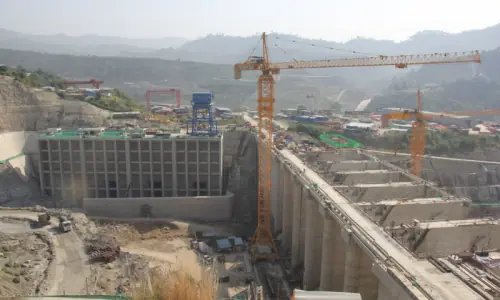
I AM an architect and university teacher/researcher. I am writing as a former member of a fact-finding mission on the proposed Indus River Diamer-Bhasha Dam at Chilas in 2008, and as a consultant for the NDMA-UNISDR ‘safe cities campaign’ for making Pakistani cities resilient in the face of large disasters.
I understand the technical aspects that this massive dam construction project involves, related to engineering, environment, people and cultural heritage. Having dealt with Wapda directly while part of the mission, I was appalled to see that they were boldly resistant to sharing information which is legally public namely the environmental impact assessment (EIA) which could prove that the proposed project will do minimal damage to the environment, people and heritage, and based on which the government’s Environmental Protection Agency (EPA) grants approval for large-scale projects.
We were informed by sources that earlier the World Bank had withdrawn funding of the project and that a new report was subsequently being prepared, which would be available at the EPA offices and the legally required public hearings would be announced. Since 2008, every year we have tried to access this document and hearing dates through various sources, but to no avail.
The project is being touted as a multi-faceted saviour for Pakistan’s development, but in fact its construction will be one of the most disastrous investments for the entire nation with far-reaching impacts, especially in the scenario of climate change. The dam structure is not capable of controlling large floods, and it will be devastating also when an earthquake rocks it in this most risky zone, and might forever damage the Indus River bed at this precious location. When such an incident will occur, we will not be able to count in dollars the losses incurred by the devastation to this lifeline of the entire nation. In its regular operation, the overall volume of water in the Indus which will be able to reach downstream is one of the most important issues which is being disregarded, even though we have alarmingly witnessed the desertification of large tracts in Sindh.
Awareness about this issue needs to reach Pakistanis in other regions immediately. We should talk about the impacts on the soil, water, habitats and livelihoods of people in lower riverine areas if we are to speak of a mega project as beneficial. As climate change will now regularly rock us between droughts and flooding, we are talking about a life and death situation and millions of Pakistani citizens. Each of the benefits of a dam – power-generation, water storage and irrigation – can be achieved through many other means which we are already capable of practising. What solutions were good 60 years ago are no longer viable, and it is time not to forcefully dominate nature, but to work with it through smaller-scale interventions which are sustainable and which empower local communities. There is now only one way towards development – let us religiously save our precious environmental resources, and fashion our projects accordingly. Save Pakistan now.
SAMEETA AHMED Karachi