16
16

Something seemed awry. I only had to take one look at my electricity bill to conclude that somebody had messed with my meter. True enough, someone certainly had.
Between the rising import bills of oil, circular debt of Rs. 130bn that may be charged to consumers and no sustainable power production project forthcoming, the energy crisis is gnawing away at 1/3rd of my monthly salary like a menacing plague; the share threatening to increase.
While the government busies itself with formulating the ‘new plan’ on combating the power woes of the country; shutting down its industries (instead of creating more), giving more holidays to its officials (instead of giving tax holidays to investors) and the more recent, importing LNG (instead of cutting down on imports).
And while the AEDB sips tea in their offices and commit to yet another wind or solar powered project which may never really see daylight (notice the pun?) I find myself wondering, what is my contribution towards this except commenting on it as is the occupation of, if not most, some of us- educated and uneducated alike. Whatever happened to taking control?
How long can we sit here and wait for things to be fine? The economy is stumbling as it is, the gap between demand and supply of electricity is increasing (6000 MW) while gas reserves which provide for *43.7 per cent of energy in Pakistan are slowing depleting. After all said and done, the common man still experiences 6-8+ hours of load-shedding everyday while his electricity bill shoots up.
There is hope in hopeless
It is frustrating yes that Pakistan, a country with a rich solar belt and a coastline with the potential of producing *50,000 MW of energy through wind power alone is struggling to get a measly 6,000 MW in place. There is however no point blaming, really. Unless you have the influence or the motivation to get into bureaucracy, there is not much, a common man like you can do.
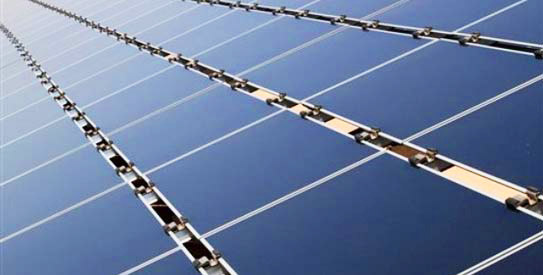
What you can do is change your lifestyles and while at it, change your bulbs. The future of power production is renewable energy for two astoundingly simple reasons: It is environmentally friendly and it is nearly free once the capital investment is realised.
We should start with getting technology run by solar power for our homes; start with bulbs (which use only 33 per ccent of the energy traditional bulbs do), maybe solar powered fans. Since I got a UPS, my electricity bill has nearly doubled; a UPS costs around Rs. 20,000 PKR. Get a solar panel to charge this UPS for Rs. 40,000. With a life of 20 years, this technology could provide you power for the 42 hour load shedding every week for almost free and you can realise this amount in say a little over a year (After rapid calculations, If I’m saving 3,000 PKR off my bill every month, I would be able to realise 40,000 in approximately 13 months).
One can also buy a Rs. 100,000 PKR of a solar-powered UPS. Yes, it is 5 times the price of a UPS run with electricity but you can expect to save at least 1/3 of the total energy you consume and a bulk of your monthly electricity bill – which is expected to rise (In only the first quarter this fiscal year, we have experienced a 62 per cent increase in import bills of oil - $ 3.8 billion).
At this rate, oil bills would go over 12b $ and infact, as forecasted by The Energy Expert Group, the import bills by 2020 would be a whopping $ 124 billion. Will the local price of oil not rise in the same proportion?
Forgoing present gains to maximise future profits
When did some of the most basic concepts of economics start to elude us? As consumers, maybe we don’t think like that but how is the private sector not rising to this challenge and creating a market for this technology.
At present, most of these products are imported. We need to think along the lines of local production, and increased awareness for the need to accept this technology. The role of media cannot be underestimated here; more airtime and headlines should be dedicated to experts in the field of green technologies, industrialists, NGOs and the power sector evaluating this option.
Distributors of solar powered products could join hands with international and local NGOs to first promote the need of solar power in Pakistan, not forgetting the consumer market and then urge these NGOs to fund these projects for villages and agricultural lands (powering tube wells which take upto 1500 MW of the electricity in the country), as is happening in other third world countries like Bangladesh and India.
NGOs could also provide loans for stand-alone solar systems if they can bring banks to come on board while companies selling this technology could provide simple benefits like payments in installments.
Of course there will be some loss of profit but once the market kicks off, consumers could expect more competitive prices and suppliers could expect higher demand – as the viability of this option would have increased.
Turning crisis into opportunity
Over the years, several companies under their CSR initiatives have provided power to villages through these solar panels and are still doing so. The buzz word around the world today is sustainability – green technologies are King. Companies who have renewable technology under their labels should come forward; power producers should unveil their capabilities; plan, donate, if donation is too much to ask, play their role in bringing together proposals for power projects that could get international donors to approve; we can turn this energy crisis into an energy coup.
We could learn some lesson from the Grameen Shakti project of the Grameen Bank in Bangladesh which provides renewable energy based electricity to people in the rural areas who have no access to the national grid through credit facilities. Why is it not possible in Pakistan where 70 per cent of the population lives in villages off the national grid and the remaining 30 per cent without electricity a large part of the day, everyday?
How long are you willing to wait?
*As per the “Integrated Energy Plan 2010-2025 and Pakistan’s Energy Future” by The Energy Expert Group.
Huma Sattar graduated from LUMS with a major in mathematics and is currently working in the corporate communications department at a global engineering company.