11
11

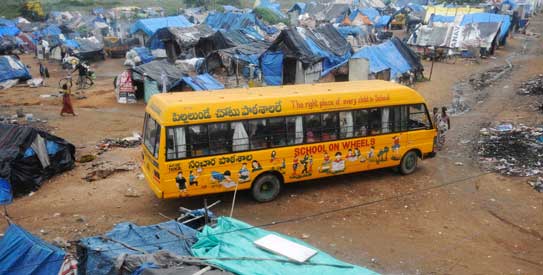
HYDERABAD: On a hot afternoon, a bright orange bus drives into a slum area of the southern Indian city of Hyderabad, parking amidst shelters made of tarpaulins and bits of wood. Barefoot children come running, eyes shining, and troop inside.
It's a school on wheels that brings education to the doorstep of disadvantaged children such as these every day, halting for several hours at a time in different parts of the sprawling city.
The children, whose parents are day labourers on construction sites, or work as rag pickers and maids, either never go to school or drop out once enrolled. Many have to work as hard as their parents to pay off family debts.
“These children have no time to go to school, unless the school comes to them,” said T.L. Reddy, founder of the CLAP Foundation, a non-governmental organisation that runs the mobile school.
“At first we prepared a temporary tent in their slum to give basic education for the children. Then slowly we developed the concept of a school inside a vehicle to attract more.”
Reddy, a teacher for 25 years, first thought of doing something for the children when they caught his attention a decade ago. After gathering donations and setting up the tent first, they began operating the bus three years ago.
The inside of the bus is bright and clean, its walls festooned with the alphabet, numbers and pictures of fruit and animals. Children perch on seats around the inside of the bus, writing on slates they hold on their laps.
Some days, the bus is so full that children sit cross-legged on the floor as a sari-clad teacher talks to them.
“The teaching is good in this bus and nobody beats us,” said 10-year-old Devi, who enrolled in the first grade of primary school three years ago but soon dropped out.
She attends school in between helping her father collect rags, and hopes to be a teacher.
Manjula, another 10-year-old girl, bubbles with excitement about her studies and wants to be a doctor to bring medical care to slum children such as herself.
“Now I can read and write from 1 to 200 numbers,” she said.
The goal, Reddy said, is to teach the children enough for them to be mainstreamed into government schools. So far, some 40 children have done so despite the considerable odds.
“The greatest hurdles are things ranging from the erratic schedule of the students, and the varied mindset of their families,” he added.
But the school's greatest achievement may be something far more simple.
“This is the only chance they get to be kids, even if it is for only two hours,” Reddy said.