0
0


CHAMAN: Sleeping in a freezing cab, running out of money and worried about militant attacks, Ghulab is one of thousands of truck drivers stranded as a result of Pakistan's blockade of the Afghan border to Nato and US war supplies.
But they and the businessmen who run what has been a lucrative trade for most of the last decade say they support the decision to shut the frontier in retaliation for coalition airstrikes almost two weeks ago that killed 24 Pakistani troops in two remote border outposts.
''We risk our lives and take these supplies to Afghanistan for Nato, and in return they are killing our soldiers,'' said Jan, whose fuel truck is parked in a terminal in the dusty, dangerous border town of Chaman in southwestern Baluchistan.
''This is unacceptable, and we unanimously support the government over closing the border.''
Given the current anti-US sentiment in Pakistan, drivers might not want to call publicly for the border to reopen. Even so, their stance illustrates the depth of anger in this country over the attack and the challenge the US faces in repairing a relationship that is critical to its hopes of ending the Afghan war.
''I hope Allah grants my prayer that this Nato supply ends permanently,'' said Ghaza Gul, a 45-year-old driver who has been in the trucking profession since was he was 10 years old, when he washed the vehicles and made tea.
''I would rather die of hunger than carry these shipments,'' he said, sitting on a dirty mat with other drivers at a terminal in Karachi, the port city where the supplies are unloaded.
Pakistan closed its two Afghan crossings in Chaman and Torkham, in the northwest Khyber tribal area, almost immediately after Nato aircraft attacked two army posts along the border on Nov. 26. The supply lines account for 40 per cent of the fuel, clothes, vehicles and other ''non-lethal'' supplies for the Afghan war.
President Barack Obama and other American officials have expressed their condolences for the deaths and promised a full investigation into what they have said was an accident. But this has done little to assuage anger in Pakistan, where the military has continued to describe the attack as a deliberate act of aggression.
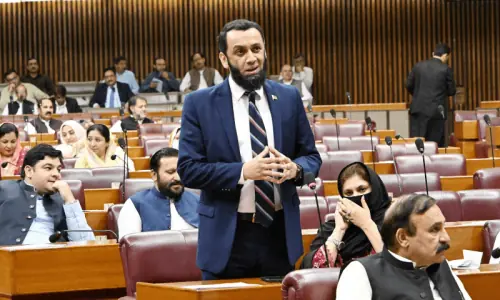
The government, needing to show a firm response to placate critics who have long protested its alliance with Washington, has also retaliated by demanding that the US vacate an air base used for CIA drones and by boycotting an international conference aimed at stabilizing Afghanistan.
Many analysts believe Pakistan and the US want to avoid a total rupture of their difficult relationship because of its mutual strategic importance. Pakistan needs American aid and cannot afford diplomatic isolation; Washington wants Islamabad's help with Afghanistan.
For that reason, most people believe the trucks will start rolling again soon, likely within a few weeks. The trucks are currently parked at terminals close to the border, some in large towns in the area. The drivers have remained with the vehicles, suggesting that the trucking companies believe the stoppage will be temporary.
''It won't be much longer,'' said Imtiaz Gul, director of the Center for Research and Security Studies in Islamabad. ''They can't sustain it indefinitely. It would alienate the whole world,'' he said, referring to the many countries that have troops in the coalition.
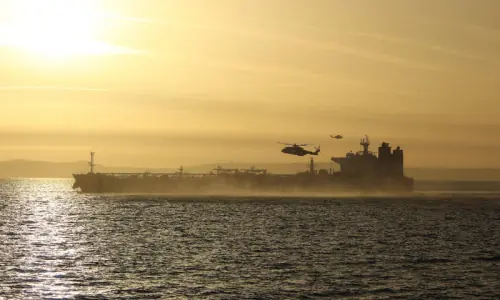
Nato officials have said the coalition has built a stockpile of military and other supplies that could keep operations in Afghanistan running at their current level for several months even if the route through Pakistan remains closed.
The coalition has reduced its dependence on Pakistan over time by developing alternative routes that enter Afghanistan through Central Asia. Nato could seek to expand those routes, but that would make the coalition heavily dependent on Russia at a time when ties with Moscow are increasingly strained.
Last year, Pakistan kept the Torkham crossing closed for 11 days after US helicopters accidentally killed two Pakistani troops. It reopened the route along the fabled Khyber Pass after Washington formally apologized.
Militants and criminals, some reportedly working with trucking companies engaging in insurance scams, took advantage of the situation to carry out near-daily attacks against trucks stacked up in poorly guarded terminals and roadside rest stops. The attacks killed several people and destroyed about 150 vehicles.
Authorities have taken stronger steps to protect the trucks this time around. Many of the vehicles were ordered to drive south away from the militant-infested border areas in the northwest, said truck owners and drivers.
Those that remained were prohibited to park along the road, where they were most vulnerable, and were instead put in terminals that may not be 100 per cent safe but at least have some security.