0
0

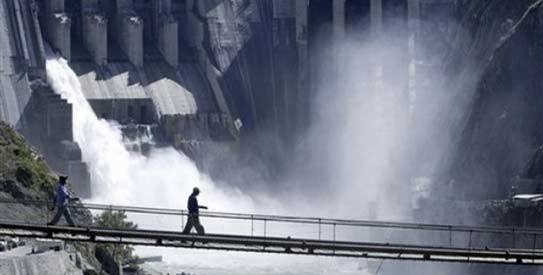
ISLAMABAD: Without a firm commitment yet on the size of financing, the Asian Development Bank has decided to play a key role in the development of Diamer-Bhasha dam as its senior lender, co-financier and financial adviser to make the $12 billion project bankable for lenders, export credit agencies and contractors.
At the conclusion of a week-long visit to Pakistan, ADB energy division director for the Central and West Asia Department Rune Stroem told journalists that Pakistan and the ADB had agreed to process the project together so that its structure was acceptable to international financial institutions, commercial banks and export credit agencies.
The ADB’s country director for Pakistan, Werner E. Liepach, said the bank did not have a loan programme for Pakistan at the moment because of the absence of an IMF programme or a letter of comfort. “But that does not mean the ADB has suspended programme loans to Pakistan,” he added.
He said the ADB had planned to provide $450 million project loans to Pakistan this year, which was now expected to be about $520 million because of higher requirement for flood-related assistance. Of this, the bank has already disbursed about $502 million until last week.
He said the Pakistan government had also sought a $1 billion loan to resolve inter-corporate circular debt, but neither the plan for resolving the chronic problems had been discussed nor had the bank made any commitment.
“The ADB will act as a senior lender, co-financier and financial adviser for the project to make it bankable for the rest of the world,” Mr Stroem said, adding that the two sides would finalise a draft of MoU (memorandum of understanding) this week to define the role of the government and the ADB.
He dispelled an impression created by a statement of the water and power ministry about the signing of an MoU this week.
He explained that the two sides would possibly finalise a draft MoU this week.
Moreover, he added, the ADB had not committed any amount or mode of financing because the structure of the financing package had not yet been finalised.
Mr Stroem said Wapda had done a remarkable job at the engineering side of the project and the ADB would work on human and social aspects of the project. “The government and Wapda authorities have also done good work on resettlement of people to be displaced by the project, but there are still a lot of gaps on mitigating environmental effects to international standards.”
He said the government would have to make a lot of effort in resolving the revenue sharing dispute between Gilgit-Baltistan and Khyber Pakhtunkhwa. He said there was going to be a lot of debate on revenue sharing and resettlement issues.
In reply to a question, Mr Stroem said the construction of the multi-purpose dam was a marathon race and the challenge for the ADB was to make it bankable for the international world through a financial package that should be attractive to the international financial institutions, export credit agencies and commercial banks. “Diamer-Bhasha dam is the most complex and comprehensive project the ADB has ever handled.”
He said while international financial institutions like the ADB would provide most of the foreign component of financing for civil works, equipment supplies would have to be covered by export credit agencies and the financing gap in civil works would have to be raised through commercial financing. The cost of land acquisition and resettlement would be provided by the government. The ADB would lead the syndicate of international lenders, he said.
About the impact of global recession, he said most possibly it would go in favour of Pakistan. He explained that the international market was not saturated with similar projects owing to the recession that would ensure shorter delivery time for equipment and material. He said prices of international inputs were currently down and leading companies had a lot of idle people who could be employed in Pakistan.