0
0

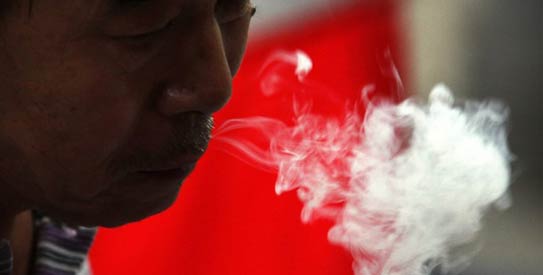
Children whose fathers smoked around the time of their conception have at least a 15 per cent higher risk of developing the most common form of childhood cancer, a type of leukemia, according to an Australian study.
Although the findings, published in the American Journal of Epidemiology, credit multiple factors in children developing acute lymphoblastic leukemia (ALL), the study follows others that have also found an increased risk.
“Study results suggest that heavier paternal smoking around the time of conception is a risk factor for childhood ALL,” wrote researchers led by Elizabeth Milne at the Telethon Institute for Child Health Research in Australia.
Although ALL is the most common childhood cancer, it is still rare, affecting about three to five children out of every 100,000.
The researchers surveyed the families of nearly 300 children with ALL, asking about the smoking habits of both parents. They also compared these families to those of more than 800 children of similar ages who did not have leukemia.
The mothers’ smoking behavior had no impact on the children’s risk of developing the cancer, but children whose fathers smoked at all around the time of their conception were 15 per cent more likely to develop leukemia.
Those whose fathers smoked at least 20 cigarettes per day around that same time were 44 per cent more likely to be diagnosed with the disease.
Of nine earlier reports the researchers used in their comparison with the current study, six also found an increased risk.
“The importance of tobacco exposure and children’s cancers has been overlooked until recently,” said Patricia Buffler, a professor at the University of California, Berkeley, who was not involved in the study.
She added that since tobacco is full of toxins, including carcinogens, it was not unlikely that there could be damage in the cells that produce sperm.
Milne agreed, noting: “Sperm containing DNA (damage) can still reach and fertilize an ovum, which may lead to disease in the offspring.”
But she added that the study did not prove that DNA damage in the sperm caused ALL in the children, since the disease was likely to be caused by a number of factors.
Other environmental factors tied to a greater chance of developing childhood leukemia are ionizing radiation such as x-rays, and the mother’s exposure to paint or pesticides while pregnant.