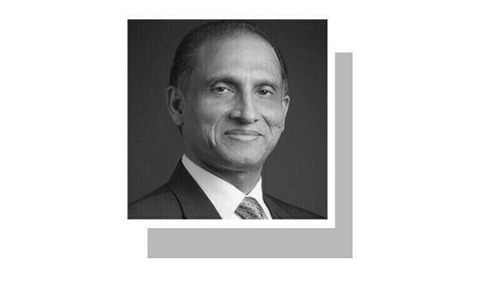
We don’t have much time left: Dr Akbar Ahmed
Malik Siraj Akbar | | 17th December, 2011
40
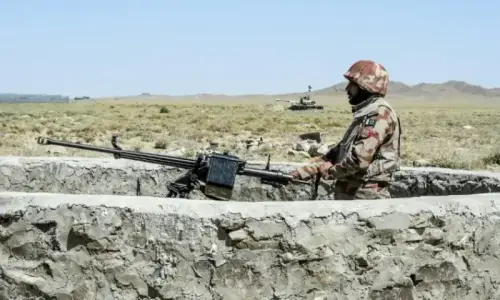
“People in the periphery think they have been neglected, humiliated and culturally looked down upon by the Centre.” –Photos by author

“People in the periphery think they have been neglected, humiliated and culturally looked down upon by the Centre.” –Photos by author

Mark Twain once said “travel is fatal to prejudice, bigotry and narrow-mindedness.” Pakistan’s former high commissioner to United Kingdom and the current Ibn Khaldun Chair at the Washington DC-based American University, Professor Akbar S. Ahmed, truly fits in the category of people who believe in seeing and experiencing things to challenge the prejudices of the ignorant.

Described by the BBC as “world’s leading authority on contemporary Islam”, Dr Ahmed today travels across the globe to promote inter-faith dialogue and mutual understanding. As a civil servant, career diplomat and one of the world’s foremost anthropologists, he regularly discovers and interacts with many known and often unknown communities of the world.

Ahmed has not forgotten home, Pakistan, all these years. He worries for Pakistan but the separatist groundswell in Balochistan, where he served in 1980s consecutively as the commissioner of Quetta, Sibi and Mekran divisions, makes him anxious. As a civil officer, he had an opportunity to closely interact with and learn from some of the most prominent Baloch nationalist and tribal leaders such as Mir Jaffar Khan Jamali (father of Dr Ahmed’s batch-mate Sikandar Jamali and the uncle of the former prime minister Mir Zafarullah Khan Jamali), Nawab Akbar Bugti, former governor Mir Ghaus Baksh Bizenjo and ex-chief minister Jam Ghulam Qadir.

He attributes the current turmoil in Balochistan to policymakers’ lack of understanding of the local society and culture. The first rule of good governance, he says, is to know and respect the people of the area where a civil or military officer serves. Former president and army chief General Pervez Musharraf ignored this basic principle of governance while dealing with Balochistan which caused confrontation with Baloch tribes and eventually led to the killing of the powerful tribal chief Nawab Bugti.

“Bugti’s killing was a tragedy for Pakistan,” he tells Dawn.com, “it was humiliating how President Musharraf threatened to “hit him” like a common criminal. Bugti was a man who is a part of our history and you don’t treat a man of history like this.”

In mid 1980s, Dr Ahmed was posted in Balochistan. Soon after his appointment as the commissioner of Mekran Division, he was caught in the midst of an attempt by some non-local religious fanatics who wanted to harm the followers of minority Zikri community. In order to prevent a possible bloodbath, the young administrator boldly reached out to Baloch opposition leader Bizenjo for assistance. For Ahmed, contacts with Bizenjo, a left-wing opposition leader, amounted to alienating President General Zia-ul-Haq while meeting such a senior government official would garner criticism for Bizenjo from his comrades.

“He had a wonderful sense of humour,” Ahmed recalls. They had a one-to-one dinner at the commissioner’s house, which they later joked, would get both men in trouble.

“It was Bizenjo who helped me behind the scene to calm down the people of Mekran and enabled me to take swift measures to protect the Zikris.”

Bizenjo did not forget Ahmed’s good service and praised him openly during an anti-Zia political rally in Sibi where he told the local people how lucky they were to have a committed commissioner like Ahmed. As expected, intelligence officials approached Ahmed and asked why an anti-Zia nationalist leader had publicly praised him.

Ahmed hurriedly sent a message to the Baloch demagogue urging him not to be so generous in public praise.

Holding a Master’s degree from Cambridge University and a PhD from London University, Ahmed was impressed by what he recalls as the “charisma and wisdom” of Baloch tribal leaders as he newly arrived in Balochistan.

“These leaders had many critics but they were men of honour,” he said. “There was a rhythm of life in Balochistan at that time and the Baloch leaders were the jewels of that remarkable society,” he remembers.

He met Nawab Akbar Bugti as the Commissioner of Sibi Division of which Bugti’s stronghold Sui was still an administrative unit. The Nawab invited him for dinner at his traditional home.

“The Nawab had so much charisma and authority that even his son, Saleem, who was a minister himself did not eat with us and instead served dinner to me as their honoured guest,” he recalls. However, what inspired Ahmed about Bugti was his knowledge of history and different cultures. They spoke about politics, history, tribes and traditions late into the night.

“We talked about Ibn Khaldun and I asked myself which Pakistani politician would know about Ibn Khaldun and here was a Baloch tribal chief discussing Ibn Khaldun and his sophisticated theories on society with me in Balochistan’s tribal region.”

In Ahmed’s view, it is critical that the federal government should understand how to deal with the Baloch. As an officer in the area, he used to tell his junior officers that it did not matter if they had been educated at Oxford or Cambridge universities. What mattered was the respect they showed to the locals.

“I’d tell my officers that you have come to their (Baloch), we are privileged to serve them. Don’t take their material poverty as spiritual poverty.” However, he regrets that several officials mistreated the locals.

The veteran scholar, who is also the first Distinguished Chair of Middle East and Islamic Studies at the US Naval Academy, says that news of kidnappings, torture and murders by security forces in Balochistan shock him.

Contemplating the repercussion of mistreating different ethnic groups, Ahmed warns that a country like Pakistan, which experienced dismemberment in 1971 must pay attention to the demands of people living in the periphery.

“Right now we are in a state of civil war in Pakistan,” he says, “People in the periphery think they have been neglected, humiliated and culturally looked down upon by the Centre. This is absolutely the same thing we did with the Bengalis. Pakistan is in a very fragile condition. Both civil and military leadership must urgently show wisdom and vision to come out of this situation.”

Increasing tensions in Balochistan between civilians and the security forces is another area which Ambassador Ahmed thinks urgently needs policy review. He describes assaults by security forces and cases of torture as ‘sadism’ and ‘foolishness.’

Ahmed blames Musharraf’s “rash actions” for subverting the very foundations of an already shaky structure in Pakistan. The ordinary Pakistani soldier is frustrated and struggling to survive in that chaotic system.

He says Pakistan cannot survive without Balochistan.

“We can’t afford to make the Baloch feel like second class citizens. Their demands are valid and some of these demands have been overlooked for several. Islamabad should make urgent accommodation with the Baloch. You can’t fool around with them. One day you offer them talks and the next day you kill their leaders. They should be treated as equal partners in the federation.”

While talking about the distance between the Center and the largest province, he appeals to the powers that be “to stop the torture and the killing because we don’t have much time left.”

The writer is a freelance journalist based in Washington DC.
COMMENTS

  1. Dr ahmad is one of the leading scholars who regularly writes about balochistan and baloch nation but we baloch are convinced that the establishment would never listen to such advices. By killing nawab akbar bugti, waja ghulam mohd, mir balaachmari and hundreds of other youths the door for reconciliation has been closed for ever.

  2. The Baloch nation never accepted to be part of another country be it Iran or Pakistan, they are fighting since the dawn of history to be independent, and that's their right. The Baloch never wanted to be part of British product of Pakistan, nor they have been asked to vote. please understand this no matter what the Baloch will fight to the end, cuz we can't live as slaves any longer.

  3. What should be done if there's little time left?
    A workable policy towards Baluchistan should be based on sound knowledge and informed advice. Let the federal government appoint a national commission composed of independent and impartial public men drawn from all the four provinces to look into the problems of Baluchistan. As soon action is taken on its report most of the Baluchistan's national grievances will evaporate.

  4. d. GOEL Pkl. afternoon5.10pm, December 19, 2011.
    I find Mr Akbar Ahmad's analysis of the fate ofPakistani Policy with tribal sensitivities of various Tribes andtribalChiefs quite scholarly andworthy for ascholar IBn Khaldun of 15th Century Savant of Civilizations and its philosophical perspectives.
    Iqbal Ahmad has truly praised Late NawabBugti who was knowledgeble about History and Pakistani Society in the Historical settings. Pity that Policy followed by General Mushraff wasjust bludgeoning Balochis into submission to his Martial Dictates. This was an invitation to Revolt and Disaster. Hope sane analysis by Ahmwed shall find Pakistani Authorities act on it.D. Goel

  5. Since Mr. Ahmed was treated well by the tribal leaders therefore they were really nice guys. He simply ignored all their crimes and ruthless attitude to their tribesmen and rivals and portrayed only one side of the prospect. Memorizing history doesn’t make you a noble person instead what good deeds you have done for your people is remembered. Mr. Ahmed looks like getting nostalgic in his blog and ignoring the blunt facts. There is injustice and repression against Baloch people but tribal leaders are also equally responsible.

  6. Great article! A well-informed and insightful analysis of the state of Balochistan at the moment. A bit partial though if I may say so. Mr Ahmed is all praise for the Baloch 'leaders' and the Baloch culture and traditions. Not even once he mentions that it is the same Baloch leadres who are partially responsible for keeping Balchoistan backward by perpuating tribalism in it's worst form. For Balchistan to emerge as an educated, liberal, pluralistic and economically advanced society, it not only has to reclaim it's rightful place in the federation, but also free itself from the clutches of tribalism which still holds majority of the papulation in slavery.

  7. Always loved listening to Dr. Akbar Ahmed – eloquent and logical!

    No solution/suggestion offered.

    All Sardars and Waderas be brought together seek views if they want Pakistan survive and what they can do….if they want to survive
    Fault findings is no solution

  8. Absolutely brilliant article. Akbar has hit the nail on the head. I've been living outside Pakistan for more than 20 years, and have met many Bengali folks. I still see them as compatriots, but do apologize for what we (as West Pakistanis) did to Bengalis in 1970-71. I hope I don't have to apologize the same way to my Balochi friends when I meet them 10 years from now.

  9. Congratulations over this excellent article. I am so glad that non-Baloch Pakistani scholars have finally decided to stand and speak up for the Baloch rights. It is a very positive initiative. Last week, the Human Rights Commission of Pakistan also set a very positive trend by dedicating the international day of human rights to the oppressed people of Balochistan. Besides scholars like Dr. Ahmed, media outlets, such as Dawn, play a magnificent role in educating the masses and protecting people's rights. I read the piece at least three times.

  10. What gems Pakistan has produced, and how unlucky we are not to use their brilliance. People like Dr.Akbar should be made head of a think-tank to formulate Government policies on internal affairs or atleast he should be taken as an adviser to the Govt. on Baluchistan affairs, if Govt is serious to solve the problems faced by our Baloch brothers. Is the Govt. serious?

  11. On any give day I would trust Dr. Akbar S. Ahmed more than General Musharraf and PTV propaganda. For me this article is very thought-provoking and meaningful. Because it narrates the story of a man who had first hand experience of spending years with the Balcoh on their land while Musharraf had not spent a regular week in Balochistan to understand the people of the province and make sense of their culture, history, tradition and aspirations.
    When Nawab Bugti was killed, I was only fifteen and I largely subscribed to the official version of the story but now I feel like I should read more, and even visit Balochistan, to learn about these great leaders that Dr. Akbar Ahmed is talking about. His word is taken as truth across the globe and I also think there is not only an urgency to address the Balochistan issue but also to take a look at the one-sided anti-Baloch narrative that rest of Pakistanis are exposed to. Thank you again, Dawn, for bringing out such an important article. Very timely and eyeopening.

  12. Akbar S Ahmad, i learned so many things from your book on Pakistani society. Indeed a very knowledgeable person. May you live longer.

  13. If you build a nation on hate then it grows out of control and it come back to haunt you .

  14. Beautiful article full of facts and figures. Baluch people need to be respected and should be given autonomy to run thier state of affairs. They have polished Baluch leaders who loves and have the same feeling of belonging to Pakistan as any other leader from other parts of Pakistan. I urged the federal gov. to take this article and derive lesson from it. Well written article.

  15. Brilliant article! As for Balochistan saga, there is so much similarity between what happened in Bangladesh and what is happening since last 30 years in Balochistan. I wonder how many Pakistanis know that East Pakistanis were rediculed and harrassed by the West Pakistanis for a long time. The day Bugti was killed, Pakistan lost Balochistan. The day Pakistan became a partner in getting rid of Taliban in Afghanistan, Pakistan lost NWFP. Musharraf will go down in Pakistan history as the worst person of the country.

  16. Dr. Ahmed is an asset to all Muslims. Hear him from time to time on certain Broadcasts in US. Very intelligent, nice and logical person, wish we had someone of his calibre at the top of Pakistan's Ruling class right now. Need a whole group of people with the type of practical experience as well as good educational background as Dr. Akbar Ahmed.

  17. I think we should be ashamed on ourselves as a Pakistanis for not providing Balochi’s their fundamental right of good life, good education and safe future for their kids. It’s painful to see a province full of natural wonders ,plenty of resources and most importantly the most patriotic people this country can get ,Yet its people face utter neglect from its leaders. If we had wise and futuristic leaders they would’ve put their energies day and night to build and bring Balochistan to the financial forefront of this country. I personally feel bad and I am really sorry to the people of Balochistan that the reason you are in this shape now is because of the neglect of the federal government of Pakistan.

  18. I wish his plea be seriously taken to consideration and ultimately acted upon.

  19. Dr. Akbar…a great and humble soul…we should heed his advice if are to survive as a nation…

  20. Beautiful piece of writing.Things r really not good for a layman in Pakistan.And we really dont have much time left.May God be merciful to us all.

  21. Respect, serve & include the locals. Pakistan needs more people like Dr Akbar. I hope in earnest we succeed in implementing the message in this article.

  22. Its only one side of the picture.what is the contribution of these atrocious feudal lords towards prosperity of their people? They have always opposed and subverted any effort which can make Blouchis prosperous or enlightened.

  23. I think the situations r much better nw but there is alwayz a room to improve.the only thing is lack of communicationz among the provinces…

  24. Hello Akbar,
    Your analysis of Baluchistan is absolutely true. To provide the greatest service to Pakistan at this time, please advise the authorities with your deep experience of the province.

    Hassan Sherazi
    Ex. Birmingham University Colleague

  25. The only policy that can earn Baloch loyalty is 'respect.' Unfortunately, the Establishment hasn't had the sanity to understand that fact. They value the land but disgust the owners of that land. Ahmed's right "We have little time left" to wake up.

  26. Stubbornness of Pakistani establishment eventually would cost them Balochistan & FATA. Establishment should avoid the spark with prolonged NATO supply blockade!!!

  27. Dr Akbar Ahmead always talks sense. Politicians at the centre however are more interested in self promotion and suffer from intellectual poverty. Democracy has its drawbacks and the major one is that mediocrity more often than not gets the power.

  28. This article is a wake up call for the civilian and military leadership of Pakistan.They can take a few lessons from India on how to assimilate varied group of population in the main stream.The federal system of power have to be implemented in true spirit.

  29. I believe 'IK' will take over this problem as well

  30. Moderation and inter-faith dialogue should not drive one against the ultimate truth of Islam. We can live together but at the same time we need be Truthful with other about Islam.

  31. Will somebody do something, to mend ties with the estranged Baloch leaders and Baloch leaders should also stop talking about separatism.

  32. I cannot agree more on what Dr. Akbar Ahmed has said, however, I have following to say:
    - Yes our elders were men of honor, but not any more. Our existing tribal leaders have given up to materialism. We would stand anything for our guests, but now we kill them. We do not realize that diversity is a key to strengthen a society.
    - I agree with Dr. Ahmed's comments about Nawab Bugti. He was a very knowledgeable person. I also agree that his killing pushed Balochistan back at least 50 years. But I wonder what his thoughts are about Bugti's contribution to his people? Why he couldn't allow his people to reach the same level of knowledge as he had. Dr. Ahmed, we would be willing to listen to your analysis on this.

  33. I share your views vis vis Baluchistan,I was a founder member of PPP in(not anymore) London and had similar views as regards East Pakistan and sheikh mujhib ur rahman.It is a great tragedy a person like ZAB committed such a folly by not accepting him the majority leader of Pakistan.I fail to understand why did he not accept him?Perhaps you can enlighten me on this Mr Ahmed?
    As regards Zia Ul haq and then pervez musharraf I blame the two most evil minds in the legal history of Pakistan,Mr AK brohi and Sharifuddin Pirzada.who I hold responsible for ruining the constitution of Pakistan.
    Regards
    Regards

  34. What we need first is a somewhat functional government that has the time to focus on issues – not all issues but just any issue.

  35. Akber S Ahmed writes master pieces. I attended one of his lecture in 1986 as a student of Command and staff college quetta. His perception about Balochistan and it's people is very clear. His views should be taken seriously by those who matter in Pakistan.

  36. "We don't have much time left." The writer leaves it to the readers' interpretaions. I wish he had elaborated on this. Not because I want him to tell us what he meant, but because common people should realize its importance too.

  37. How true! We wish people at the helm listen to this sound advice and act accordingly. As Mr. Akbar says, we don't have much time left!

  38. Always loved listening to Dr. Akbar Ahmed – eloquent and logical!