0
0

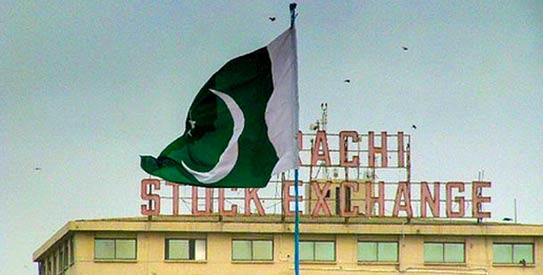
KARACHI: Two sessions remaining to the end of 2011, the Pakistani stocks are seen to have lost 6 per cent in the year 2011 with the KSE-100 index down by 670 points, closing Wednesday at 11,353 points.
Along the year, market participants attributed the dismal market conditions to various factors, the outstanding among them being economic morass, political uncertainty, law and order situation and country’s relationship with the US.
But irrefutable reasons for the dismal market performance that continued throughout the year were low daily trading volumes and foreign sale of equity.
During the year, net foreign portfolio outflow amounted to $122million. A small net buy of $0.47 million by overseas investors on Tuesday, after weeks of net sale triggered a bit of excitement, but resumption of sale of $0.33 on Wednesday poured cold water over hopes of rejuvenation of foreigners’ interest or at least putting a plug to the outflow.
“In any case, Fund managers would be celebrating the Christmas and New Year holidays. No mood change should be expected until their return to the trading desk in Jan,” says an analyst.
Mohammad Imran, head of equity sales at Arif Habib Limited, however, offers some comforting words. He points out that Pakistan stocks were not the only to be plummeted by the bears.
“Major regional indices witnessed a decline of approximately 20 per cent,” says he.
The ongoing European sovereign debt crisis and slowdown in US economic growth has made stocks a riskier class of asset, weakening both developing and emerging markets.
Compared to other regional and emerging markets, the Pakistani equity loss, therefore, looks but a pittance. It was the nervousness over global equity sell-off that seeped into the local market, resulting in accelerated foreign sale.
For stock brokers, the year has been a nightmare with volumes of trade contracting by 34 per cent in 2011 over the previous year. Daily volume dipped to 80 million shares, from 121 million shares last year.
“Most brokerage houses find it difficult to make two ends meet,” says a stock broker, who closed down the research department to cut costs.
A couple of liquid stocks have managed to attract much of the volume.
On Wednesday the stock in Hub Power Company saw trading in 13.8 million shares that accounted for as much as 37 per cent of the day’s aggregate volume of 46 million shares.
A day earlier, the market had seen business slump to over a year low at 19.6 million shares.
“Compared to around a billion shares traded prior to the crash of 2008, consider the market as closed,” says a broker.
Late on Wednesday evening, an announcement by the Securities and Exchange Commission of Pakistan was made to the effect that the apex regulator had allowed relief to the Margin Trading System (MTS) market with relaxed cash margin requirements and participation of individual investors as financiers.
The Regulator observed that the amendment in the Securities (Leveraged Markets and Pledging) Rules, 2011 rules were made as “continuous efforts to develop the capital market in the country and to support liquidity for encouraging trading activity and engendering investor confidence.”
The amended rules would empower the regulator to prescribe lenient cash margin requirements and allow individual investors to participate as financiers in the MTS. That had been one of the long standing demand of market participants.
“It has, however, to be seen if the step helps to generate volumes, going forward,” said a cautious, levelheaded broker.